 MARCEL MBAMALU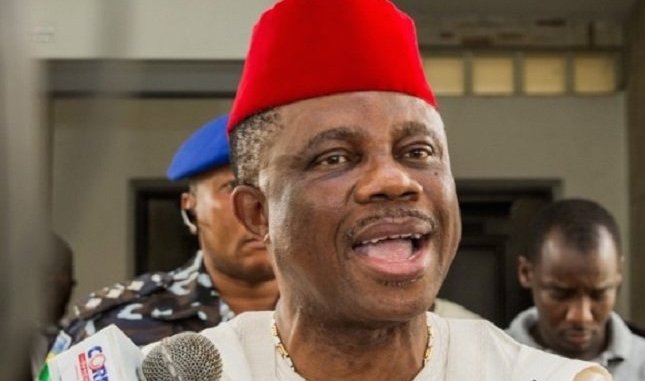
Do we truly comprehend the impact of fake news, artificial intelligence, and social media on the way we consume information and the immense pressure this places on editors to report the truth amidst such turbulence?
On Friday November 14, 2025, I found myself engulfed in a maelstrom of confusion as I headed to Abuja airport. A voice note I had inadvertently recorded and captured the conversation with my reporter in Lagos. Listening to it again revived the urgency and uncertainty I experienced in those moments.
The report that former Anambra Governor Willie Obiano had died was proliferating rapidly, yet I had no means of verification.
Join our WhatsApp ChannelI immediately called his mobile line on WhatsApp to no avail. That was after trying to reach his former Chief Press Secretary (CPS) , Mr James Eze.
I then contacted Uche Nworah, who had also served closely with him as chief executive of Anambra Broadcasting Service (ABS) hoping for clarity.
Even then, confirmation proved elusive. Sources were either uncertain or unreachable, and every channel I turned to offered only speculation.
In that moment, I confronted the full weight of my responsibilities as a journalist, editor and publisher: a high-profile story breaking, the imperative to report promptly, and yet no definitive path to verification.
I could be criticised for not confirming swiftly or for withholding the news, but until now, I had never fully grasped how intractable fake news can become once it begins to circulate.
The newsroom is a crucible of competing pressures. On one hand, there is the imperative to report swiftly, to keep pace with the relentless flow of information. On the other hand, there is the inescapable responsibility to ensure accuracy, particularly when the story concerns matters as sensitive as a person’s death.
The false report about Obiano’s death originated on social media and quickly spread before any credible confirmation.
An official statement was later issued by Chief Nweke Christian Afamuefuna of Agujiugo Global, who confirmed: “Chief Dr. Willian Maduaburuchukwu Obiano is alive, well, and in good health,” and condemned the circulation of the malicious falsehood.
Without this clarification, the media could have continued reporting the rumour, potentially publishing tributes or obituaries based on unverified information.
Although many platforms preface such reports with disclaimers: “Unconfirmed reports say…at the time of filing this report,” or choose to withhold publication entirely until verification can be secured, but navigating this tension between speed and truth is a daily reality for me as a journalist and editor, which I am sure others who are concerned about journalistic ethics also face.
It is a delicate balance, demanding both professional judgement and moral clarity, and one that the modern news environment, amplified by social media and AI, has made ever more precarious.
Broader fake and Premature Death Reports
The challenge of verification is not unique to the Obiano case. Throughout history, premature reports of prominent figures’ deaths have repeatedly tested journalists’ judgement.
I recall the false death report of Dr Nnamdi Azikiwe, widely known as Zik of Africa, on 8 November 1989.
At the time, he was 84 years old. The rumour spread after enquiries from foreign correspondents and unverified letters of condolence, prompting several newspapers to run obituaries before any official confirmation.
No credible physician or close family member was cited, yet the story gained traction rapidly. Perhaps, many media though that everything from the foreign media is accurate.
Zik himself later appeared on national television, very much alive, and eventually passed away on 11 May 1996 at age 91, almost seven years after the false reports circulated.
He had responded personally, reportedly saying: “I am not in a hurry to leave this world, because it is the only planet I know.” Although he was about 91 when he died, who knows if those reports contributed to his passing in 1996; perhaps he could have lived longer.
Similarly, General Ibrahim Badamasi Babangida, former military head of state, has been the subject of multiple death rumours, including a viral social media report in December 2019.
At 78 years old, Babangida was very much alive, as confirmed by his spokesman, Prince Kassim Afegbua. The false reports lacked any verified medical or familial source, yet they spread widely, illustrating how misinformation can escalate even around highly prominent and closely monitored individuals.
To date, Babangida remains alive. Evidently, repeated rumours can persist without foundation.
These examples underscore a fundamental lesson: even when multiple sources appear credible, verification cannot be assumed.
This dilemma extends beyond Nigeria. If Donald Trump was not involved, the BBC may never have accepted the doctoring of his speech, or the issue of doctoring may never have arisen, especially if someone concerned becomes fearful of confronting the BBC.
If all so-called credible news sources say that something is true, does that make it so?
That is also the current situation that arose when Trump highlighted news on insecurity and Christian genocide in Nigeria, which has been framed for over 20 years around the world as farmer-herder conflict occasioned by climate change.
Election manipulation in 2020 in the United States, the hullabaloo about the Jeffrey Epstein files, even his death, the Israel-Gaza conflict and insecurity in the Sahel have all been issues of whose report to believe in the face of sharply contrasting accounts.
Journalists Must Discuss It
In today’s age of AI and social media, the stakes are higher than ever. The spread of Obiano’s death false reports is a reminder of how fragile public trust can be and underscores the persistent challenge of quelling misinformation once it begins to circulate.
Journalists must discuss and uphold clear standards for reporting sensitive or unverified news. Sometimes the responsible choice is to wait, scrutinise sources, and, if necessary, withhold a story until accuracy is confirmed.
Such experiences reinforce a fundamental lesson for the appearance of consensus among “credible sources” that does not automatically equate to truth.
In the Obiano case, I erred on the side of restraint and caution. Verification requires scrutiny, patience, and, at times, the restraint to withhold a story until certainty can be established.