 MARCEL MBAMALU
The race for the next substantive Vice Chancellor of the University of Nigeria, Nsukka (UNN) is not merely an administrative process. It is a defining moment that reflects the hopes of a university community seeking leadership that will elevate the institution beyond the achievements of its predecessors, much like a parent wishing their child to surpass them.
Since the end of Prof. Charles Igwe’s tenure in June 2024, the lingering question has been: who will lead UNN into its next chapter, and can that person reposition it for national and global relevance?
Following Professor Igwe’s exit, the university has had three acting Vice Chancellors: Professor Romanus Ezeokonkwo, who served from June to August 2024; Professor Polycarp Chigbu, from August 2024 to February 2025; and Professor Oguejiofo Ujam, who has been in office since February 2025. Each provided relative stability especially Mr. Ujam who openly acknowledged the reality that UNN has fallen behind its peers in academic leadership.
By stating publicly that “UNN is no longer leading in primary academia,” Mr. Ujam issued a challenge to himself and the incoming VC: the need to rebuild the university’s lost glory and reposition it as Nigeria’s premier institution capable of competing globally.
As the university concluded its senate elections on 28 July to select representatives to the joint Council and Senate Selection Committee, those selected should know that the choice of a new leader carries the aspirations of the entire community and broader expectations that UNN will once again lead both nationally and continentally.
The Statism Undercurrent
The Senate election took place amid deep-seated regional tensions that have defined the succession debate. Statism, the growing tendency to prioritise candidates based on their regional origin rather than merit, re-emerged as a divisive theme.
This sentiment has been especially pronounced since Professor Igwe’s departure, with what seemed to be organised protests and campaigns calling for the appointment of a V C from the host community.
Some stakeholders, citing UNN’s location and history, argued that it is the turn of a native to lead the institution.
While such views reflect genuine emotions, the elevation of ethnic or regional identity over merit undermines the credibility of the selection process. The university risks becoming a casualty of identity politics, drifting away from its academic mission.
It is then important to revisit the vision of the institution’s founder, Dr. Nnamdi Azikiwe. From its founding in 1960, UNN was conceived as a truly indigenous, yet globally oriented university. It was to be a centre of excellence for all Nigerians regardless of background. Dr. Azikiwe envisioned a research-focused institution that delivers world-class education while responding to the country’s needs.
UNN’s motto, “to restore the dignity of man,” was more than a slogan, it was a call to lift Nigerians to global standards through education.
This ideal has attracted major global collaborations, such as the selection of UNN by UNESCO to host an International Institute for Biotechnology.
These achievements affirm the university’s founding ambition, which is now at risk of being eroded by parochial interests.
The Threat of Political Interference
Even more troubling is the encroachment of partisan politics into academic processes. With the 2027 general elections looming, political actors appear increasingly interested in shaping leadership decisions within public universities. UNN is not immune.
Reports of politicians attempting to influence the VC selection process are unsettling. Some are believed to be seeking to install loyal proxies who may favour them during the coming election cycle.
This development compromises the university’s autonomy and casts doubt on the impartiality of the process.
As the Chair of the Governing Council, Engr K. O. Ojo is expected to announce the new Vice Chancellor after over a year of transitional leadership, the responsibility before him and the Council is to uphold the integrity of the selection process as defined by the university’s laws.
According to existing statutes, including the “Yellow Book” cited by Senate, the process must focus on academic and administrative experience. Candidates must be full of repute. More importantly, the selection board must assess them based on merit, not politics or regional sentiment. This is why Nigerians, and indeed anyone with merit excels in education, politics and industry in the developed world.
The ideal choice must be someone who can unify the university community, safeguard its academic values, and inspire confidence among staff and students.
The next Vice Chancellor must possess the courage to lead, the intellect to innovate, and the strength to resist external pressures that could compromise institutional goals.
A shinning example, the Acting VC’s Legacy
The example of the current Acting Vice Chancellor is instructive. Since assuming office in February 2025, Professor Ujam has stabilised the institution, restored academic order, and navigated the transition without controversy.
His short tenure has been marked by calm, purposeful leadership, and inclusive administration.
This period stands in contrast to the turbulence that often accompanies leadership changes in Nigerian public universities.
Under his guidance, academic activities resumed in full, and a sense of normalcy returned. His leadership proves that merit and clarity of vision, not politics or ethnicity, are what the university needs.
The next Vice Chancellor must study this model and build on it, rather than return to the politics and patronage that have hindered real progress.
UNN must not become a battleground for sectional interests. It must remain a beacon of excellence and integrity.
What the Incoming VC Must Do
The challenges ahead are daunting, and whoever assumes office must be ready to act decisively. The university is facing a severe shortage of student accommodation, outdated infrastructure, and an overstretched academic workforce. These issues require urgent attention.
The new administration must prioritise campus security, upgrade research and teaching facilities, and adopt modern technologies to enhance both learning and administration.
The digital and practical transformation of the institution where students engage in both theory and practice cannot be delayed any further.
Stabilising the academic calendar is also key, as frequent disruptions have marred the university’s reputation. Staff welfare must be central to the new VC’s strategy, as no university can thrive without motivated and well-supported lecturers.
Above all, the next leader must uphold the autonomy of the university. They must resist political interference and reaffirm UNN’s role as a centre for intellectual freedom and innovation.
For the senste and governing council, they should know that when regional considerations become the dominant factor in leadership selection, institutional trust is eroded.
Talented candidates may be discouraged, and the university’s position as a leading academic institution further weakened.
This moment offers UNN a chance to make a statement, that Nigerian universities can still be guided by merit, integrity, and the pursuit of excellence. The eyes of the nation, and indeed other institutions across Africa, are watching.
UNN was built to lead. The next Vice Chancellor must be prepared to restore that mandate.
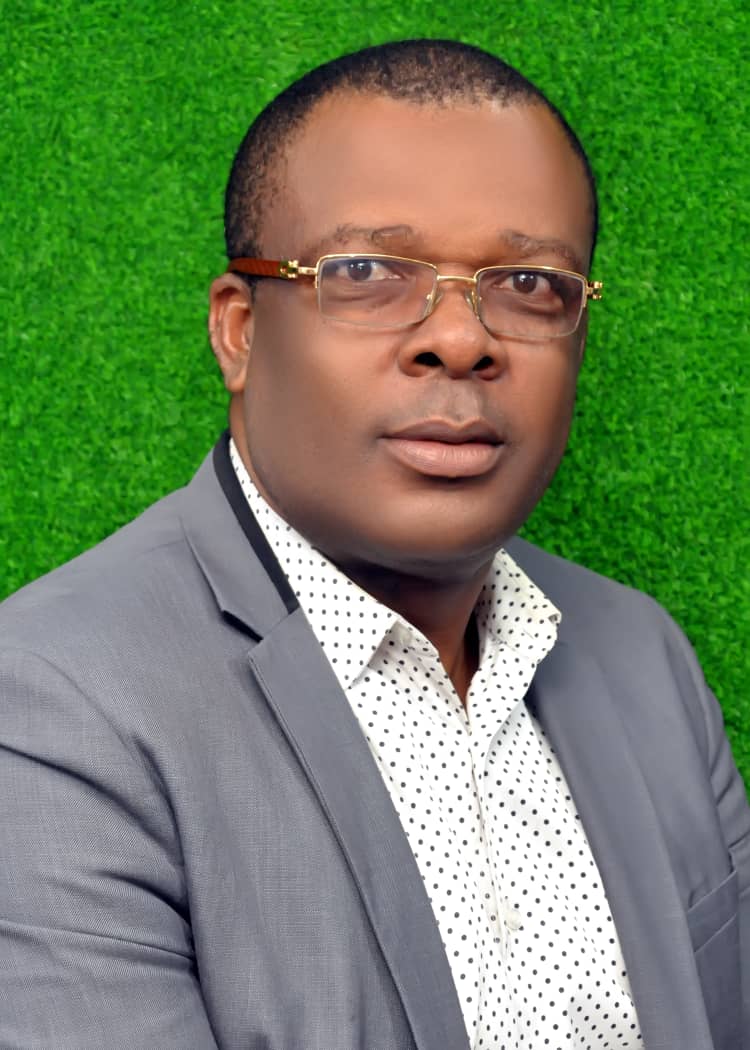
Dr Mbamalu, a Jefferson Journalism Fellow, member of the Nigerian Guild of Editors, and Media Consultant, is the publisher of Prime Business Africa

Dr. Marcel Mbamalu is a distinguished communication scholar, journalist, and entrepreneur with three decades of experience in the media industry. He holds a Ph.D. in Mass Communication from the University of Nigeria, Nsukka, and serves as the publisher of Prime Business Africa, a renowned multimedia news platform catering to Nigeria and Africa's socio-economic needs.
Dr. Mbamalu's journalism career spans over two decades, during which he honed his skills at The Guardian Newspaper, rising to the position of senior editor. Notably, between 2018 and 2023, he collaborated with the World Health Organization (WHO) in Northeast Nigeria, training senior journalists on conflict reporting and health journalism.
Dr. Mbamalu's expertise has earned him international recognition. He was the sole African representative at the 2023 Jefferson Fellowship program, participating in a study tour of the United States and Asia (Japan and Hong Kong) on inclusion, income gaps, and migration issues.
In 2020, he was part of a global media team that covered the United States presidential election.
Dr. Mbamalu has attended prestigious media trainings, including the Bloomberg Financial Journalism Training and the Reuters/AfDB Training on "Effective Coverage of Infrastructural Development in Africa."
As a columnist for The Punch Newspaper, with insightful articles published in other prominent Nigerian dailies, including ThisDay, Leadership, The Sun, and The Guardian, Dr. Mbamalu regularly provides in-depth analysis on socio-political and economic issues.