 Elsie Udoh
Nigeria’s banking sector showed remarkable strength in 2024.
Seven leading banks posted combined profits of N4.2 trillion despite tough economic conditions. These top Nigerian banks continue to shape the financial market of West Africa’s largest economy as we move into 2025.
Join our WhatsApp ChannelThese record profits raise important questions for customers, investors, and the Nigerian economy. Let’s discuss the profits made by these banks and what it means for you.
Nigeria’s Most Profitable Banks in 2024
1. Zenith Bank Plc
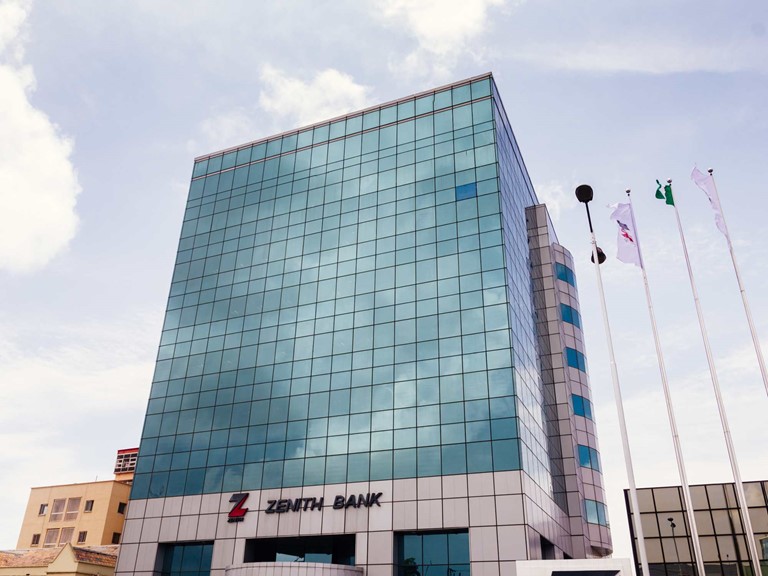
Zenith Bank maintained its position as one of Nigeria’s banking powerhouses, recording a substantial profit of N676.95 billion for the 2024 financial year.
This represents a significant increase from previous years, cementing the bank’s reputation for consistent performance even during challenging economic periods.
The bank’s success can be attributed to diversifying revenue streams, enhancing digital banking, and managing risks effectively. This proves its strong fundamentals and adaptability in Nigeria’s volatile economy.
2. United Bank for Africa (UBA)

UBA posted an impressive N654.86 billion profit in 2024.
The bank’s pan-African strategy has continued to pay dividends, with its operations across multiple African countries contributing significantly to its bottom line.
The UBA earnings represent one of the strongest performances in the sector.
UBA grew through successful expansion, better operational efficiency, and an increasing customer base. The bank’s continental approach has proven particularly effective in mitigating country-specific risks.
3. Guaranty Trust Holding Company (GTCO)

GTCO earned N590.31 billion in 2024.
This proves the effectiveness of its holding company structure adopted in recent years. The GTCO profit figures show its continued dominance as one of the top Nigerian banks 2025 will watch closely.
The company’s strong performance stems from innovative product offerings, strategic investments in technology, and the expansion of non-interest income sources.
4. FBN Holdings Plc

First Bank’s holding company achieved N502.95 billion in profits.
This marks a major milestone in its recovery strategy. FBN Holdings has bounced back impressively after facing challenges in previous years.
The group improved through successful restructuring, better credit risk management, and a focus on high-growth sectors.
5. Access Holdings Plc

Access Holdings earned N501.08 billion in 2024. Like GTCO, its holding company structure helped expand across various financial service segments.
The group grew through strategic acquisitions, market expansion, and digital transformation investments.
6. Stanbic IBTC Holdings

Stanbic IBTC Holdings recorded N225.52 billion in profits. The company performed well across banking, asset management, and pension administration.
The holding company benefits from its diverse business model, strong governance, and strategic positioning.
7. Fidelity Bank Plc

Fidelity Bank earned N123.82 billion in 2024. Though smaller than other banking giants, Fidelity’s performance impresses given its focused approach and smaller market share.
The bank succeeds through targeted customer segments, operational efficiency, and strategic positioning in retail and SME banking.
Fidelity shows that mid-sized banks can achieve significant profits through focused strategies.
READ ALSO: Five Reasons Why Dangote Remains Africa’s Richest Billionaire
What Drove These Record Profits?
Several key factors led to these exceptional performances:
1. Favorable Foreign Exchange Environment
CBN’s forex market reforms created profit opportunities.
Banks generated substantial income from foreign exchange transactions, and many banks recorded large gains after the naira’s depreciation and stabilisation.
2. High-Yield Government Securities
Banks benefitted from high-interest government securities in 2024.
The high monetary policy rate allowed banks to invest in Treasury bills and bonds with attractive returns and minimal risk.
The high-interest environment created a windfall for financial institutions, causing some government securities to yield up to 30%.
3. Digital Transformation Dividends
Investments in digital banking infrastructure over recent years began yielding substantial returns in 2024.
Digital channels reduced operational costs while simultaneously increasing transaction volumes and associated fees.
4. Effective Cost Management
Despite inflationary pressures, many of these banks implemented robust cost-containment measures that maintained or improved their cost-to-income ratios.
Automation, process optimisation, and strategic staffing helped maintain operational efficiency despite challenging economic conditions.
5. Growth in Fee-Based Income
As traditional interest income faced challenges from selective lending approaches, banks increasingly focused on growing their fee-based revenue streams.
Charges from electronic transfers, account maintenance, and value-added services contributed significantly to overall profitability.
What These Record Profits Mean For You
For Bank Customers
1. Potential Service Improvements
The substantial profits should enable banks to invest in improved service delivery, more innovative products, and enhanced digital platforms.
Customers may benefit from more intuitive mobile apps, faster transaction processing, and expanded self-service options.
2. Possible Increase in Fees
Record profits might not lead to lower banking costs. Instead, banks may maintain or increase certain charges, especially for premium services.
3. More Competitive Products
With substantial profit buffers, banks may compete more aggressively for customers.
This could mean better interest rates on savings, innovative credit offerings, and enhanced loyalty programmes.
For Investors
1. Enhanced Dividend Potential
The record profits position these banks to potentially offer attractive dividends to shareholders.
Historical patterns suggest that Nigerian banks with strong profit performances typically return significant value to investors through dividends.
2. Stock Value Appreciation
Banking stocks may rise as profit figures influence investor sentiment.
The banks’ proven resilience could drive increased interest in banking equities.
3. Sustainable Growth Indicators
Diverse profit sources suggest sustainable growth for these institutions. Investors can take comfort in the banks’ ability to thrive despite challenging economic conditions.
For the Broader Economy
1. Enhanced Financial Intermediation
Stronger capital positions help banks fulfil their financial intermediation roles better.
This could increase lending to productive sectors, although high interest rates may still limit credit growth.
2. Financial System Stability
The substantial profits strengthen Nigeria’s financial system.
Well-capitalised banks can absorb economic shocks and maintain operations during difficult periods.
3. Tax Revenue Generation
These profits contribute significantly to government revenues.
With a 30% corporate tax rate, these seven banks alone would contribute over N1.2 trillion to government coffers.
Conclusion
The record profits posted by these seven Nigerian banks in 2024 demonstrate the sector’s resilience and adaptability amid challenging economic conditions.
The impressive GTCO profit and strong UBA earnings highlight their continued dominance among the top Nigerian banks 2025 will feature.
For customers, these profits could translate to improved services and innovative products, though potentially at maintained or increased costs. Investors may benefit from attractive dividends and potential stock appreciation, while the broader economy gains from enhanced financial system stability.
However, for these profits to contribute meaningfully to Nigeria’s economic development, banks must balance profitability with their fundamental role of financial intermediation.

Elsie Udoh is an SEO content writer who specialises in writing engaging stories that resonates with diverse audiences. She studied mass communication at the Lagos State University.