 Emmanuel Ochayi
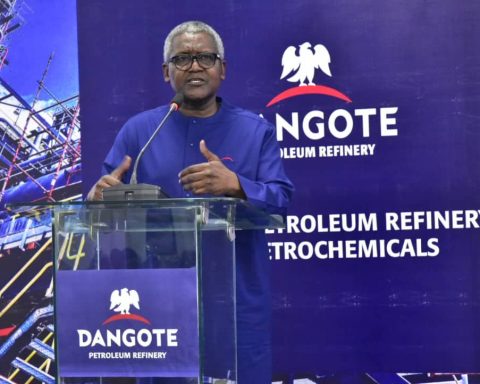
The importation of petrol into Nigeria has seen a significant drop recently, marking a shift in the country’s fuel supply landscape. According to a report by S&P Global Commodity Insights, the first two weeks of October revealed a steep decline in petrol imports as the Dangote Refinery ramped up its production.
This development has not only implications for local supply but also affects petrol prices across the nation.
Join our WhatsApp ChannelDecline in Petrol Imports
Data from S&P Global Commodities highlights a dramatic decrease in petrol import activities. In the week ending October 6, only 280,400 barrels of gasoline were imported into Nigeria via a single vessel. This figure is a stark contrast to the weekly average of 1.3 million barrels recorded in August. The following week, imports were marginally higher, with a reported 290,567 barrels shipped from Antwerp to Lagos.
As one industry analyst pointed out, “This represents a significant drop in the flow of petrol into Nigeria, a trend we have not seen before.” The total number of cargo shipments has decreased sharply, with only two shipments reported in October compared to twelve in both August and September.
The Role of Dangote Refinery
The surge in production from the Dangote Refinery is the primary reason behind this decline in petrol imports. The refinery, which has a capacity of 650,000 barrels per day, aims to meet local fuel demand and eventually export to neighboring countries. The full operational capacity of the refinery is expected to change how Nigeria approaches its petrol supply.
“The Dangote Refinery is a game changer,” said a trade source. “With its local production capabilities, Nigeria can reduce its reliance on imports significantly.” The refinery’s production has already begun, with petrol retail prices initially set between N850 and N900 per litre.
Deregulation of the Downstream Sector
The reduction in petrol imports coincides with the federal government’s move to deregulate the downstream sector. Previously, the Nigerian National Petroleum Company (NNPC) Limited was the sole off-taker of petrol from the refinery. Now, with the authorization for petroleum marketers to lift petrol directly from the Dangote Refinery, the government aims to cut costs associated with fuel subsidies.
However, this deregulation has come with challenges. Retail prices have risen from approximately N998 to N1,030 per litre since the NNPC no longer controls the supply. “While deregulation is necessary, it is important to ensure that fuel remains affordable for the average Nigerian,” commented a local marketer.
READ ALSO: Petrol Import Dropped By 13.77% In 2023 – NBS
Concerns Over Fuel Deficits
Despite the optimism surrounding the Dangote Refinery, traders are still wary of a potential fuel deficit. One trader noted, “If the new refinery does not meet domestic demand, we could face significant shortages.” The speculation that the refinery might only fulfill 25% of the country’s needs adds to these concerns.
“There is currently no schedule for gasoline coming from Europe to Nigeria,” the trader continued. “The country may need to look to other markets to fill the gap.”
The Future of Nigeria’s Fuel Supply
As Nigeria navigates this transition in its petrol import landscape, the implications are vast. With the Dangote Refinery positioned to meet local demand, the country might reduce its dependence on imported petrol. However, as the refinery ramps up production, it remains crucial to monitor how it will affect fuel prices and supply stability.
Industry experts believe that this shift could lead to a more sustainable fuel supply model for Nigeria. “If the Dangote Refinery can meet its projected production levels, we may see a stabilization of fuel prices in the long run,” said an energy analyst.
The decline in petrol imports signifies a transformative phase for Nigeria’s fuel supply chain, primarily driven by the operations of the Dangote Refinery. While this marks a positive step towards self-sufficiency, it also brings challenges that need careful navigation. Ensuring that petrol remains affordable while increasing domestic production will be key to securing a stable energy future for Nigeria.
With ongoing developments in the country’s oil industry, the coming months will be critical in determining the long-term impact of reduced petrol imports and the role of the Dangote Refinery in shaping Nigeria’s energy landscape. The nation’s fuel supply may finally be on a path toward greater independence, but vigilance will be essential to ensure that these changes benefit all Nigerians.

Emmanuel Ochayi is a journalist. He is a graduate of the University of Lagos, School of first choice and the nations pride. Emmanuel is keen on exploring writing angles in different areas, including Business, climate change, politics, Education, and others.