Prime Business Africa
…END Fund moves in with fresh programmes to save more lives
There are concerns that the recent announcement by the UK Foreign and Commonwealth Development Office (FCDO) to eliminate its funding for global neglected tropical disease (NTD) programmes would negatively affect more tham 100 million people across 22 African countries.
Join our WhatsApp ChannelNTDs are a group of parasitic, viral, and bacterial infections that affect more than 1.7 billion people worldwide. Africa represents 40% of NTD global burden. The diseases include intestinal worms and river blindness, among others, that perpetuate a cycle of poverty, sickness and suffering.
It is believed that NTDs impede growth and development, resulting in absenteeism for school-aged children, and prevent adults from participating in the workforce.
Scaling down on NTD funding can make vulnerable communities even more susceptible to the diseases and imperil the significant progress made.
But the END Fund, which has, over the years, committed to ending five of the most common NTDs has provided a response to what Eloine Barry of the Africa Media Agency (AMA) described as “an ongoing crisis.”
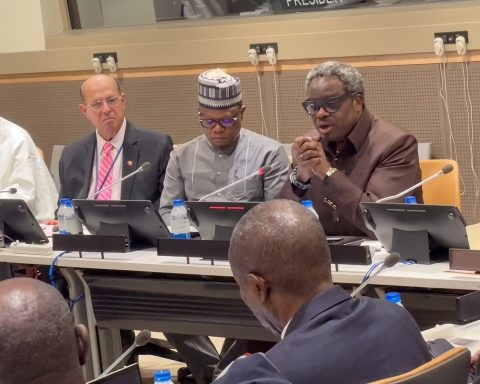
Th END Fund is hosting an urgent convention on June 1 to discuss how African leaders, in particular, can galvanize a groundswell of action to respond to the need of the continent.
“This is an opportunity for African leadership to chart a more sustainable way forward in this new chapter of ending preventable diseases and building resilient health systems,” a statement from the organisation said.
“The global NTD sector is most definitely in a crisis as a result of the FCDO’s decision, and we know that this decision will affect the lives of hundreds of millions of people. Despite the challenge, we can use this present moment to effectively coordinate with relevant stakeholders around the logistical, political, and financial ripple effects of this new reality. We can also leverage the power of collaborative philanthropy in helping donors know where, when, and how to channel their support to have the biggest impact,” said Ellen Agler, CEO of the END Fund.
The FCDO decision has highlighted a central fact: philanthropy, the private sector, NGOs, and governments must work collaboratively to address global health crises and ensure more sustainable efforts to pursue disease elimination across the continent. The loss of a single major funding source should not threaten the significant progress made in tackling diseases like NTDs. This convening will give cross-sector stakeholders a chance to explore alternative funding mechanisms for achieving disease elimination goals. It will also facilitate a timely conversation on what this means for drugs that have already been delivered to countries preparing for mass drug administration campaigns. In an effort to sustain the progress made in ending NTDs, it is critical that local and global stakeholders build back better by finding innovative and sustainable solutions to bridge the immediate gap in global NTD funding.
The END Fund is the only private philanthropic initiative solely dedicated to ending the five most common neglected tropical diseases (NTDs), which affect more than 1.7 billion people globally. It efficiently puts private capital to work, advocating for NTD programs that are innovative, integrated, and cost-effective. It facilitates strong partnerships with the private sector and has supported national disease control programs in 31 countries.
Since its founding in 2012, with its partners, the END Fund has provided over 1 billion donated treatments worth over $1.3 billion, over 43,000 surgeries for people suffering from the effects of the advanced stages of elephantiasis and trachoma, and trained more than 3.4 million people.

Prime Business Africa is a business, economy and policy news platform founded in 2021 by veteran journalist and media scholar, Dr Marcel Mbamalu, after he left The Guardian as Editor.
Dr Mbamalu, who serves as Founder and Publisher, set up Prime Business Africa to deliver sharp, data-driven reporting on Nigeria’s markets, trade, investment, and governance trends for decision-makers, entrepreneurs, and policy leaders.
He also writes The Bottom Line, a backpage column for Punch Newspaper every Thursday.
Under his leadership, Prime Business Africa combines deep newsroom experience with a focus on accountability journalism, aiming to bridge information gaps between Africa’s private sector and the global economy.