 Emmanuel Ochayi
Nigeria, Africa’s largest oil producer, faced a significant revenue setback as a consequence of consecutive declines in crude oil production.
The country lost about N720 billion due to a slump in production during February and March 2024.
Join our WhatsApp ChannelAccording to data from the Organisation of Petroleum Exporting Countries (OPEC), Nigeria’s crude oil output, excluding condensates, experienced a downward trend for the second straight month.
In March, production dropped to 1.231 million barrels per day (mbpd), down from 1.322 mbpd in February. This decline resulted in a total loss of 5,866,000 barrels of crude oil over the two months.
The drop in production led Nigeria to miss its crude oil production benchmark set in the 2024 budget, which aimed for 1.78 mbpd, inclusive of condensates.
OPEC’s report revealed that Nigeria lost approximately 105,000 barrels of crude oil daily in February compared to January’s production levels. This amounted to a total loss of $254.19 million or N351.78 billion, considering February’s average exchange rate and crude oil prices.
READ ALSO: Israel-Iran Crisis: Crude Oil Prices Will Rise Above $90 Per Barrel If Conflict persists- Analysts
Similarly, in March, the country lost 91,000 barrels per day, resulting in a revenue loss of $240.94 million or N368.23 billion based on March’s average exchange rate and crude prices.
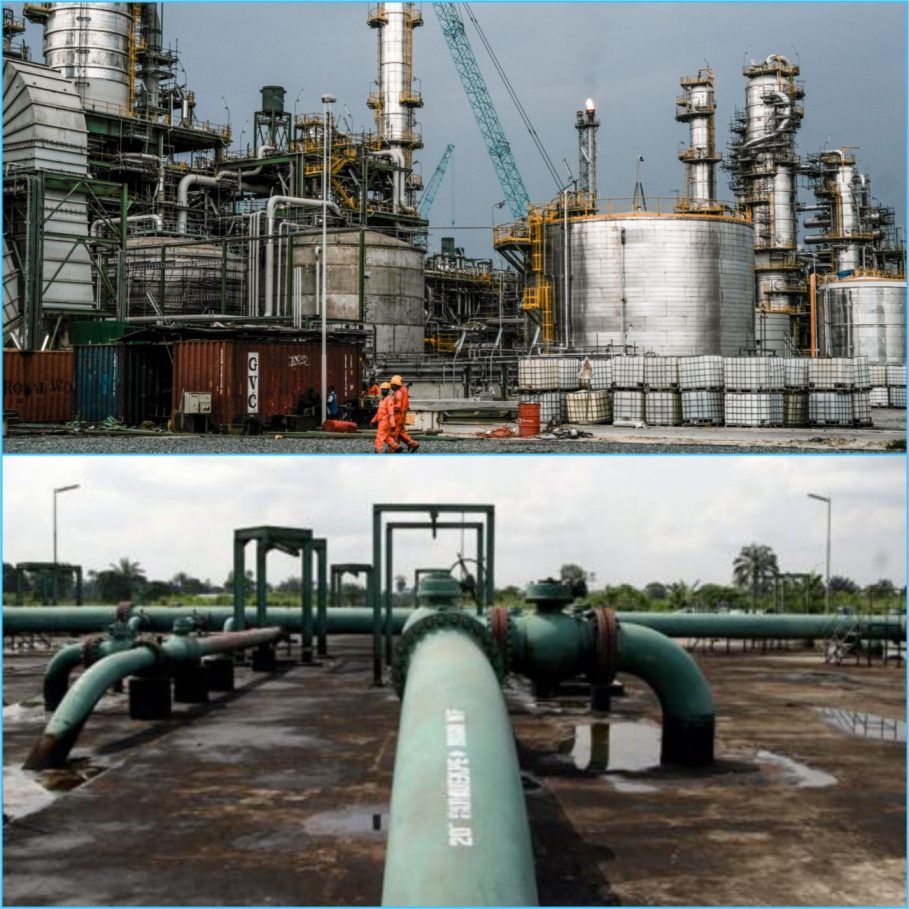
The decline in production was attributed to challenges faced by the Trans Niger Pipeline, a critical component of Nigeria’s oil infrastructure. Issues on this pipeline, compounded by maintenance activities conducted by oil companies, contributed to the production shortfall.
Heineken Lokpobiri, Nigeria’s Minister of State for Petroleum Resources (Oil), addressed concerns regarding the production shortfall, assuring the public that measures were being taken to address the situation. He attributed the decline to issues on the Trans Niger Pipeline and maintenance activities by oil companies but assured that these issues had been resolved, with production expected to return to previous levels soon.
Lokpobiri highlighted ongoing efforts to fix the Trans Niger Pipeline and stated that production could potentially reach up to 1.7 million barrels per day once these challenges were addressed. Additionally, the Federal Ministry of Petroleum Resources was actively working on policy evolution to maximize the utilization of available wells, aiming to stabilize revenue and fulfill commitments outlined in the 2024 budget for essential infrastructure development.
The decline in crude oil production underscores the vulnerability of Nigeria’s oil-dependent economy to infrastructure challenges and operational disruptions. As the country works towards resolving these issues and ramping up production, it seeks to mitigate revenue losses and ensure economic stability amidst fluctuating global oil markets.

Emmanuel Ochayi is a journalist. He is a graduate of the University of Lagos, School of first choice and the nations pride. Emmanuel is keen on exploring writing angles in different areas, including Business, climate change, politics, Education, and others.