 Izuchukwu Okosi
Nigeria is struggling to cope with the effects of economic downturn caused by inflation because there is lack of a monitoring system and adequate security measures to stem the problem.
This is the view of Professor Joseph Nnanna, Chief Economist at the Development Bank of Nigeria (DBN) on Wednesday.
Join our WhatsApp ChannelNnanna made reference to other countries like the United States, the United Kingdom, and parts of Europe where such drawbacks are adequately checked.
“When you look at the price of wheat for instance and the supply chain, we have the ability to bring wheat to make bread, cereals, and so on.
“But you will find out that our bakeries are closing shops simply because they can’t meet up, they can’t make ends meet,” Professor Nnanna stated while featuring on Channels Television programme on Wednesday.
READ ALSO: Nigeria’s Food Inflation Hits 31.5% With Headline Rate At 27.3% In October
“The prices of importation have gone up and that cut across the economy. So if we say inflation in the US, UK, and Europe in general is going down, it simply means that the monitoring policy is more effective and they have the mechanism to bring inflation down. They are more responsive, they have a transition mechanism in place.
“In Nigeria, we know that the Central Bank of Nigeria (CBN) hiking rates started late, and when they did, it was the 25% base and so on.
“That is the problem but beyond that, we have to look at what is happening within the economy.
Nnanna admitted that the state of insecurity in Nigeria is much better than what it was a couple of years ago, which has aided oil production, but more still needs to be done in that regard.
“On one hand, when the Organization Of Petroleum Exporting Countries (OPEC) came out with the report that Nigerian is number one in terms of oil production, for the first time it shows that we are curbing the issue of banditry and terrorism and all those bottlenecks in Niger Delta. It’s a good sign.
“But we still have to curb insecurity within the country. There’s flooding that needs to be resolved. All these things affect food production,” Nnanna stressed.
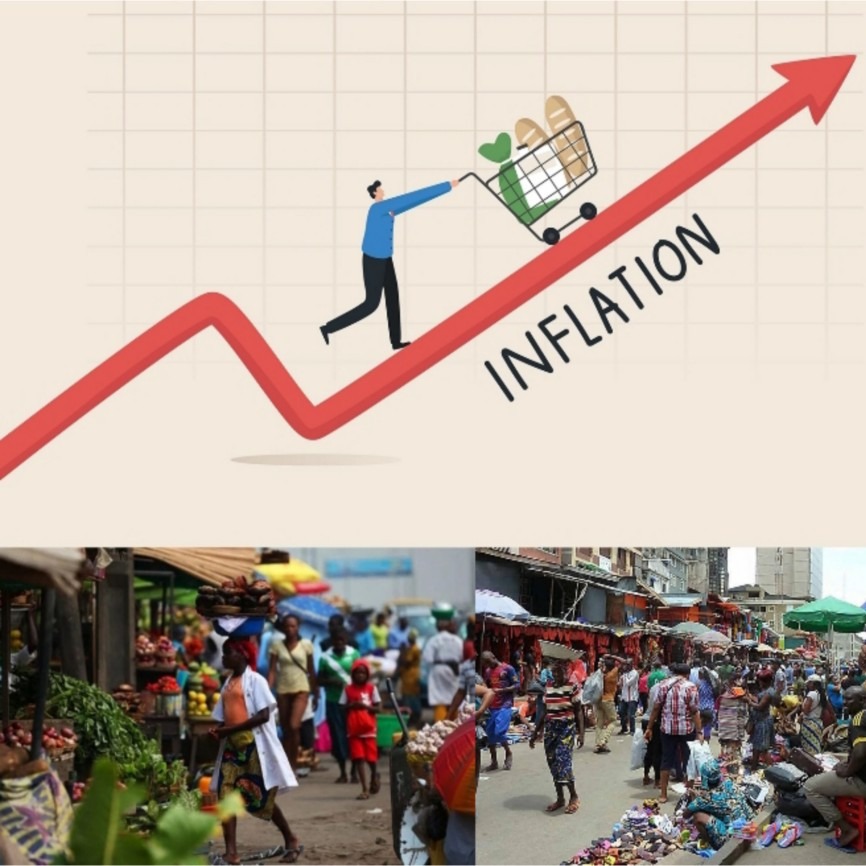
Inflation in Nigeria has continued to bite harder with the petroleum subsidy removal that has seen prices of goods including fuel costs rise in recent months.

Izuchukwu Okosi is a Nigerian sports and entertainment journalist with two decades of experience in the media industry having begun his media journey in 2002 as an intern at Mundial Sports International (MSI) and Africa Independent Television (AIT), owners of Daar Communications Plc.