Fakoyejo Olalekan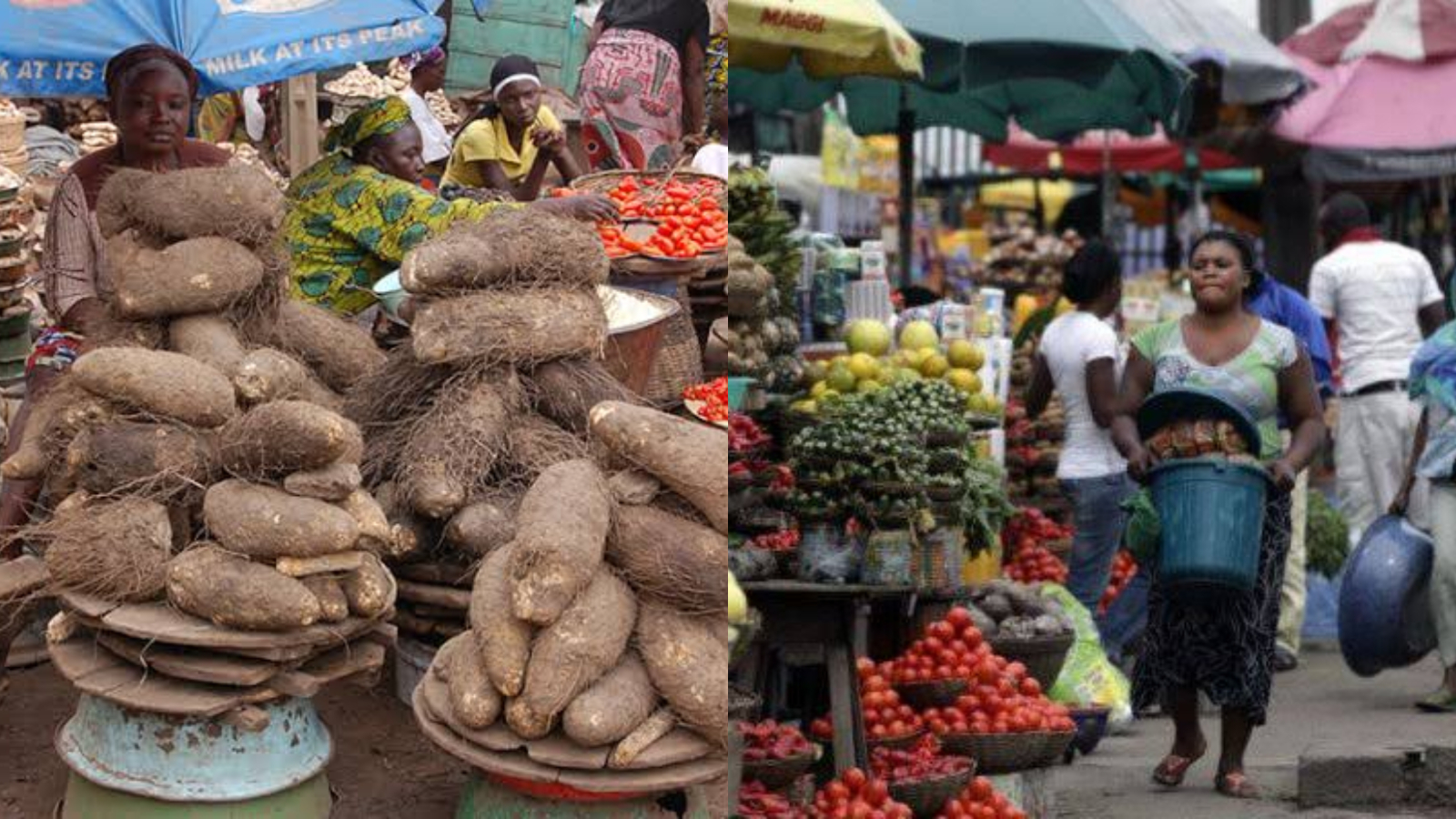
Food prices in Nigeria skyrocketed by 5.6% in June, as Nigeria’s inflation soared to 18.6%, the highest level in five years, reflecting the government’s inability to curb rising cost of living in Nigeria.
The National Bureau of Statistics (NBS) revealed the inflation rate for last month on Friday, following the release of the Consumer Price Index (CPI), which tracks prices of consumer goods and services purchased by Nigerian households.
Join our WhatsApp ChannelBreakdown of the inflation rate in Nigeria
In May, Nigeria’s inflation stood at 17.71%, but reported a month-on-month increase of 5.02% to settle at 18.6% in June. This level was last seen in January 2017, that is 65 months ago.
Data obtained from the NBS disclosed that urban inflation rate grew to 19.09% during the period under review, rising against the 18.35% reported in the same period of June 2021. The rural inflation rate also surge to 18.13%, in contrast to the 17.16% of June 2022.
Meanwhile, the increase in food inflation was driven by Bread and cereals, Food products, Potatoes, yam, and other tubers, Meat, Fish, Oil and fat, and Wine, as the rate moved up from May’s 19.5% to 20.6% in June 2022.
An Abuja resident, who would not want to be named, told Prime Business Africa (PBA) that cost of yam has indeed hit the rooftops, beyond the reach of an average Nigerian civil servant.
”Yes ooh, na true; starvation is staring the nation in the face, as the Pioneers put it in their immortal Reggae tune,” he said. ”Yesterday (Thursday July 14) at a local restaurant inside the the Mgbuka spare parts market in the Apo axis, pounderd yam was not on offer. Reason: Yam has become so expensive, according to the owner of the business; people are not willing to afford pounded yam. They instead settle for such swallows as semovita, wheat, akpu otr garri. Pounded yam is a no-go area.”
Yet, another resident said: ”Layman explanation: You buy garri N300; you now buy kerossene N700 to boil water for the garri.”
Nigerian states with highest and lowest inflation rates
- Prime Business Africa understands that the top three states with the highest items inflation rate are Bauchi with 21.99%, Kogi 21.37% and Ebonyi 20.73%.
- The lowest inflation rate for all items are Adamawa 16.14%, Sokoto 16.31% and Jigawa 16.37%
- States with highest food inflation rate are Kwara State 25.62%, Kogi 24.81%, and Rivers 24.34%
- The slowest food inflation rate by state are Jigawa 16.01%, Sokoto 16.24%, and Kaduna 17.75%