Editor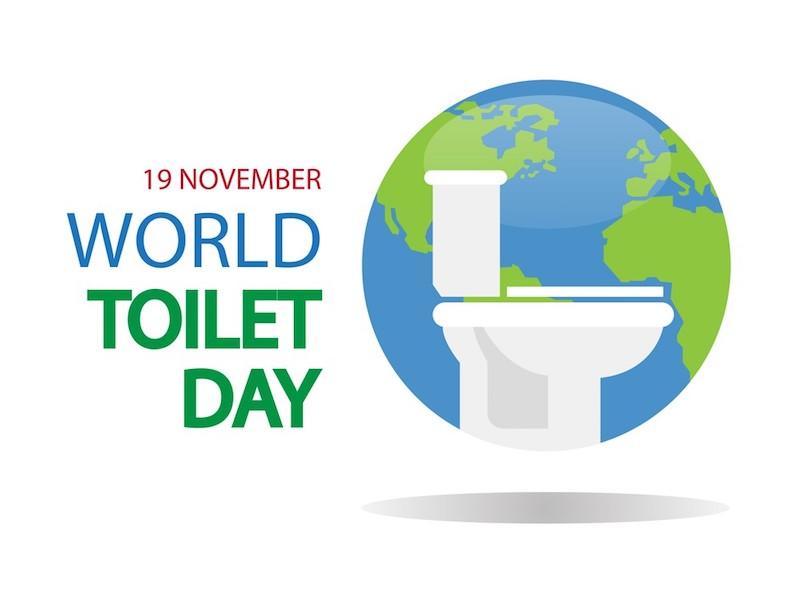
Chief, UN Children’s Fund (UNICEF), Maiduguri Field Office, Dr Clement Adams, has urged federal and state governments to expand toilet and water services to actualise the 2025 target of ending open defecation.
Join our WhatsApp ChannelAdams gave the charge on Friday, at a one-day media dialogue in Maiduguri, Borno to commemorate the 2021 “World Toilet Day” with the theme: “Valuing Toilets”.
The media dialogue is organised by the Child Rights Information Bureau (CRIB), Federal Ministry of Information and Culture in collaboration with UNICEF.
Adams said that in spite of the 2025 deadline given by the Federal Government to achieve the target, efforts made so far did not show readiness to reach the target.
He also disclosed that Nigeria is still among the countries with the highest number of persons practicing open defecation globally.
With at least 47 million Nigerians practicing open defecation, the Federal Government in 2018, declared a state of emergency on Water, Sanitation, and Hygiene (WASH).
This declaration led to the launch of an Open Defecation Free (ODF) campaign aimed at creating a road map toward ending open defecation in Nigeria by 2025.
The campaign is tagged: “Clean Nigeria: Stop Open Defecation”.
Findings from the 2018 WASH National Outcome Routine Mapping covering 36 states and the FCT show that about 47 million Nigerians practice open defecation and at least 87,000 children under age five die annually from diarrhoea.
Adams said that to achieve the 2025 target, federal and state governments need to construct more toilets and water sources, especially in local communities including markets and public places.
“At a time when the Federal Government has made a call to make the country ODF through the nationwide “Clean Nigeria Campaign”, it is important that all states adopt this in a mission mode.
“To become open defecation-free by 2025, practical steps towards ending open defecation by constructing more toilets and water sources, especially among the most vulnerable population need to be pursued.
“National and state budgets must also reflect the importance of toilets and water sources to the health of children and the workforce.
“We must prioritise investments in physical and human resources and scale up existing programmes targeting expansion of toilet and water services,” Adams said.
He said that since 2018, UNICEF had supported state government in the North-East with the construction of 4,752 toilets and the rehabilitation of 2,976 across Internally Displaced Persons (IDP) camps and communities.
Adams said that some of UNICEF’s efforts to help end open defecation also included building the capacity of state departments and LGAs to deliver WASH services to communities and IDPs.
“Every day is toilet day. I used one this morning and I am sure most of you did too. But across the country, at least 46 million Nigerians lack access to toilets and protection against diseases and possible deaths.
“With about 16 per cent of the population in Borno and 32 per cent in Yobe states still practicing open defecation, all stakeholders must review existing mechanisms.
“This is to improve access to toilets, reduce disease outbreaks and tackle malnutrition in conflict-affected children.
“We must put our money where our mouth is. It is more cost-effective to construct more toilets for conflict-affected people than to treat endless flares of cholera outbreaks with unnecessary mortalities,” Adams said.
Adams said that the inability of children and communities to access toilets is costly as it robs children of their health, leads to death from cholera complications and forces children to lose protection.
The UNICEF chief assured that the agency would continue to work with the Rural Water, and Sanitation Agency (RUWASSA) and state governments in the North-East.
Adams said that the agency’s work would help to promote the well-being of conflict-affected people and safeguard the rights of children to life and good health.
The “Clean Nigeria: Stop Open Defecation” campaign is spearheaded by the Federal Ministry of Water Resources with support from UNICEF, Nigeria WASH, Inter-ministerial agencies, civil society partners, and the private sector.