 Dr Gabriel Uguru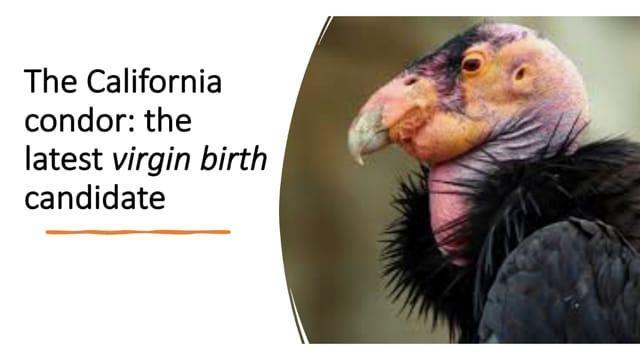
Parthenogenesis or “virgin birth” occurs in the absence of sperm fertilisation when an egg develops into an embryo during reproduction. This type of asexual reproductive process is common amongst some invertebrates (insects) and lower plants, and even in some vertebrates like fishes, amphibians and reptiles. Domesticated turkeys and chickens separated from males have been reported to undergo parthenogenesis producing healthy offsprings!
The famous occurrence of parthenogenesis in human is the Biblical account of the “virgin birth” of Jesus Christ. But since this has not been proven and is scientifically impossible and, as this current report is not a “faith” article, we shall not concern ourselves with the Biblical account of “virgin birth”, suffice it to say that yes, parthenogenesis does occur in humans as well but it only results in tumours.
Join our WhatsApp ChannelParthenogenesis is thought to be an evolutionary event caused by adaptation to environmental conditions, especially in situations where certain factors make it impossible for sexual reproduction to occur. An egg can replicate by mitosis (division of two identical daughter cells) to produce diploid cells (i.e. cells containing two sets of chromosomes) which are essentially clones of the single parent.
READ ALSO: WTO Boss’s Son, Uchechi Iweala, Breaks Medical Record In US
An article published in the 28 October 2021 edition of the Journal of Heredity showed that vultures have now made the honours list of those “blessed” with virgin births.
The California condors (or vultures) were in the brink of extinction with only 22 birds left in existence as at 1982. But over the years, wildlife conservationists adopting “captive” breeding of healthy male and female condors, and releasing the birds back into the wild have helped increase the condor numbers to more than 500.
When scientists analysed the DNA of the birds born since the breeding programme started, they were surprised to find two male birds who were genetically different from their supposed fathers. All their DNAs were those of their mothers! Parthenogenesis occurring in such sexually reproducing species is thought to be due in part to endomitosis (i.e. the doubling of the chromosomes without such a division also occurring in the cell nucleus. This gives rise to cells having more than two sets of chromosomes or polyploidy cells).
The birds were aged almost two years and eight years, respectively, when they died. The vulture that aged less than two years was released in the wild but could not integrate successfully with other wild birds and so had little food to eat, consequently it died prematurely. The other older vulture was small in stature weighing not more than 7 kg as against 8-10 kg, the average weight of other vultures. It was never released in the wild but shared an enclosure with a female bird to whom he never showed any sexual interest. He was submissive and had a deformity diagnosed as scoliosis (i.e. sideways curvature of the spine). It had a foot injury and digit amputation, and died of systemic complications. This was of no surprise as parthenogens in snakes have been reported to also have deformities. The most striking thing was that both females who gave birth to the two birds normally were sexually active and had reproduced sexually both before and after the parthenogenesis.
The parthenogens died prematurely when compared to the average age of 60 years for California condors. Most parthenogenesis occurrences in birds result in arrested development and parthenogenesis always happens in the absence of male companionship. But this is the first time that a bird parthenogenesis would occur without involving segregation from males.
The reason for this unusual reproduction occurring in vultures is not immediately apparent. But speculation is centred on adaptation to environmental cues. The near extinction of the condo population might have encouraged parthenogenesis. For the simple reason that it is difficult to spot parthenogenesis without in-depth genetic analysis, the process might be more common in nature than is known.