 Prosper Okoye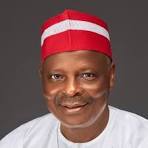
When two Republican members of the U.S. Congress introduced a bill this month to punish those they say are responsible for the killing of Christians in Nigeria, they did more than escalate Washington’s pressure on Africa’s most populous nation.
They also pulled a prominent Nigerian opposition politician into a bitter international debate — and ignited fears at home that the country’s already fragile religious balance could be pushed closer to breaking point.
The Nigeria Religious Freedom and Accountability Act of 2026, filed Feb. 10, calls for visa bans, asset freezes and other sanctions against former Kano State governor Rabiu Musa Kwankwaso, two Fulani cattle breeders associations and what the bill describes as “Fulani ethnic nomad militias.”
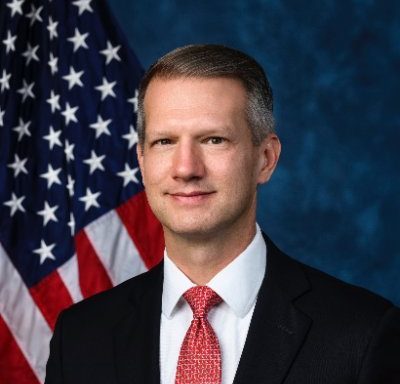
Join our WhatsApp ChannelIts sponsors, Reps. Riley Moore of West Virginia and Chris Smith of New Jersey, accuse those named of being responsible for “severe violations of religious freedom” against Christians, including killings, kidnappings and church burnings. The bill estimates that between 50,000 and 125,000 Christians were killed in Nigeria between 2009 and 2025. In Nigeria, the reaction was swift and angry.
An Opposition Figure in the Crosshairs
Kwankwaso, a Muslim and leader of the opposition New Nigeria People’s Party, is one of the country’s best-known political figures. He has served two terms as governor of Kano State, was Nigeria’s defence minister and later a senator. He has no known links to armed groups or militias. Yet his name appears in the U.S. legislation alongside groups accused of mass violence.
“We received the information with shock,” said Mansur Kurugu, a spokesman for Kwankwaso’s political movement, Kwankwasiyya, speaking to a local newspaper. “We are studying what that means, then at a later time, we shall issue a proper statement.”
The NNPP went further, calling the bill a politically motivated smear.
“We see this development as a contrived action against an innocent man who clearly has no relationship with religious fundamentalism in Nigeria,” said Ladipo Johnson, the party’s national publicity secretary. “His record is there in the public domain. It is advisable for people to investigate such things properly before reaching such conclusions.”
A Political Clash Goes Global
Analysts say Kwankwaso’s inclusion may stem from a political clash with U.S. lawmakers earlier this year.
In January, Kwankwaso publicly criticised former President Donald Trump’s decision to redesignate Nigeria a “Country of Particular Concern” for religious freedom violations. He called the move an oversimplification of Nigeria’s security crisis and urged the United States to provide intelligence and technology support instead of public condemnation.
Moore responded on social media, accusing Kwankwaso of being “complicit in the death of Christians.”
Journalism professor and political analyst Farooq Kperogi called the accusation “unfair and erroneous.” Some Nigerians on social media suggested the move was retaliation for Kwankwaso’s refusal to join the ruling All Progressives Congress.
Violence With Many Causes
Nigeria is roughly split between Christians and Muslims, but the violence that has ravaged large parts of the country for more than a decade does not fit neatly into religious categories.
In the Middle Belt — a region of farms, grazing land and contested borders — deadly clashes between Fulani herders, who are mostly Muslim, and farming communities, many of them Christian, have surged. Climate change, desertification, shrinking grazing routes and long-standing land disputes all play a role.
International Christian advocacy groups such as Open Doors and the U.S. Commission on International Religious Freedom describe much of the violence as religious persecution. Open Doors reported that more than 5,000 Christians were killed in Nigeria in 2024 alone.
Nigerian analysts, however, warn that labelling all such attacks as “jihadist” risks obscuring their economic and environmental roots — and may make the conflict harder to resolve.
Washington’s Hard Line
Moore has made no attempt to soften the bill’s religious framing.
“The U.S. is a Christian nation,” he wrote on X. “As such, we must stand with persecuted Christians around the world.”
Smith said Nigeria’s government had shown “blatant denial” while allowing “unprecedented levels of violence.”
The bill builds on Trump’s 2025 redesignation of Nigeria as a Country of Particular Concern, a label first applied in 2020, lifted under President Joe Biden, and later restored. It would require annual State Department reports on Nigeria’s progress in prosecuting attackers and repealing blasphemy laws, and could trigger reviews of U.S. security assistance.
It also urges Washington to coordinate pressure with allies such as Britain, France and Hungary.
Risk to U.S.–Nigeria Relations
One of the most controversial provisions calls for Fulani militias to be designated a Foreign Terrorist Organization, a step that Nigerian analysts say could strain security cooperation between Washington and Abuja.
Nigeria relies on U.S. support in its fight against Boko Haram and the Islamic State West Africa Province, which have waged a 16-year insurgency in the country’s northeast.
Political commentator Mahdi Shehu accused the United States of trying to divide Nigeria along religious lines, calling the bill hypocritical given America’s own history of foreign interventions.
On social media, Nigerians voiced alarm. Some warned that congressional hearings were already portraying Nigeria as a “flashpoint for persecution,” while others feared the bill could invite extremist influence from abroad.
Also Read:
Dachomo Warns of ‘Christian Genocide’ Under Tinubu-Shettima, Bashir Defends Democratic Process
Kano Governor Resigns from NNPP as Kwankwaso Hits Back
US Congress Criticizes Nigeria Over Inaction Amid Alleged Christian Persecution
What Comes Next
The legislation must still pass through Congress. If approved, it could reshape U.S.–Nigeria relations and escalate international scrutiny of Nigeria’s internal conflicts.
For Kwankwaso, it adds an unexpected foreign dimension to his political future. His supporters say the move could even boost him at home, casting him as a victim of outside interference.
One thing is already clear: a bill written thousands of miles away has forced Nigerians to confront a painful question — whether global pressure will help end the country’s violence, or deepen the divisions that fuel it.
Prosper Okoye is a Correspondent and Research Writer at Prime Business Africa, a Nigerian journalist with experience in development reporting, public affairs, and policy-focused storytelling across Africa