Prime Business Africa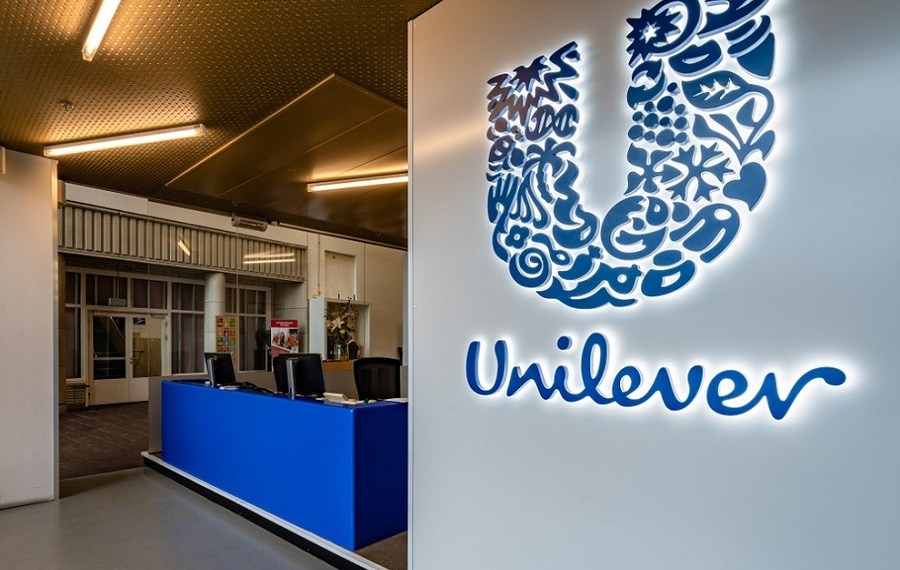
In the first quarter (Q1) of 2026, Unilever recorded an impressive revenue growth, however, the company’s inability to curtail exchange loss is overshadowing its topline performance and impacting bottom line.
Unilever recorded a 25.96 percent growth in revenue in Q1 2026, after generating N59.17 billion, compared to the N46.97 billion turnover earned in the corresponding period in 2025.
Join our WhatsApp ChannelAlso, cost of sales, according to the company, increased to N32.55 billion in Q1 2026, surpassing the N28.12 billion expended by Unilever in the first quarter in 2025, indicating an increase of 15.76 percent.
Prime Business Africa’s (PBA) analysis showed that revenue growth outstripping that of cost of sales led to the impact of expenses on turnover to drop to 55.02 percent in Q1 of this year, after gulping 59.86 percent of revenue in Q1 2025.
This gave Unilever a 41.17 percent growth in gross profit, which increased to N26.61 billion between January and March 2026, compared to the N18.85 billion recorded by the company in the first quarter of last year.
During the period under review, Prime Business Africa gathered that selling and distribution expenses increased by 9.50 percent year-on-year, from N1.71 billion to N1.87 billion.
However, Unilever saw a double-digit increase in marketing and administrative expenses, which grew from N9.08 billion in Q1 2025 to N13.57 billion in the first three months of this year, representing an increase of 49.38 percent.
In addition, Unilever revealed that other income segment was N295.23 million between January and March 2026, up by 283.96 percent when compared to the N76.89 million reported in the same period last year.
According to the company’s financial statement, operating profit also witnessed an increase during the review period, rising by 38.87 percent to N11.48 billion, above the N8.26 billion achieved in 2025 first quarter.
Unilever experienced an improvement in its finance income, which grew to N3.33 billion in the first three months of this year, surpassing the N2.65 billion recorded in the corresponding period of 2025, reflecting a growth of 25.70 percent.
However, the company’s earnings was impacted by a 713.66 percent year-on-year increase in finance cost, as it surged from N172.06 million to N1.4 billion, driven majorly by exchange loss difference on bank accounts, which accounted for N1.23 billion.
Consequently, the manufacturer’s net finance income declined to N1.93 billion in the first quarter of 2025, below the N2.48 billion secured in Q1 2025, indicating a decrease of 21.95 percent.
Despite the decline, Unilever’s bottom line grew by 24.82 percent to N13.42 billion during the period under review, exceeding the N10.75 billion recorded in the first quarter of last year.
Also, the company filed N6.40 billion as income tax for the period between January and March 2026, compared to the N5.2 billion incurred in Q1 2025, representing an increase of 23.11 percent.
Additionally, Unilever’s profit after tax (PAT) went up by 26.42 percent in the first quarter of this year, as the company reported N7.01 billion, against the N5.55 billion recorded in the first quarter in 2025.
For press releases, tip-offs, and corporate information, call 08149575257 (hotline), email: [email protected] and [email protected]

Prime Business Africa is a business, economy and policy news platform founded in 2021 by veteran journalist and media scholar, Dr Marcel Mbamalu, after he left The Guardian as Editor.
Dr Mbamalu, who serves as Founder and Publisher, set up Prime Business Africa to deliver sharp, data-driven reporting on Nigeria’s markets, trade, investment, and governance trends for decision-makers, entrepreneurs, and policy leaders.
He also writes The Bottom Line, a backpage column for Punch Newspaper every Thursday.
Under his leadership, Prime Business Africa combines deep newsroom experience with a focus on accountability journalism, aiming to bridge information gaps between Africa’s private sector and the global economy.