Editor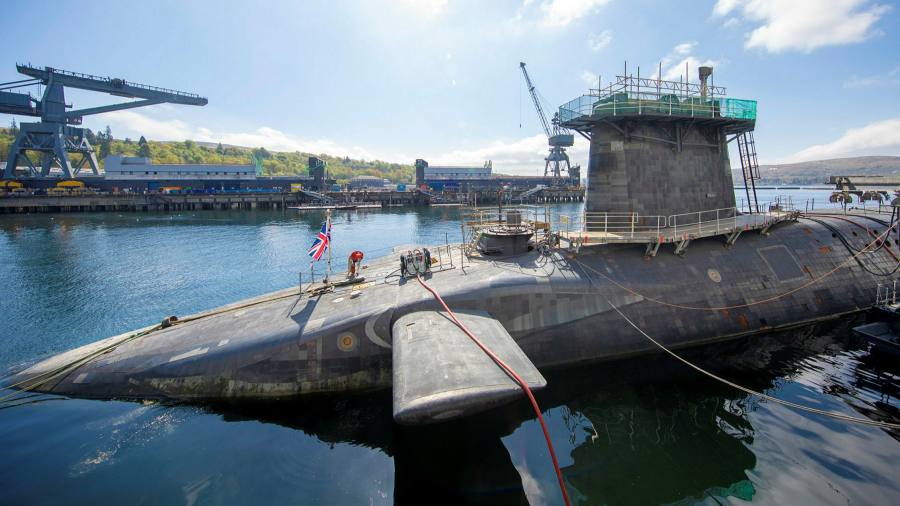
THERE are indications that the United Kingdom has contingency plans to move its Trident nuclear submarine bases from Scotland to the US or France in readiness for possible Scottish independence.
It is also considering seeking a long-term lease for the Royal Navy’s nuclear bases at their current location in Faslane and Coulport on the west coast of Scotland.
Join our WhatsApp ChannelIt is believed that this will create a British territory within the borders of a new Scotland.
The government of the UK has been in fierce opposition to Scottish independence but a potential break-up of the union now stares it in the face. The governing Scottish National party that returned to power in May pledged to ban all nuclear weapons in an independent Scotland.
Senior officials were quoted as saying that “the contingency plans for moving the submarines underscored the difficult choices ministers will have to make for Britain’s nuclear programme after a potential Scottish breakaway.”
Those properly briefed on the plans were also quited as saying the exercise was carried out recently, although a senior government official disputed the timing.
The exercise concluded that the Trident programme would have three options after the formation of an anti-nuclear independent Scottish state. The first of the options could be to relocate the bases elsewhere on the British Isles, with the Royal Navy’s Devonport base cited as the most likely location to replace Faslane.
Royal United Services Institute think-tank’s analysis ahead of the 2014 Scottish independence referendum had estimated the relocation costs of such move to hit between £3bn and £4bn.
The second option, it was gathered, would be to move the UK’s nuclear bases to an allied country like the United States.
A defence expert was said to have cited Kings Bay Georgia, the base for the US Navy’s Atlantic fleet of Trident submarines as possible location. Officials also considered moving the United Kingdom’s submarine base to Île Longue in Brittany, France.
But Moving the bases to the US appears the preferred option of the UK Treasury, as it would require less capital investment, officials were quoted as saying. Locating Trident outside Britain could be difficult politically since it could be viewed as threat to defence sovereignty.
Prime Business Africa gathered that the third option would be “to negotiate a new British Overseas Territory within an independent Scottish state that would contain the Faslane and Coulport bases…” An insider had dubbed the Faslane and Coulport bases as “Nuclear Gibraltar.”
Sequel to negotiations on Scotland exit from the UK, Whitehall would hope to lease the land for “several decades”, according to officials.
The Ministry of Defence has been quoted as saying there were “no plans” to move the nuclear deterrent away from Scotland. It noted its contribution to the security and economy of Scotland and communities across the UK.
“The UK is strongly committed to maintaining its credible and independent nuclear deterrent at HM Naval Base Clyde, which exists to deter the most extreme threats to the UK and our Nato allies,” Financial Times quoted a spokeswoman as saying, although the MoD did not comment on contingency plans for a Scottish breakaway.
The Scottish government itself has said it firmly opposed possession, threat and use of nuclear weapons and was “committed to the safe and complete withdrawal of Trident from Scotland.”
Tom Plant, director of proliferation and nuclear policy at Rusi, had described the contingency planning as “sensible,” but noted major drawbacks on all options.
Moving the base to another country, such as the US, would also have operational repercussions.
“If we’re sharing infrastructure [with the US] then there are presumably intersections with US submarine patrol timings,” Plant said, explaining that the logistics of deploying the deterrent would have to be negotiated with the hosting nation.
“Once the boats are at sea, they would still be as independent as they are now. But once they’re tied up alongside, they would no longer be independent.”
The “Nuclear Gibraltar” option — whereby the bases remain in an independent Scotland but are leased back by the UK — is preferred by some in Whitehall as the most realistic as it would not require immediate changes to the Trident programme following Scottish independence.
But any negotiation to retain the bases for an extended period after independence would be likely to face strong opposition from the SNP, which has for decades made nuclear disarmament one of its core policies.
Before the 2014 referendum, the SNP said an independent Scotland would prioritise the speediest possible safe removal of nuclear weapons. “This would be with a view to the removal of Trident within the first term of the Scottish parliament following independence,” it said.
Experts have suggested that this timetable could be softened as part of wider discussions between an independent Scotland and the UK over issues such as currency arrangements, responsibility for the national debt and management of the new border between England and Scotland.
However, a long-term or extraterritorial compromise on Trident would go against the fundamental principles of Scottish first minister Nicola Sturgeon, who joined the Campaign for Nuclear Disarmament as a teenager even before she joined the SNP.
“Like many other Scots, I’ve always been appalled that Britain’s nuclear arsenal has been kept in my backyard,” Sturgeon wrote in 2019.