 Amanze Chinonye
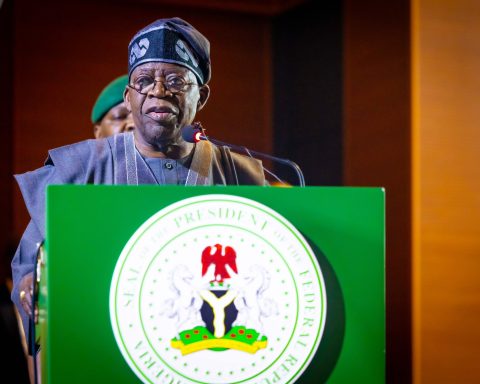
President Tinubu on Friday presented a ₦58.18 trillion 2026 Appropriation Bill to a joint session of the National Assembly, pledging stricter budget discipline, deeper economic reforms and a renewed focus on shared prosperity for Nigerians, Prime Business Africa reports.
The budget, themed “Budget of Consolidation, Renewed Resilience and Shared Prosperity,” was presented in fulfilment of the President’s constitutional obligation and reflects what he described as a defining moment in Nigeria’s ongoing economic reform journey.
Addressing lawmakers, Tinubu said the 2026 fiscal plan is designed to consolidate the gains of reforms undertaken over the last two and a half years, stabilise the economy, rebuild confidence and move the country “from survival to growth.”
Join our WhatsApp ChannelHe acknowledged that the reform process has been difficult for many Nigerians, noting that families and businesses have faced pressures and disruptions. However, the President insisted that the sacrifices were necessary and would ultimately deliver lasting stability and inclusive prosperity.
READ ALSO : Tinubu Nominates New Oil Regulators as Ahmed, Komolafe Resign
Tinubu’s Ambassadorial Nominees Breeze Through Senate Amid Tensions Over Screening
The President pointed to recent macroeconomic improvements as evidence that the reforms are yielding results. He disclosed that Nigeria’s economy grew by 3.98 per cent in the third quarter of 2025, up from 3.86 per cent in the same period of 2024. Inflation, he said, has moderated for eight consecutive months, declining to 14.45 per cent in November 2025 from 24.23 per cent in March.
He also cited improved oil production, expanded non-oil revenue through enhanced tax administration, rising investor confidence, and external reserves that have climbed to about $47 billion a seven-year high providing over 10 months of import cover.
Reviewing the 2025 budget performance, Tinubu said ₦18.6 trillion in revenue, representing 61 per cent of the target, and ₦24.66 trillion in expenditure, or 60 per cent of the target, had been recorded as of the third quarter of 2025. Capital releases remained low, he explained, due to the emphasis on completing priority 2024 capital projects during the transition period.
Looking ahead, the President declared that 2026 would mark a turning point in fiscal discipline.
“Let me be clear: 2026 will be a year of stronger discipline in budget execution,” Tinubu said, adding that he has issued directives to key economic officials to ensure the budget is implemented strictly in line with approved details and timelines.
He said revenue performance is expected to improve through the new National Tax Acts and ongoing reforms in the oil and gas sector, while government-owned enterprises will be compelled to meet their revenue targets through full digitisation and tighter accountability frameworks.
According to the budget estimates, expected total revenue for 2026 stands at ₦34.33 trillion, while projected expenditure is ₦58.18 trillion, including ₦15.52 trillion for debt servicing. Recurrent non-debt expenditure is put at ₦15.25 trillion, capital expenditure at ₦26.08 trillion, and the budget deficit at ₦23.85 trillion, representing 4.28 per cent of GDP.
The assumptions underpinning the budget include a crude oil benchmark of $64.85 per barrel, oil production of 1.84 million barrels per day, and an average exchange rate of ₦1,400 to the dollar.
Tinubu said the 2026 budget is guided by four core objectives: consolidating macroeconomic stability, improving the business and investment environment, promoting job-rich growth and poverty reduction, and strengthening human capital development while protecting vulnerable Nigerians.
Key sectoral allocations include ₦5.41 trillion for defence and security, ₦3.56 trillion for infrastructure, ₦3.52 trillion for education, and ₦2.48 trillion for health.
“These priorities are interlinked,” the President noted, stressing that security, infrastructure, education and health are essential to unlocking investment, productivity and sustainable growth.
The appropriation bill will now be subjected to legislative scrutiny, with the National Assembly expected to debate and pass the budget in the coming weeks.

Amanze Chinonye is a Staff Correspondent at Prime Business Africa, a rising star in the literary world, weaving captivating stories that transport readers to the vibrant landscapes of Nigeria and the rest of Africa. With a unique voice that blends with the newspaper's tradition and style, Chinonye's writing is a masterful exploration of the human condition, delving into themes of identity, culture, and social justice. Through her words, Chinonye paints vivid portraits of everyday African life, from the bustling markets of Nigeria's Lagos to the quiet villages of South Africa's countryside . With a keen eye for detail and a deep understanding of the complexities of Nigerian society, Chinonye's writing is both a testament to the country's rich cultural heritage and a powerful call to action for a brighter future. As a writer, Chinonye is a true storyteller, using her dexterity to educate, inspire, and uplift readers around the world.