 MARCEL MBAMALU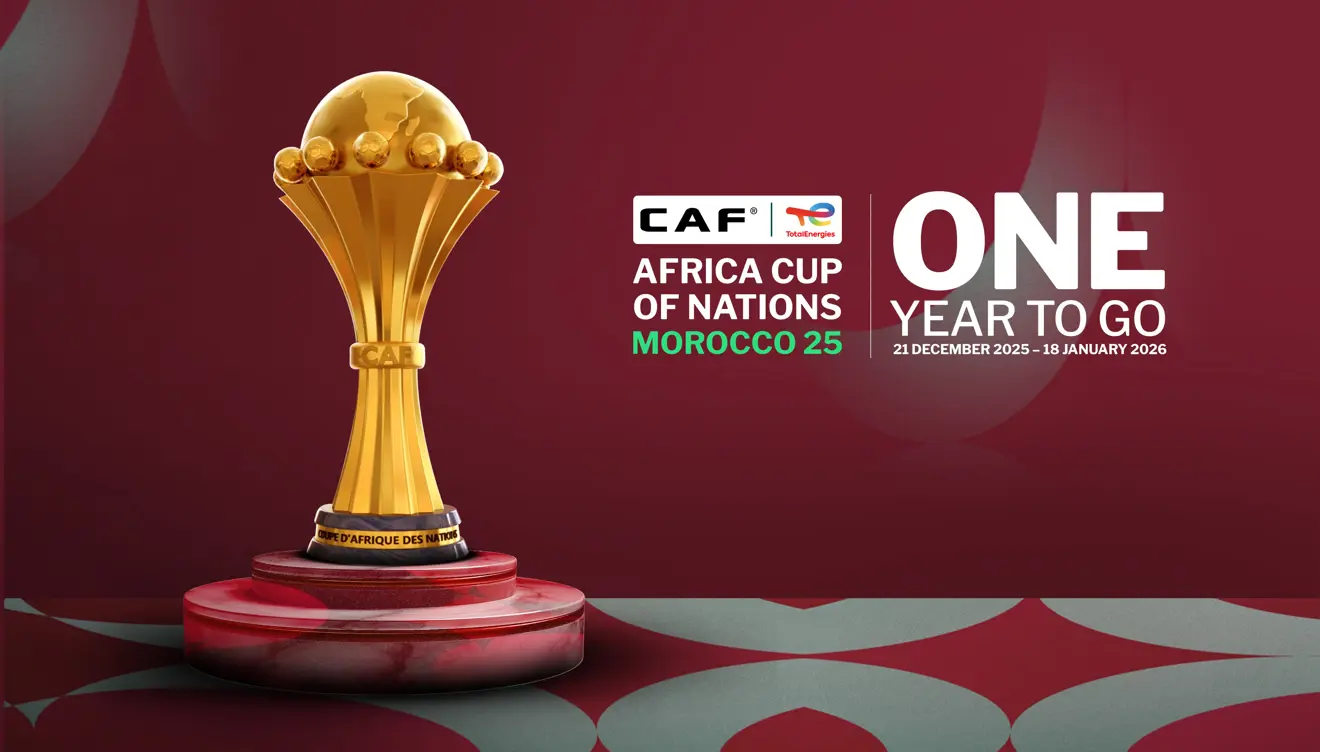
The Raw Goat in Morocco 2025: AFCON and the Burden of Crude Representation
By Dr Marcel Mbamalu
From its inception in 1957 under Egypt’s Abdel Aziz Abdallah Salem to its current status under South Africa’s Patrice Motsepe, the Confederation of African Football (CAF) has evolved into the second-largest football confederation in the world. The Africa Cup of Nations is no mere regional contest. It is a dramatic, physical, and unpredictable tournament where 54 nations collide, legends emerge, and tactical skill meets raw passion.
The 2025 edition in Morocco, from 21 December 2025 to 18 January 2026, has delivered precisely that. Traditional powers like Egypt, Nigeria, and Algeria navigated the group stages with authority, while hosts Morocco and Senegal confirmed their stature. Every pass, chant, and surge down the flank reaffirms AFCON as a world-class tournament, rich in history and vibrant in the present.
Join our WhatsApp ChannelAFCON, goats and image
AFCON is more than just football. It is a continental mirror. CAF’s campaigns, including Our AFCON, Our Pride, celebrate African unity, yet some DStv-produced promos feature recurring motifs: bleating goats, heavy drums, rustic soundscapes, and staged newspaper readings, raising questions about representation versus stereotype. These choices stand in stark contrast to the elegance, speed, and tactical sophistication unfolding in the stadiums.
From Football to Framing
Representation in AFCON really matters because perception shapes value. The way a tournament is marketed signals to sponsors, global audiences, and future fans what to expect. Promotional imagery acts as a lens through which Africa, its players, and its football are seen.
Although Defenders of the goat imagery insist it represents “G.O.A.T.” (Greatest of All Time), a popular sports acronym now entrenched in global football discourse. On paper, the metaphor appears clever. In practice, however, symbolism does not exist in abstraction. It is filtered through culture, history, and power relations. When meaning travels across unequal representational terrains, it often mutates.
When I first heard an excellent player being called a goat, it took time to understand why, since a person referred to as a goat in Africa often implies someone lacking awareness or discernment, suggesting incompetence or an inferiority complex rather than skill or brilliance.
In the African semiotic space, the goat is not a neutral animal. It signifies subsistence, ritual sacrifice, rural livelihood, and survival economies. When such imagery is paired with persistent bleating, the metaphor collapses. The sound does not suggest excellence or greatness; it evokes rusticity and pre-modern life. Unlike an image, sound bypasses intellectual negotiation. It works subliminally, shaping atmosphere rather than argument. The bleat becomes not playful irony but aural primitivism.
In Addition to the Goat
In the DSTV promo, goat does not stand alone, crucially. It appears within a wider aesthetic pattern. Drumbeats dominate the soundscape: predictably and repetitively. Characters are shown reading physical newspapers, as though Africa’s engagement with information must be anchored in analogue nostalgia. The setting often leans towards earth, dust, crowd chants, and elemental noise rather than architecture, systems, or technology.
None of these elements is inherently problematic. Drums are African. Newspapers are legitimate media artefacts. Animals are part of cultural life. The problem lies in their cumulative orchestration. Together, they produce a single, flattened narrative: Africa as primordial, instinctive, earthy, and perpetually pre-modern. This is what makes the representation crude, not offensive in a loud sense, but reductive in a subtle one.
What about UEFA and others?
Within the past cycle of tournaments, distinct patterns have emerged in the way continental bodies communicate the drama, unity and cultural identity of their flagship events. Nowhere is this contrast sharper than between CAF’s AFCON and the likes of UEFA’s European Championship, CONMEBOL’s Copa América, and CONCACAF’s Gold Cup.
Across the world, continental confederations use video campaigns not just to announce tournaments, but to shape identity, pride, and anticipation. UEFA’s European Championship promo clips, for instance, are cinematic and symbolic.
Recent 202425 campaigns blend kinetic typography, sound design, and abstract visuals to emphasise unity, passion, and heritage. They rarely rely on literal cultural props; instead, design and narrative speak globally, signalling a tournament that is both European and universal. The EURO 2028 brand film utilises animated soundwaves and kinetic typography tied to fans’ collective voice, positioning football as a universal language. There, we encounter orchestral scores, aerial cityscapes, LED-lit stadia, data analytics, tactical boards, slow-motion biomechanics, and digitally enhanced graphics. Modernity is assumed. Sophistication is implicit. Systems are foregrounded.
It may be unfair to compare the EURO with AFCON due to differences in scale and resources. But CONMEBOL’s Copa América campaigns foreground the continent’s fiery energy. Marquee players, packed stadiums, and iconic national imagery create a spectacle of heroism, competition, and continental pride. Music and editing amplify the drama, projecting football as a shared cultural heartbeat. The tournament often features global stars, while sponsorships from brands like Puma highlight region-inspired design and ambassador involvement.
READ ALSO: Falcons Storm Morocco, Begin Final Shape Up For WAFCON 2024
CONCACAF’s Gold Cup takes a different route. Its promotional content emphasises national pride, fan passion, and community connection. Cameras linger on celebrating crowds, explosive goals, and intimate moments of joy. The message is clear: this is football that belongs to its people but remains accessible to a wider North American and Caribbean audience. Official clips focus on action, star moments, and fan emotion, often packaged as highlight reels such as Unstoppable Goals.
African football, by contrast, is often celebrated only when wrapped in folklore. Bleating goats, heavy drumbeats, and staged newspaper readings anchor the tournament in local culture and claim to celebrate African identity. Yet many, both inside and outside the continent, read these motifs as clumsy or reductive. Talent must be raw, energy tribal, and excellence noisy. This is the familiar burden of representation: Africa may shine, but only within a narrow imaginative corridor.
These elements recur across multiple adverts and social media clips, forming a deliberate visual and aural pattern that favours cultural familiarity and rhythm over cinematic abstraction. While AFCON remains the second-largest confederation with world-class football, such promotional choices may limit international sponsorship and reinforce stereotypes of Africa as underdeveloped.
Since AFCON today operates on advanced infrastructure: global broadcasting, sports science, professional coaching, and transnational networks, reducing its aesthetic to goats, drums, and analogue props misaligns representation with reality. The problem is not cultural authenticity but symbolic laziness, repeating familiar tropes at the expense of Africa’s true complexity, undermining the tournament’s global cultural and commercial potential.
Returning to Pitch
In the end, it is the football that matters most. AFCON delivers pace, skill, and drama from precise passes to audacious strikes, amplified by the roar of the terraces. Africa’s game is world-class, electrifying, and compelling.
Yet the marketing has not matched this brilliance. Promotional campaigns that captured the tournament’s energy and sophistication could elevate AFCON to the global stage alongside UEFA and CONMEBOL. Representation should expand meaning, not confine it. Africa does not need to erase its traditions to appear modern, but its achievements should not be narrated through primordial shorthand.
AFCON deserves an aesthetic that reflects its reality: confident, structured, technologically embedded, and globally fluent. Until then, the goat will continue bleating, a reminder that misrepresentation persists even when the football itself soars.