 Etim Etim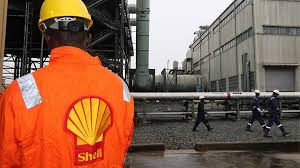
The announcement by the British energy giant, Shell PLC, that it is selling off its operations in Nigeria’s onshore oil and gas sector to a consortium of mostly Nigerian companies is a welcome opportunity for further indigenization of a sector that had long been dominated by foreigners.
The transaction bodes well for the industry because Nigerians’ ownership and operatorship of the oil fields will enable local solutions to be deployed to multiple issues peculiar to the Niger Delta. Opening up production with domestic expertise will have multiplier effects in the economy. In this essay, I will explain the various dimensions of the exit of Shell and how it is good for both the company and the country.
Join our WhatsApp ChannelREAD ALSO: Shell To End Nigerian Onshore Oil Operations, Seals $2.4bn Deal With Renaissance Africa Energy
I commend President Bola Tinubu for endorsing the transaction after a long delay due to his predecessor’s refusal to approve it. I congratulate the new Nigerian owners of the oil fields as I look forward to improved relations with the host communities.
Shell is selling off its subsidiary, Shell Petroleum Development Company Ltd (SPDC), which has operated in this country for close to a century, to a consortium of five companies, one foreign and four Nigerian-owned. The four are owned and managed by former Shell managers. The consortium, known as Renaissance Africa Energy Company Ltd (RAEC), is made up of ND Western; Aradel Energy; First E&P; Waltersmith and Petrolin. They are paying $2.4 billion for the acquisition, of which $1.3 billion would be paid immediately, and $1.1 billion, primarily relating to prior receivables and cash balances in the business, in a later date. In simple terms, the $1.3 billion is for the oil blocks, while the $1.1 billion is for the use of Shell’s pipelines and Forcados Terminal as well as the use of Shell’s offices and assets in Warri. The chief executive of Renaissance is Tony Attah, former CEO of Nigeria LNG. He leads a strong team of other shell veterans like Samuel Dossou-Aworet (representing ND Western/Petrolin Group); Abdulrazaq Isa (Waltersmith Group); Ademola Adeyemi-Bero (First E&P) and Gbite Falade (Aradel Energy).
But why is Shell quitting the onshore business? Onshore operations have been very problematic to SPDC for a long time. Vandalism of oil pipelines; the attendant oil spills and environmental degradation; community restiveness and now oil theft are the major problems. In addition, the company faced huge costly lawsuits from host communities and embarrassing campaigns from international environmental groups like Greenpeace. The killings of Ogoni 4 and Ogoni 12, including the hanging of Ken Saro-wiwa by the Sani Abacha junta in 1995, resulted in the worst moral nightmare and greatest PR disaster for Shell. The rising wave of oil theft was the last straw that broke the camel’s back, and so in 2012, the company initiated the exit process. We should also note that as far back as over 30 years ago, Shell had started developing its offshore deep-water production, the Bonga oil fields. So, selling off its onshore fields is part of a long-term business decision.
The beauty of this transaction is that Shell is loaning the Renaissance Consortium $1.2 billion to part-pay the $1.3 billion purchase price, and is also providing the Consortium additional finance of $1.3 billion to continue the development of the HA field – the shallow water oil block off Nembe area of Bayelsa State – which supplies gas to NLNG. “I reckon that Shell’s business strategy is to handover 100% of its onshore shallow-water oil fields, which provide the bulk of the feed gas to NLNG, to tested and trusted hands, and in addition, give them money to operate the oilfields too’’, says Engr. Ani Udott, a retired Shell veteran who is not involved in this transaction, but is quite knowledgeable about Nigeria’s oil industry. He added matter-of-factly: “When you have built a reputation of competence and the right rapport with the right people at influential positions, this type of favour lands on your lap. It is a good deal for Shell; and a good deal for the Renaissance guys.’’ This deal therefore saves the consortium from the huge headache of sourcing for funds, especially funds of this magnitude, which is one of the major problems indigenous producers continue to confront.
But make no mistake, Shell is not packing up and fleeing Nigeria as some people erroneously believe. It is only selling off one part of its business empire in the country. It is natural for multinational companies to sell off one of its subsidiaries for some strategic business reason. Recently, Union Bank sold off its UK subsidiary to Fidelity Bank because the new owners of Union Bank want to concentrate and grow within Nigeria.
Shell still has three main businesses in Nigeria. They are: SNEPCO (produces oil and gas in the deep-water Gulf of Guinea); Shell Nigeria Gas (provides gas to domestic industrial and commercial customers) and Daystar Power which provides solar power to industrial and commercial users across West Africa. In addition, Shell holds 25.6% stake in NLNG.
The acquisition of SPDC by RAEC has been a long and tedious process. Four Nigerian companies (Seplat, Heirs Oil & Gas; Sahara Energy and ND Western) first bided for it in 2021. As of June, last year, the Renaissance Group and Tony Elumelu’s Heirs Oil & Gas were serious contenders, but Renaissance’s track records, as I have outlined earlier, paid off for them. The fact that Renaissance is led by former Shell stars is also a strong factor.
This deal is coming at a very difficult time in the nation’s energy industry. Nigerians who acquired marginal oil fields many years ago are still struggling financially; many are yet to strike oil and are shackled with huge debt burdens. There are no new investments; technical skills are scarce and expensive and revenues are yet to be realized, yet the government is breathing down on their neck for royalty and tax. It is a tough business. But Renaissance is banking on the fact that they are inheriting very active wells and they are hoping to keep production costs far below SPDC’s.
Shell’s divestment from onshore and shallow-waters production is coming after Eni, ExxonMobil, Chevron and Equinor left. The fact that their assets are being acquired by Nigerians is an indication that our people are now ready to participate actively in the core business of oil exploration and production. But I am surprised that the Buhari administration had refused to approve the Shell-Renaissance deal, thus delaying it for a long time. President Tinubu is allowing the sale to proceed, apparently because he has a better understanding of business than his predecessor.