Chidiebere Onyishi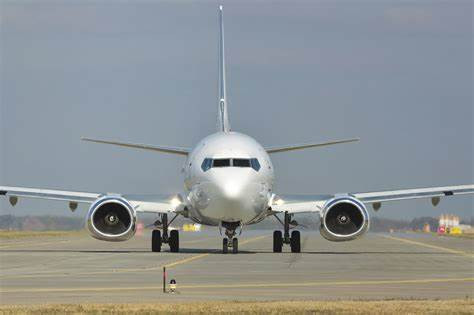
“Air Peace has had this kind of ground handlers hitting our aircrafts on more than 15 occasions, damaging our planes.
This is a brand new plane bought with over $85 million, and they damaged it. The thrust reversal of that engine is gone as I speak to you.” These were the words of Air Peace CEO, Mr Allen Onyema, after a NAHCO ground handling equipment damaged the Thrust Reversal Cowling of his brand new Embraer 195-E2 aircraft valued at over $85 million.
The repair cost of the damage is estimated at $3.5 million and it is alleged that this is the third such incident in a month for Air Peace.
Join our WhatsApp Channel
Airline operators in Nigeria have constantly carried many such burdens – some more frequent than the other, all in a bid to ensure seamless and safe air travels for its travelers.
The cost of these burdens, heavy as they are, are blamed on airline operators because travelers have no idea what these airlines face on the other side of the divide. Very recently, Nigerians voiced out their frustrations over the enormous hike in airfares – calling it an unwarranted exploitation by airline operators. Deservedly so it was, the prices are unaffordable per Nigerian standards when juxtaposed with the national minimum wage. It wrecked December travel plans for a lot of travelers and families.
READ ALSO : Ground Handling Equipment Damages Air Peace New Aircraft, Disrupts 9 Flights
NCAA Explains Damage To Air Peace New Aircraft, Disrupted Flight, Absolves Airline of Wrongdoing
However, underneath all these lies the silent milking of local airline operators, in the guise of taxes and duties. Nigerian airlines face what industry experts describe as “death by a thousand cuts” tax regime. Nigerian airlines reportedly pay over 54 different taxes and charges which accounts for 35% – 40% of total airfare costs – inherently making Nigeria the third most expensive country in Africa for aviation taxes.
The CEO of Air Peace revealed during an interview with Arise News that Nigerian airlines are heavily overburdened with taxes, levies and all manner of charges. He gave an instance that for a ticket of N350,000, only about N81,000 goes to the airlines while the rest are taken away in form of taxes.
United Nigeria Airlines CEO, Obiora Okonkwo made a similar claim sometime ago stating that Nigerian airlines face about 18 taxes per ticket, with up to 70% of fares going to the government. He equally added that operational costs are enormous, and loan rates hang between 25 -30%. Meanwhile, in other countries, it is between 2% – 7%.
The three headed sectors collecting taxes in the aviation industry are the Nigerian Civil Aviation Authority (NCAA), Federal Airports Authority of Nigeria (FAAN) and the Nigeria Airspace Management Agency (NAMA). Some of these taxes include: For the NCAA; 5% ticket sales charge on all tickets, 5% cargo sales charge, 5% import/5% export charges, registration and licensing fees, aircraft certification charges.
For FAAN; FAAN collects 18-21 separate charges including Passenger service charge, Landing fees, Parking fees, Fuel surcharge, Enroute charges, Ground handling fees, Utility charges and others.
For NAMA; Terminal navigation charges (20,000 – 25,000 naira), Overflight charges ($75-$195) for regional and international flights, Enroute navigation charges. This means that for an international flight departing Nigeria, passengers pay nearly $150 in various taxes and charges before even considering the base air fare.
There’s a new Advance Passenger Information System (APIS) $11.50 charge mandated on all international travelers (to & fro) by the Nigerian Civil Aviation Authority. This APIS Levy will run for 20 years (2045) and will generate nearly $1 billion for the Nigerian Civil Aviation Authority (NCAA)
These taxes in the long run may end up crippling the aviation industry. Over taxation has never helped any nation grow, instead it weakens the financial strength and exploits the very population it was meant to help. In addition to inflation and low minimum wage, Nigeria has many people in multi dimensional poverty – it makes absolutely nonsense taxing them any further. The airlines and passengers bear the brunt of this rascality, but guess who doesn’t – the government. FAAN, NCAA and NACA are not primarily revenue generating agencies, so why the obsession with trying to tax airline operators out of business. This has continued unabated despite repeated calls for action. The Managing Director of Overland Airways warned that such excessive levies risks stifling an industry central to Nigeria’s economic growth. Another Country Manager revealed to THISDAY that “they promised the $20 security levy would last just five years post-2010 underwear bomber scare, but here we are in 2025 still paying it. Nigeria is even catching up in providing critical security equipment compared to other countries despite special fees paid by passengers for security.” Invariably, industry consensus suggests there is no discernible security infrastructure procured with the original $20 security charge that has generated approximately $1.2 billion over 15 years.
The Nigerian government has to set its priorities right and answer critical questions on whether it exists to tax airline operators out of business or to improve the quality and overall look of the aviation sector. Fashionably so, Nigeria should follow in ECOWAS’ tax reduction footsteps, and abolish excessive taxes, reducing the percentage of the remaining few by a substantial margin. Notably, West Africa is almost 67% more expensive to fly in, than any other African region. ECOWAS Director of Transport, Chris Appiah, revealed that about 64-70% of air ticket prices in West Africa went to taxes and charges. Nigeria’s total revenue from aviation is estimated at about $480 million yearly.
For context, ECOWAS approved certain aviation tax reforms effective January 1, 2026. Ticket tax, Tourism tax, Solidarity tax and Foreign travel tax are to be abolished permanently, while passenger charges and security charges are to be reduced by 25%. Similarly, concerned Nigerians and industry experts have urged for a return to the 2020 aviation tax, which provided VAT exemptions and duty waivers. In addition, there should be a single figure airlines should pay – hence merging the 54 taxes into one single agency fee, and charging only for services rendered, rather than the absurd revenue generation taxes. Every necessary step and caution must be taken for the sustainability of airline business in Nigeria, and towards utmost regard to the peculiar nature of the aviation industry. If these airlines were to collapse, it will be felt in every nook and cranny, most especially the banking sector, and a further collapse of the economy.
It is imperative to note that airline operators should be protected and provided the best ease of doing business services their operations require. The aviation sector is very critical and must be handled with utmost diligence and professionalism, as little mistakes could turn out very catastrophic with dire consequences.