 Emmanuel Ochayi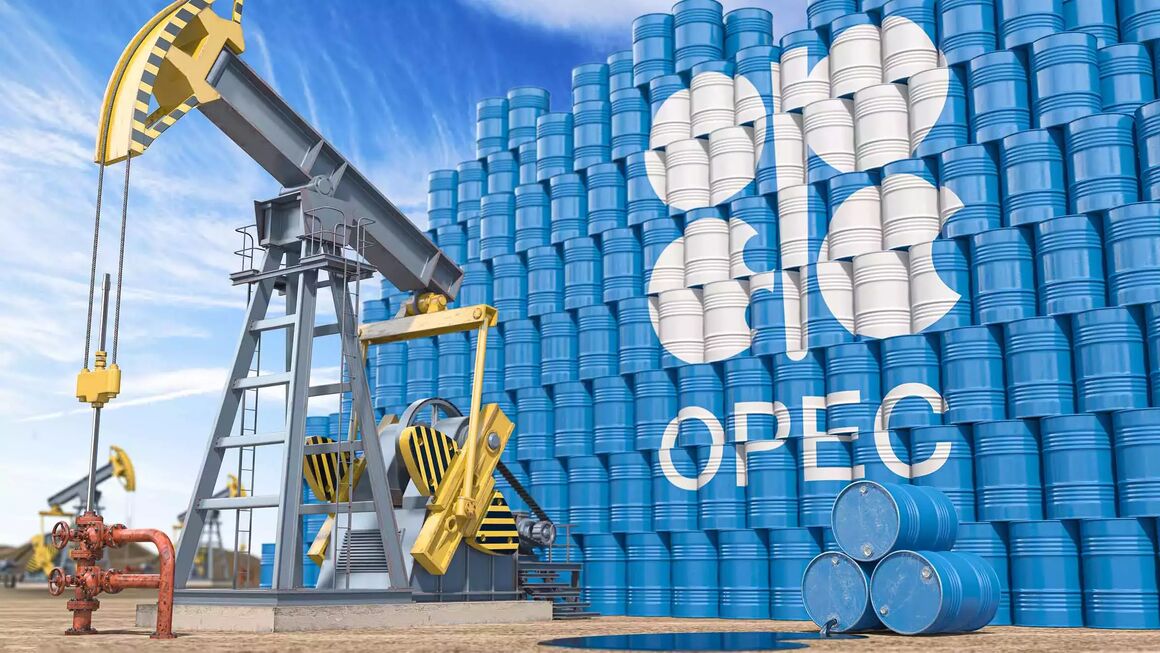
The Secretary General of the Organisation of Petroleum Exporting Countries (OPEC), Haitham Al Ghais, has disclosed that taxes imposed by major oil-consuming countries, not oil prices, are the main driver behind rising fuel costs at the pump.
Al Ghais revealed this during a recent press conference, shedding light on the often misunderstood factors that contribute to high fuel prices.
Join our WhatsApp ChannelAl Ghais stated, “What many consumers don’t realise is that the final price they pay at the pump is not solely determined by oil prices. Instead, taxes imposed by governments account for a significant portion of the price.”
How Taxes Affect Fuel Prices
According to Al Ghais, the price consumers pay for fuel includes various components. He explained that it is determined by several factors, including the cost of crude oil, refining, transportation, marketing, and taxes. However, it is the taxes imposed by oil-consuming nations that have the most substantial impact on the final price.
“In some European countries, taxes represent more than 50 percent of the final retail price,” he noted. “This means that taxes can contribute to the perception of oil being more expensive than it actually is.”
Al Ghais highlighted data from the Organisation of Economic Co-operation and Development (OECD), which revealed that in 2023, the average share of taxes on the final retail price of petroleum products had increased. In many OECD countries, taxes accounted for as much as 44% of the price consumers pay for fuel.
READ ALSO: OPEC: Nigeria’s Oil Production Rises By 3.4% In August As Global Demand Outlook Adjusted
Reinvestment by Oil-Producing Countries
While oil-producing countries generate significant revenue from oil sales, Al Ghais pointed out that much of that revenue is reinvested back into the oil sector. OPEC member countries, he said, allocate a large portion of their oil revenue to fund exploration, production, and transportation projects.
“This reinvestment ensures the continuous supply of oil to meet global demand,” he explained. “Without this reinvestment, oil supply would diminish, leading to increased prices globally.”
However, Al Ghais contrasted this approach with the actions of governments in oil-consuming countries, noting that these governments benefit significantly from the taxes imposed on petroleum products. “Governments are generating vast amounts of revenue from fuel taxes, and this often goes unnoticed by the public.”
Governments’ Tax Revenue from Oil
The OPEC Secretary General emphasised the significant revenue governments earn from taxing petroleum products.
He cited the United Kingdom’s Office for Budget Responsibility, which revealed that fuel duties were expected to generate £24.7 billion from 2023 to 2024. This revenue represents 2.2% of all receipts and is equivalent to £850 per household in the UK.
He added, “From 2019 to 2023, OECD economies earned approximately $1.915 trillion more annually from the retail sales of petroleum products than OPEC countries made from oil revenues.”
Future of Energy Taxation
Al Ghais questioned how governments planning to phase out oil would replace the revenue currently generated from oil taxes.
“Some governments are trying to phase out oil while subsidising other energies. But they should ask themselves, how will they replace the revenues lost from taxation on oil?” he asked.
He concluded by stating that while OPEC member countries continue to reinvest in oil to ensure future supply, the substantial taxes imposed on oil by consuming nations play a crucial role in driving up fuel prices.
“It’s important to recognise that the high fuel prices many are experiencing are not purely the result of oil prices. Taxes imposed by governments have a significant impact,” he said.
OPEC continues to advocate for a balanced approach to energy taxation, one that considers the long-term sustainability of both oil and alternative energy sources.

Emmanuel Ochayi is a journalist. He is a graduate of the University of Lagos, School of first choice and the nations pride. Emmanuel is keen on exploring writing angles in different areas, including Business, climate change, politics, Education, and others.
- Emmanuel Ochayihttps://www.primebusiness.africa/author/ochayi/
- Emmanuel Ochayihttps://www.primebusiness.africa/author/ochayi/
- Emmanuel Ochayihttps://www.primebusiness.africa/author/ochayi/
- Emmanuel Ochayihttps://www.primebusiness.africa/author/ochayi/