John Adoyi
The South African government has formally classified gender-based violence and femicide (GBVF) as a national disaster, responding
to growing concern over escalating violence against women and children.
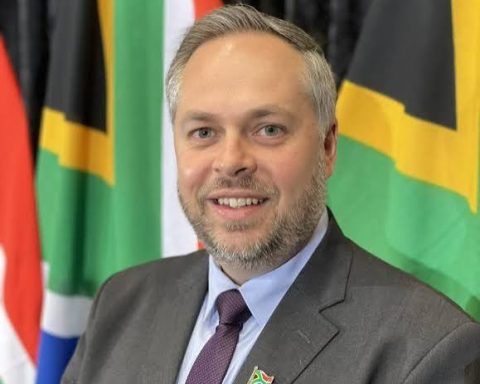
The announcement was made by Minister of Cooperative Governance and Traditional Affairs Velenkosini Hlabisa, who confirmed that the National Disaster Management Centre (NDMC), led by Bongani Elias Sithole, invoked Section 23 of the Disaster Management Act (2002) to formalize the classification.
Join our WhatsApp ChannelThe government’s decision follows increasing public activism, including a nationwide “15-Minute Stand” protest on November 21 led by the activist group
Women for Change. Protesters lay down in silence to mark the daily deaths of women due to femicide and demand stronger government action ahead of the G20 Leaders’ Summit.
South Africa has one of the highest rates of gender-based violence in the world, with recent studies estimating that 15 women are killed every day due
to femicide and hundreds more suffer physical or sexual abuse annually. Civil society groups and government reports have long highlighted the urgent need for stronger, coordinated interventions. “This decisive action follows a thorough reassessment of previous reports and updated submissions from state organs and civil society organisations,” Hlabisa
said. “After evaluating the persistent and immediate life-safety risks posed by ongoing acts of violence, the NDMC has concluded that GBVF now meets the
threshold of a potential disaster.”
Women for Change founder Sabrina Walter hailed the classification as a “historic victory,” noting that their petition demanding GBVF be declared a national
disaster had gathered over one million signatures. She said the protests were aimed at holding the government accountable and ensuring tangible action
against GBVF.
Other civil society organizations welcomed the move but stressed that the classification must translate into concrete interventions, monitoring, and stronger
enforcement mechanisms to make a real impact.
The NDMC will now coordinate management of the crisis using existing laws and contingency frameworks. State agencies are required to submit progress reports
to enable oversight of interventions by government departments, municipalities, NGOs, and communities.
Hlabisa emphasized that while the classification highlights the seriousness of the crisis, it does not automatically provide emergency powers or access
to special funds. The government still has the option to elevate the classification to a full disaster declaration, which would unlock additional resources. “This classification is not a symbolic gesture. It formalizes our commitment to protecting women and children and ensures that all sectors work together to prevent further loss of life,” Hlabisa said.
While the classification recognises GBVF as a national disaster, it obliges all government organs to strengthen existing response structures, activate
contingency plans, and implement measures to prevent and mitigate violence.
Under Sections 22, 23, and 26 of the Disaster Management Act, national, provincial, and municipal authorities, along with the private sector and communities, are urged to intensify GBVF prevention and enforcement efforts. Hlabisa emphasized that the classification reinforces existing programmes, including the Inter-Ministerial Committee on GBVF, the 90-Day GBVF Acceleration Programme, Thuthuzela Care Centres, Sexual Offences Courts, and broader criminal justice reforms.
The classification represents a formal acknowledgment by the government of the severity of GBVF in South Africa. It sets a legal and institutional framework
for all sectors to collaborate, strengthens existing interventions, and provides a basis for monitoring progress.
Activists continue to press for further measures, including emergency funding, expanded services for survivors, and systemic criminal justice reforms, to ensure that the classification leads to meaningful change rather than symbolic action.