 Amanze Chinonye
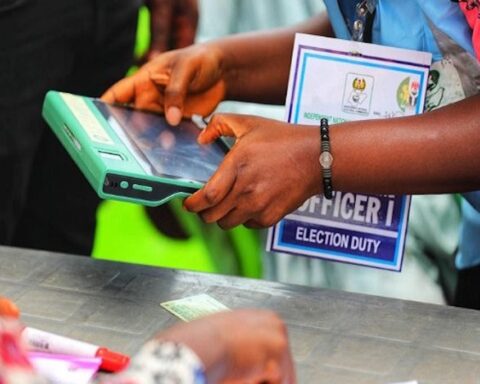
The Senate on Tuesday made a sharp reversal on electronic transmission of election results, endorsing an amended clause of the Electoral Act that allows polling unit results to be transmitted electronically, with manual documentation retained as a safeguard where network coverage is weak.
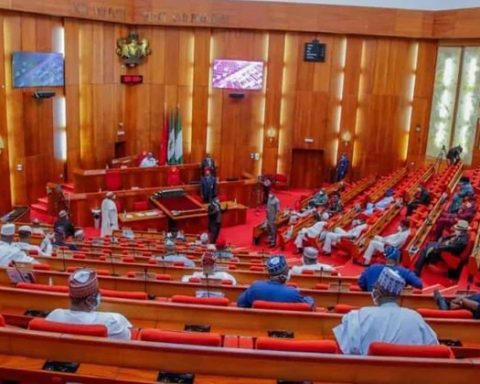
The decision followed a tense and disorderly emergency plenary marked by sharp procedural disagreements, multiple points of order and repeated interventions by Senate President Godswill Akpabio, who presided over the session.
At the centre of the dispute was Clause 60(3) of the Electoral Act Repeal and Enactment Bill, which the Senate had passed on February 4, 2026, using the term “transfer” of results instead of “transmission.” The wording triggered widespread criticism from civil society groups, opposition figures and election observers, who argued that it weakened safeguards for electoral transparency.
Join our WhatsApp ChannelThe Senate Chief Whip, Senator Tahir Monguno, reopened the matter by invoking relevant provisions of the Senate Standing Orders to seek the rescission of the chamber’s earlier decision. He cited concerns arising after the bill’s passage and said the provision required urgent reconsideration to protect the credibility of future elections.
According to Monguno, ambiguity in the disputed clause had created public unease, making it necessary for the Senate to clarify its intent and align the law with democratic expectations.
Following debate, the Senate approved a fresh amendment stipulating that presiding officers at polling units shall electronically transmit election results to the Independent National Electoral Commission’s Result Viewing Portal (IReV) after completing and signing Form EC8A.
The amended clause further provides that where electronic transmission is impossible due to network or communication challenges, the manually completed and duly signed EC8A form shall serve as the primary basis for collation and declaration of results.
READ ALSO : Diaspora Voting And Electoral Reforms in Nigeria
Contributing to the debate, Senator Orji Uzor Kalu emphasised the need to balance technological advancement with Nigeria’s infrastructural realities, noting that many rural communities remain without reliable network coverage.
“Presiding officers can now transmit results electronically after completing and signing Form EC8A,” Kalu said, adding that the fallback provision was necessary to prevent the disenfranchisement of voters in underserved areas.
The motion was seconded by Senate Minority Leader, Senator Abba Moro, who described the reversal as a reflection of democratic accountability, arguing that lawmakers must be willing to revisit and correct their decisions when required.
Proceedings briefly descended into confusion after the amendment was adopted through a voice vote, with some senators invoking Order 72 to challenge the ruling and demand individual voting. The situation was compounded when the request for a division was later withdrawn, prompting the Senate President to uphold the voice vote.
The Senate subsequently adopted the votes and proceedings of the previous sitting, bringing the emergency session to an end.
The decision has continued to attract reactions beyond the chamber. Human rights lawyer and public affairs commentator, Chidi Anselm Odinkalu, criticised aspects of the debate, insisting that individuals with unexpurgated criminal convictions should not occupy positions of public trust.
The Senate’s latest action represents a major shift on one of the most contentious elements of Nigeria’s electoral framework, introducing electronic transmission of results while preserving manual safeguards in recognition of the country’s uneven digital infrastructure ahead of future elections.

Amanze Chinonye is a Staff Correspondent at Prime Business Africa, a rising star in the literary world, weaving captivating stories that transport readers to the vibrant landscapes of Nigeria and the rest of Africa. With a unique voice that blends with the newspaper's tradition and style, Chinonye's writing is a masterful exploration of the human condition, delving into themes of identity, culture, and social justice. Through her words, Chinonye paints vivid portraits of everyday African life, from the bustling markets of Nigeria's Lagos to the quiet villages of South Africa's countryside . With a keen eye for detail and a deep understanding of the complexities of Nigerian society, Chinonye's writing is both a testament to the country's rich cultural heritage and a powerful call to action for a brighter future. As a writer, Chinonye is a true storyteller, using her dexterity to educate, inspire, and uplift readers around the world.