 Victor Ezeja
As the energy transition mantra takes centre stage globally, the Federal Government and other stakeholders in the oil and gas industry have been advised to intensify efforts in the promotion of quality petroleum education and development of competent manpower to help Nigeria meet the challenges and expected boom in the gas sector.
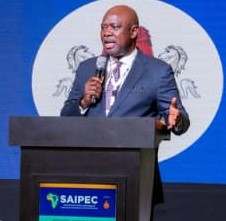
Executive Secretary of the Nigerian Content Development and Monitoring Board (NCDMB), Engr. Simbi Kesiye Wabote made this recommendation in the convocation lecture he delivered on Friday at the Federal University of Petroleum Resources (FUPRE) Effurun, Delta State, titled “Defining the Value of Local Content in Petroleum Education.”
Join our WhatsApp Channel
He explained that as western nations shift their attention from oil and gas and focus on the provision of funding, manufacturing of equipment, and development of supply chain to support their renewable energy sources, it is imperative that Nigeria and other hydrocarbon-rich countries develop the requisite capacity and capability to produce and utilize their fossil fuel resources.
According to him, the ongoing debate and the deadlines being set in respect of energy transition underscored the need to develop home-grown skill sets to develop and manage the nation’s natural resources. He stressed that “the narrative around energy transition has further revealed the need to ensure that there is a direct link between our petroleum education and the development and utilization of our hydrocarbon resources, so we are able to deal with any outcome of the transition.”
Commenting on the recent enactment of the Petroleum Industry Act 2021 and the Decade of Gas initiative, Wabote pointed out that those developments would not only engender investments and utilization of the nation’s estimated 600 trillion cubic feet of gas reserves but also lead to a boom in the gas sector, which would benefit discerning institutions, investors, operators, and service providers.
He added that “these scenarios require a robust petroleum education sector to ensure that our in-country skill sets are available and sufficient to support the exploration, development, production, and processing of hydrocarbon resources.”
The Executive Secretary charged educational institutions in Nigeria to prepare for the opportunities and challenges of energy transition and gas revolution by preparing robust curriculum in petroleum education with the mindset of enabling Nigerians develop and utilize our hydrocarbon resources using our home-grown technology. The institutions he added, should put greater focus on training of top-notch graduates to enable the development of Nigerian hydrocarbon resources – especially gas.
This he further explained, “will ensure that we are not forced out from the development of hydrocarbon resources due to lack of technical capability as was the case with coal development in Enugu.”
He maintained that FUPRE is an institution devoted to petroleum education and should be at the forefront of preparing our manpower needs for any outcome or impact of Energy Transition.
He agreed on the need to add renewables to the global energy mix to ensure energy security, but criticised attempts by the western world to demonize or de-marketing other energy sources as well as extracting commitments and setting unrealistic deadlines for countries to abandon fossil fuels.
He advised all nations to jealously guard their locally available sources of energy and ensure they remain in their energy mix for the benefit of their people.
The NCDMB boss also highlighted two implications that have emerged from the rush to move the world away from fossil fuels and they include Divestment, whereby western countries shift funding away from the development of hydrocarbons towards renewable energy and Energy Shortage, which is the decline in the supply of hydrocarbons due to lack of investments and the fast pace of the shift to renewable energies.
He posited that divestment has resulted in the emergence of indigenous companies playing major roles in exploration and production activities “such that companies like AITEO, FIRST E&P, EROTON, and others have acquired assets and are now responsible for producing about 15% of Nigeria’s oil and more than 60% of domestic gas.”
He however regretted that the divestment of the international oil companies and their reluctance to make further investments in oil and gas have resulted in the repatriation of capital out of Nigeria. “This stifles the nation’s economy of the much-needed foreign exchange with funds used as loans to acquire oil and gas assets instead of being used to develop new production assets,” he rued.