 Emmanuel Ochayi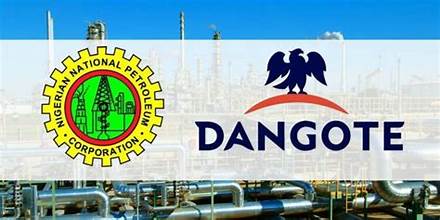
NNPCL and Dangote Refinery in Pricing Controversy
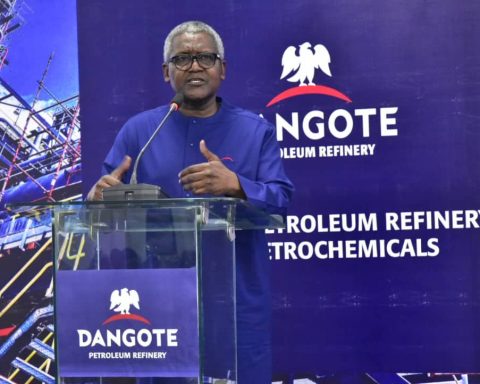
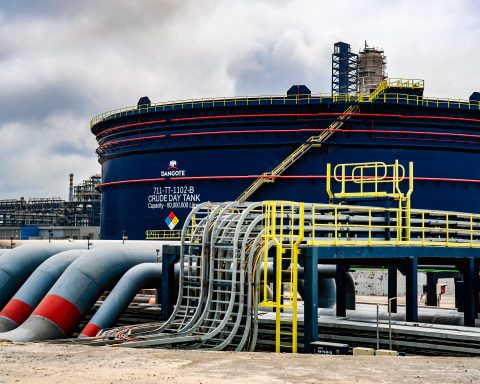
A fresh storm is brewing in Nigeria’s energy sector as the Nigeria Labour Congress (NLC) accuses the Nigeria National Petroleum Corporation Limited (NNPCL) and Dangote Refinery of engaging in fraudulent practices regarding fuel pricing.
The NLC President, Joe Ajaero, took a strong stance, highlighting how the ongoing price war between the NNPC and the private refinery is a direct result of what he termed as a “government policy somersault.”
Join our WhatsApp ChannelThis tension raises critical questions: Is the NNPC attempting to undermine competition in the oil market? And is Dangote Refinery being unfairly pressured to align its pricing with government dictates?
NNPCL’s Pricing Practices Under Fire
At the centre of this controversy is the government’s approach to fuel pricing. Despite a deregulated market, Ajaero claims that the government, through the NNPCL, is trying to dictate prices, particularly for products produced domestically. “For a product produced here, he didn’t import with dollars, there was no landing cost, and they wanted him to sell it at the same cost of what they are bringing from abroad,” Ajaero said, referring to Dangote Refinery’s operations. “That is fraudulent and unacceptable.”
The NNPCL, which controls a significant portion of Nigeria’s oil resources, is being accused of monopolising the fuel market, leaving little room for competition. The key question remains: In a deregulated economy, why should a private entity like Dangote Refinery be forced to sell fuel at the same price as imported products, which are burdened with costs such as foreign exchange fluctuations and import duties?
The Role of Deregulation in Pricing Disputes
Ajaero’s comments point to a deeper issue in Nigeria’s oil industry: the failure of the government to create a competitive environment that allows market forces to dictate prices. In a deregulated economy, fuel pricing should naturally reflect the dynamics of demand and supply, allowing consumers to benefit from choices between multiple suppliers.
However, Ajaero asserts that this is not the case, with the NNPC allegedly dictating terms that prevent Dangote Refinery from offering lower prices, even when its costs are significantly lower than those of imported fuel.
READ ALSO: NNPCL Releases New Pump Prices Of Petrol, Sells ₦950 In Lagos, ₦1,019 In Borno
“The basis for regulating what Dangote should sell or dictating prices for the private sector is fraudulent,” Ajaero said, underlining the fundamental problem with the government’s intervention in what should be a free market. “Nigerians need to speak up,” he urged, warning that the government’s actions could stifle the growth of the private sector.
Government’s Broken Promises on Local Refineries
The NNPC’s involvement in this pricing dispute comes at a time when the government has failed to deliver on its promise to repair and modernise the country’s local refineries. Over the years, Nigeria’s refineries have been operating far below capacity, forcing the country to rely on imported fuel despite being one of the world’s largest crude oil producers. This dependency on imports has made fuel more expensive and subjected the market to international price shocks.
“The government promised to repair our refineries, but what have they done?” Ajaero asked rhetorically. “We’ve watched as billions were spent on turnaround maintenance, yet the refineries are still not working.” The failure to repair these local refineries has placed a heavier burden on consumers, who are forced to pay higher prices for imported fuel. Ajaero suggested that this failure is part of the reason the NNPC is reluctant to allow Dangote Refinery to sell at a lower price. “It’s frustrating to see this deliberate attempt to frustrate Dangote,” he added.
Pricing War: Is There a Monopoly at Play?
The price war between NNPCL and Dangote Refinery has led to suspicions that the NNPC is trying to maintain its monopoly over the country’s fuel market. With its control over the import and distribution of petroleum products, the NNPC wields enormous power.
By allegedly pressuring Dangote Refinery to align its prices with the higher cost of imported fuel, the NNPC could be attempting to eliminate any potential competition from private players.
This monopolistic approach contradicts the principles of deregulation, which are supposed to foster competition, innovation, and better pricing for consumers. Instead, Nigerians are being denied the benefits of a competitive market, as the NNPCL seems intent on maintaining control over the market.
What Lies Ahead for Nigerians?
The current situation raises concerns about the future of fuel pricing in Nigeria. If the NNPCL continues to dictate prices in the face of competition, it could lead to long-term consequences for the country’s energy market. Higher fuel prices would not only strain household budgets but also inflate the cost of transportation and goods, exacerbating the already high cost of living.
Moreover, the NLC’s accusations of fraudulent practices point to a broader issue of transparency and accountability in Nigeria’s oil industry. The lack of competition, combined with the government’s failure to repair local refineries, has left Nigerians vulnerable to the whims of a few powerful players.
“Nigerians must speak out,” Ajaero said, calling for citizens to hold the government accountable. “This is not just about fuel prices; it’s about the future of our economy. If we allow this kind of manipulation to continue, we are all going to suffer.”
A Call for Accountability
The ongoing price war between NNPCL and Dangote Refinery has exposed the flaws in Nigeria’s approach to fuel deregulation. Instead of fostering competition and allowing market forces to determine prices, the government seems to be using the NNPCL to maintain control over the oil market. The result is a system that penalises private sector players like Dangote Refinery and denies Nigerians the benefits of lower fuel prices.
It’s time for the government to honour its promises, repair the country’s refineries, and create a truly competitive market that works in the best interests of the people. As Ajaero stated, “Nigerians deserve better, and it’s time we demand it.”
The NNPC must be held accountable for its actions, and the government must take steps to ensure that deregulation is implemented in its true form—without manipulation, fraud, and the suppression of competition.

Emmanuel Ochayi is a journalist. He is a graduate of the University of Lagos, School of first choice and the nations pride. Emmanuel is keen on exploring writing angles in different areas, including Business, climate change, politics, Education, and others.