Prime Business Africa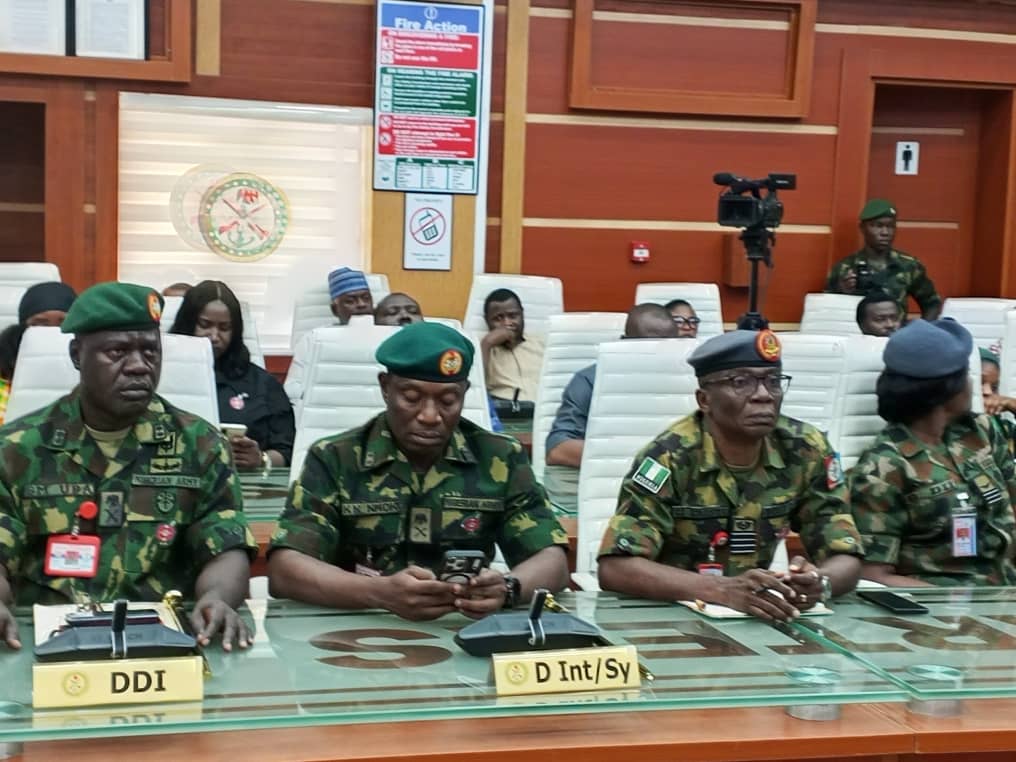
By Prosper Okoye
Nigeria’s military is reporting key victories against terrorists, bandits, and oil thieves in 2025—over 4,000 arrests, 2,300 hostages rescued, $74 billion worth of oil theft foiled—but warns armed groups are adapting, relocating, and exploiting porous borders, keeping the security crisis far from over.
At a year-end briefing at Defence Headquarters (DHQ) in Abuja, Major General Michael Onoja, Director of Defence Media Operations, said troops killed several senior terrorist and bandit commanders, arrested more than 4,000 suspects, and rescued over 2,300 kidnapped victims between January and December. He added that more than 1,600 fighters surrendered during the year, a development the military attributed to sustained pressure across multiple theatres of operation.
The overview also reflects a security environment that is evolving, with insurgents exploiting porous borders, shifting operational bases, and targeting vulnerabilities in both rural and urban areas.
Join our WhatsApp ChannelUneven security picture
The DHQ said the North East remained “relatively stable” compared with previous years, despite ongoing attacks by Boko Haram and the Islamic State West Africa Province (ISWAP). The military reported that the groups continued isolated assaults on both civilian and military targets and deployed improvised explosive devices along key routes, including attempted suicide attacks.
READ ALSO: Barracks Logic: Guinea‑Bissau’s Coup Fuels West Africa’s Military Temptation
In a rare public disagreement between security agencies, the Army said it had arrested a suspected suicide bomber in Borno State and recovered materials allegedly intended for making explosives. The Borno State Police Command, however, disputed the claim, stating the items did not indicate bomb-making intent and that the suspect was in police custody. The contrasting accounts underline the difficulty of verifying incidents in an active conflict zone.
While troops reported killing several commanders and dismantling insurgent camps, the continued capacity of militants to launch sporadic attacks suggests the decade-long conflict remains unresolved.
In the North West, where banditry and mass kidnappings have persisted, the military said it recorded gains through arrests and rescues but raised concerns about foreign-linked extremist networks operating along the north-western borders.
Major General Onoja confirmed that precision air strikes, conducted with support from the United States, targeted suspected Islamic State enclaves in parts of Sokoto State. He said the strikes hit confirmed terrorist locations, although some fighters may have escaped, and that a full impact assessment was still under way.
He addressed public concerns after reports that debris from the strikes landed in other states, saying there were no civilian casualties and describing the incidents as unintended consequences. Intelligence, he added, had confirmed terrorist activity in the Sokoto axis, despite public scepticism over whether the area was a known terrorist enclave. The military dismissed suggestions that the strikes could trigger a wider jihadist backlash in Nigeria, amid concerns about Sokoto’s historical significance in Islamic scholarship.
The relocation of militants under military pressure suggests that gains in one area may be displacing violence rather than eliminating it.
Persistent challenges in the North Central
The North Central zone continued to face overlapping threats, including banditry, kidnapping, arms trafficking, and communal violence, particularly between farmers and herders. The military reported evidence of terrorist activity in states including Niger, Kogi, Taraba, and Kwara, while raising concerns about the spread of illegal arms, some traced to local fabrication networks in Kaduna, Kogi, and Plateau.
While troops recorded arrests and rescues under Operations Enduring Peace and Whirl Stroke, the scale and diversity of the threats show the limits of purely military solutions.
Oil theft remains a major concern
In the oil-producing South South, the military said it disrupted crude oil theft valued at nearly ₦9bn, recovered millions of litres of stolen petroleum products, and destroyed more than 500 illegal refining sites.
Yet the scale of the figures highlights the persistence of oil theft and pipeline vandalism, longstanding issues that continue to drain government revenue and damage the environment. Analysts say enforcement operations, while important, have struggled to address the economic incentives behind the illegal trade.
South East: Nnamdi Kanu Imprisonment Reduces Insecurity
The DHQ reported a marked reduction in violent activity in the South East, attributing it to intensified operations against the proscribed Indigenous People of Biafra (IPOB) and its armed wing, the Eastern Security Network. Legal developments involving the group’s leaders also played a role. Simon Ekpa was jailed in Finland, while Nnamdi Kanu received a prison sentence in Nigeria, both of which the military said substantially weakened the group’s operational capacity.
However, the military acknowledged that militants continued to target lightly manned checkpoints and used improvised explosive devices, indicating that while the threat has diminished, it has not been fully neutralised.
Fighters displaced by operations in one region, the military warned, were attempting to infiltrate other communities, prompting heightened intelligence and surveillance nationwide. While DHQ figures suggest progress in weakening armed groups and rescuing hostages, the report points to a security crisis that is shifting rather than ending — highlighting the need for stronger border control, governance, and economic measures to consolidate gains in 2026.