 Emmanuel Ochayi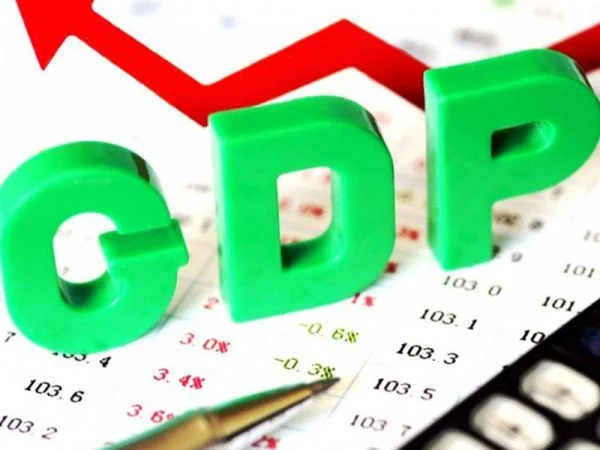
The latest data from the National Bureau of Statistics (NBS) shows that Nigeria’s economy grew by 3.84% year-on-year in the fourth quarter of 2024. This marks an improvement from the 3.46% growth recorded in the same period of 2023 and the previous quarter. However, while some experts see this as a positive sign, others question whether the GDP growth is translating into real economic benefits for Nigerians.
Key Sectors Driving GDP Growth
The services sector played a major role in driving economic expansion, recording a 5.37% growth rate and contributing 57.38% to the GDP. The petroleum refining sector also showed strong performance, growing by 9.6% after years of decline.
Join our WhatsApp ChannelDr. Ango Malari, an economic analyst, highlighted the significance of this recovery. “One good thing about the Q4 GDP report was the recovery of the petroleum refining sector from decades of recession to a positive GDP growth of an impressive 9.6%. This was one of the best performances among the strategic sectors of the economy, attributed to the commencement of refining operations by the Dangote Refinery and the NNPC refineries,” he said.
READ ALSO: Nigeria’s Equity Market Climbs 0.49% as Investors Respond to Q2 GDP Growth
Experts Weigh In on GDP Growth
While the 3.84% GDP growth is being celebrated by some, others believe it does not necessarily reflect improvements in living standards. Economic analyst Sam Maiyaki emphasised the need for the growth to impact everyday Nigerians. “A 3.84% GDP growth is a positive sign, especially as Nigeria navigates economic challenges. The key question is whether this growth translates into real improvements in living standards, job creation, and inflation control,” he said.
However, some remain skeptical. Felix Gagare, a social commentator, questioned the impact of the GDP growth on ordinary citizens. “Where’s the GDP? Why aren’t we feeling the impact of this so-called expanded economy?” he asked.
Similarly, Maurice Ekpenyong argued that the growth is not inclusive, saying, “It is not an inclusive growth because of the widening gap between the rich and the poor, coupled with the growing level of hunger and human misery in Nigeria since Tinubu became president.”
Concerns Over Data Accuracy
The credibility of the GDP growth figures has also been questioned. Business owner John Olabamiji pointed out discrepancies between reported growth and actual business conditions.
“The economy was driven by the service sector, but the Service PMI entered the contraction zone just last week. I don’t understand this data at all because what I’m experiencing in real life from the service sector does not align with this report,” he said.
Similarly, Ikechukwu Kalu noted the slow progress in key industries. “There are a lot of gaps to be covered. Manufacturing, agriculture, trade, and construction GDP are all growing but very slowly. We need to push harder to get at least 5% real GDP growth,” he stated.
Trust Issues in Economic Data
Atedo Peterside, the founder of Stanbic IBTC Bank Plc, raised concerns about the trustworthiness of economic data from the NBS. He argued that recent changes in economic calculations have raised doubts.
“The rebasing happens once in a while in most economies. Part of the problem we have here is that there is a trust deficit. The Nigerian Bureau of Statistics said they changed how they compute unemployment, and all of a sudden, we realised that we are almost attaining full employment in Nigeria. Sometimes, it’s garbage in, garbage out,” Peterside said.
While he acknowledged the importance of GDP rebasing, he stressed that credibility in economic data is essential for accurate analysis.
Future Expectations for GDP Growth
Investment experts have mixed expectations regarding GDP growth for 2025. Onyinyechi Onwubu, an investment advisor at FCSL Asset Management, predicts that economic expansion will remain steady.
“We expect increased commercial activities due to the festive period in the latter part of the year to drive the Q4 2024 GDP to hover between 3.5% to 3.6% levels. The average GDP growth rate for 2024 is, however, expected to come in lower than this,” Onwubu said.
Similarly, Moyosore Onanuga, Head of Investments at AIICO, projects GDP growth between 2.5% and 3.5%, largely influenced by holiday spending and a trade surplus.
Factors Driving GDP Growth
Several factors contributed to the 3.84% GDP growth in Q4 2024, including:
- Festive Season Boost: Higher consumer spending on food, clothing, entertainment, and energy led to increased economic activity.
- Trade Surplus: Nigeria recorded a foreign trade surplus of N5.81 trillion in Q3 2024, which continued to support it in Q4.
- Strong Services Sector Performance: The telecommunications, banking, FinTech, and legal services industries remained key drivers of economic expansion.
While Nigeria’s GDP growth of 3.84% in Q4 2024 indicates economic resilience, many Nigerians are still questioning its real impact. Analysts agree that for it to be meaningful, it must translate into job creation, poverty reduction, and improved business conditions. As the government looks toward 2025, the challenge will be ensuring that growth is inclusive and sustainable for all citizens.

Emmanuel Ochayi is a journalist. He is a graduate of the University of Lagos, School of first choice and the nations pride. Emmanuel is keen on exploring writing angles in different areas, including Business, climate change, politics, Education, and others.
- Emmanuel Ochayi
- Emmanuel Ochayi