 Emmanuel Ochayi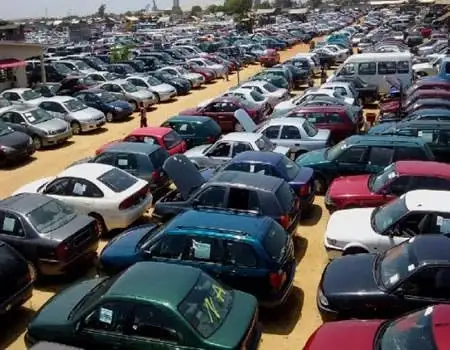
In a move to revolutionize Nigeria’s automotive industry, Joseph Osanipin, the Director-General of the National Automotive Design and Development Council (NADDC), advocated the ban of importation of vehicles used from the year 2000 to 2007.
Addressing stakeholders at the Public Sector Engagement on the Implementation of the Nigerian Automotive Industry Development Plan (NAIDP 2023-2033), Osanipin stressed the necessity of collaboration with relevant agencies to impose a maximum 20-year age limit on imported used vehicles.
Join our WhatsApp Channel“We cannot allow Nigeria to be a dumping ground for used vehicles,” Osanipin declared emphatically during the engagement. “It’s unacceptable to have vehicles from 2000 to 2007 flooding our markets.”
READ ALSO: Fuel Scarcity Looms As Forex Crisis Causes 90% Depot Shutdown
Highlighting the need for stricter standards, Osanipin expressed concerns about the entry of vehicles lacking critical safety features such as airbags. He emphasized the urgency of implementing policies that uphold minimum standards for vehicles entering the country.
Moreover, Osanipin shed light on the NADDC’s strategy to bolster local manufacturing by implementing a deletion policy. This initiative aims to identify and produce essential components like tyres, plastics, foams, leather, and batteries within Nigeria, reducing the reliance on imports.
“The deletion policy is crucial for growing our local content and developing our parts,” Osanipin explained. “We’re exploring opportunities to produce these components locally, aligning with our standards and reducing dependency on imports.”
Despite notable progress in Nigeria’s automotive sector, the country still faces challenges bridging the demand-supply gap.
The annual vehicle demand in Nigeria stands at 720,000 units, but local factories produce only around 14,000 units yearly, resulting in reliance on imports, according to the International Trade Administration of the United States.
Data from the Nigeria Bureau of Statistics revealed an influx of used vehicles into the country. Import figures from the United States and the United Arab Emirates totaled N926.09 billion in the first nine months of 2023. While imports fluctuated, starting at N59.53 billion in the first quarter, soaring to N721.79 billion in the second, and declining to N144.77 billion in the third quarter, the cumulative figures signify the magnitude of the issue.
Osanipin’s proposals aim not only to regulate imports but also to invigorate local manufacturing, fostering a self-reliant automotive industry while enhancing safety standards for vehicles entering Nigerian market.