Uduegbunam Chukwujama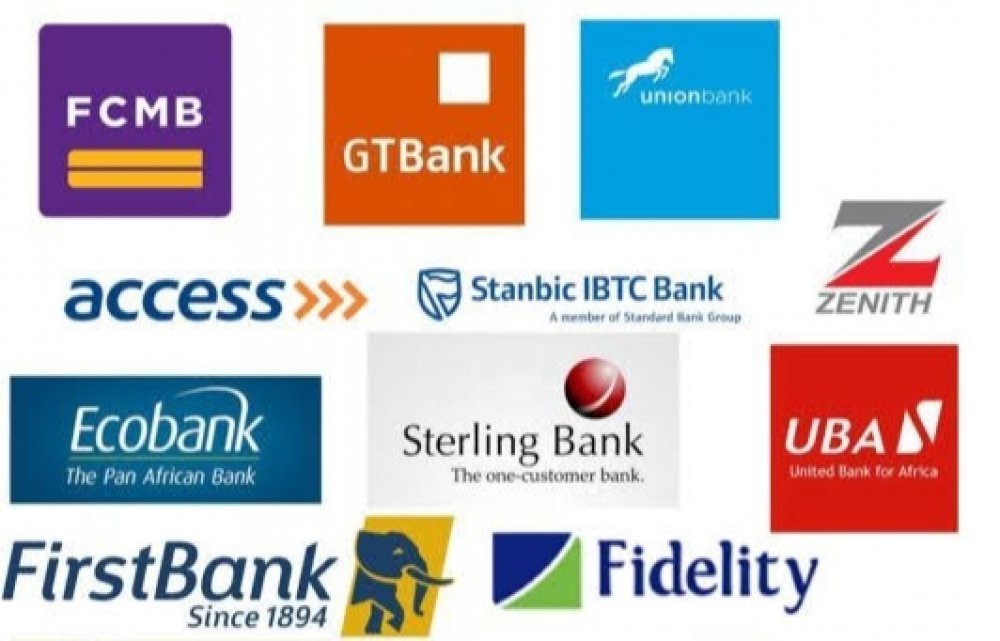
Moody’s Investors Service has provided an in-depth analysis of how foreign currency shortages mount serious pressure on Nigerian banks.
Its report in February reveals that Nigerian banks’ liquidity are under serious pressure as a result of lower domestic oil production, higher prices for imports of refined petroleum products and capital outflows which cause foreign-currency (FX) shortages.
Join our WhatsApp ChannelThrough its credit ratings, Moody’s delivers transparent global opinions on credit risk to help issuers access debt markets and investors to compare credit risk across countries and asset classes. Moody’s Investors Service rates fixed income debt securities.
Moody’s noted that the Central Bank of Nigeria had, in response to the stated pressures, scaled down its foreign exchange (FX) allocations to local companies, creating a material gap between official and unofficial exchange rates in the country. It warned that the attendant FX shortages faced by local companies may further threaten bank liquidity.
Banks providing trade finance for import-oriented corporate clients must typically cover any shortfall should the firms default on their FX liabilities, but to mitigate that risk, Nigerian banks, according to Moody’s, have over the last 12 months been reducing the size of their trade exposures, collecting more cash collateral from trade-finance clients, or ensuring in advance that clients can source FX.
“We estimate that the off-balance sheet trade-related exposure of rated Nigerian banks amounts to around $9.8 billion in June last year, representing over 54% of their FX liquid assets. Large amounts of FX lent to the central bank pose further risk,” Moody’s posited.
Summary of Nigerian Banks – Moody’s Analysis:
“We estimate that rated Nigerian commercial banks had lent an aggregate $10.4 billion in FX to the central bank as of June last year. The central bank has a strong track record of repaying the FX it owes to the banks, but at a time of acute FX shortages, there is increased risk that it would extend the life of some contracts, postponing repayment. To mitigate that risk, Nigerian banks are gradually reducing the duration and the size of those contracts.
“Sound FX liquidity held by the banks provide a buffer. Rated Nigerian banks carry sound FX liquidity, with $18.2 billion in FX liquid assets that cover 45% of their FX liabilities.
“Public information on the portion of banks’ FX liabilities due over the next 12 months is limited, but they do not have outstanding eurobonds due in 2023-24. Banks’ FX deposits and correspondent banking lines remain stable.”
Moody’s, however, said it believes that “the risk that the central bank would prevent banks from using their FX remains contained for now.
READ ALSO: Top 5 Revenue-generating Nigerian Banks – Access, Zenith, UBA, FBN’s Market Share
“Strict dollar rationing means the country’s FX reserves stood at $37 billion as of December 2022 ($40 billion in December 2021). Confiscating dollars from banks would also risk undermining financial stability.
“A material devaluation in local currency caused by the FX shortage would noticeably weaken bank capital. A rapid convergence of official and unofficial foreign-exchange rates is not our base case, as we expect that the authorities will allow the exchange rate to continue to adjust at a gradual pace. Should this happen, however, the capital ratios of Nigerian banks would fall markedly but they would remain above the regulatory minimum.”