Moghalu Warns Tinubu Against Making Naira Stronger, Says It Makes Import Cheaper

June 22, 2023
Moghalu Highlights How Trump’s Presidency Will Affect African Economies
Prof. Moghalu

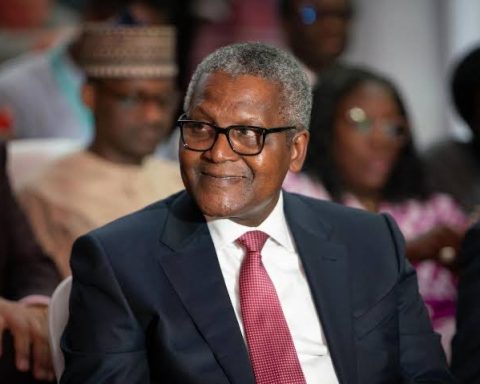
The former Presidential aspirant, Kingsley Moghalu, cautioned President Bola Tinubu against being fixated on a stronger naira, as it could affect the exportation drive.

Moghalu said Nigeria having a stronger naira could make the country an import-dependent economy. He made this known during an interview with Arise TV on Thursday. 

Join our WhatsApp Channel

His statement comes amid President Tinubu’s foreign exchange reforms meant to strengthen the naira against the dollar and also increase foreign reserves through improved foreign investments. 

Tinubu has devalued the naira as part of his forex reforms, a move that has unified the multiple exchange rates in Nigeria. 

As of Wednesday, the naira to the dollar exchange rate in the official market is N763.17/$1, but the United States currency was sold at N760.3/$1 in the black market. 

Note that before the devaluation of the naira last week Wednesday, both currencies exchanged at N471.67/$1 in the official window, against the N755.7/$1 rate in the black market. 

However, the expectation of the government and the Central Bank of Nigeria (CBN) is to ensure stability in the foreign exchange rates, then the naira will strengthen against the dollar in the long term. 

Speaking on the government’s policies, Moghalu warned that a stronger naira could have a side effect, as it will make importation cheaper, hence, making the country import-dependent. 

The former Deputy Governor of the Central Bank of Nigeria (CBN) suggested that Tinubu’s government should employ competitive devaluation, which he said economies that are productive, such as China, conduct. 

“I also need to say that we have this fixation on having a strong naira. Having a strong naira when you are not a productive economy, all it does is that it makes you an import-dependent economy. 

“Because having a strong naira makes your important cheaper. Economies that are productive, actually, sometimes engage in competitive devaluation. 

“China does this, so that their goods are cheaper for foreigners to buy, and therefore, they get more money into their country, rather than wanting their currency to be very strong,” Moghalu expatiated. 

+ posts

Featured Stories

Latest from Business News

Ruto Signals Deeper AFC Role in Kenya’s Lamu Refinery Push

Written by Amanze Chinonye Kenya has increased its shareholding in the Africa Finance Corporation (AFC) by $25 million (3.25 billion shillings), President William Ruto said on Saturday during a visit to the pan-African lender’s headquarters in Lagos, as Nairobi seeks financing for major
Global Oil Prices Rise To $73.05/ Barrel As Market Prepares For 2024 Outlook

TOR Secures 950,000 Barrels of Sankofa Crude to Sustain Operations

Written by Amanze Chinonye Tema Oil Refinery (TOR) has secured 950,000 barrels of locally produced crude from Ghana’s Sankofa-Gye Nyame field, providing fresh feedstock as the refinery works to sustain operations and increase fuel production for the domestic market, Prime Business Africa reports.

Gambia Orders Banks to Replace Non-Gambian Staff by Year-End

Written by Amanze Chinonye The Central Bank of The Gambia has directed commercial banks to phase out non-Gambian employees and replace them with suitably qualified Gambian nationals by Dec. 31, as the regulator tightens enforcement of rules governing expatriate employment in the banking

Dangote, Ethiopia and Djibouti Unveil $660m Fuel Pipeline Plan

Written by Amanze Chinonye Ethiopia, Djibouti and Nigerian industrialist Aliko Dangote plan to invest $660 million in a refined petroleum products pipeline connecting the two East African countries, seeking to lower fuel transportation costs and strengthen energy security. Join our WhatsApp Channel The

Lithium: Will Nigeria Repeat the Oil Curse?

Written by MARCEL MBAMALU There is a road out of Lafia where trucks leave every night loaded with stones that will power Tesla batteries in Berlin and solar storage in Beijing, but cannot power the village they left. That is the story of
Previous Story

Soludo’s Lagos Townhall Meeting With Ndi Anambra Investors, Livestreaming Via YouTube On Thursday

Next Story

Court Reinstates Impeached Zamfara Deputy Gov Mahdi Gusau

Don't Miss

IMF

IMF Launches $50bn Lifeline For Nigeria, Others

The International Monetary Fund has expressed its readiness to launch

Badagry Deep Seaport Project To Generate $53.6bn For Nigerian Economy – BPDL

Promoters of the newly approved Badagry Deep Seaport project, Badagry