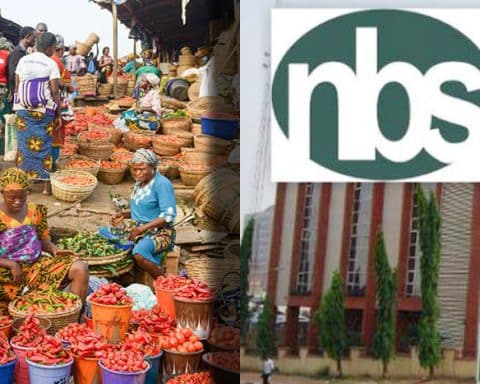
The latest Consumer Price Index (CPI) data, unveiled by the Nigeria Bureau of Statistics, has illuminated a challenging financial landscape for residents in Kogi, Lagos, and Rivers states, as they grapple with soaring living costs.
In a surprising turn of events, these states have now earned the dubious distinction of being the most expensive places to live in Nigeria, owing to a sharp rise in inflation rates for August 2023.
Join our WhatsApp ChannelOn a year-on-year basis, Kogi has taken the lead with an alarming all-items inflation rate of 31.50 percent, followed closely by Lagos at 29.17 percent and Rivers at 29.06 percent.
These staggering figures have sent shockwaves through the nation, leaving many Nigerians in these states struggling to make ends meet.
READ ALSO: Nigeria’s Public Debt Soars by 75.27% in Q2 2023, Says NBS
Conversely, Sokoto stands out as an oasis of relative affordability, recording a more modest 20.91 percent, followed by Borno at 21.77 percent, and Nasarawa at 22.25 percent, showcasing a stark contrast in the economic conditions across the country.
The grim narrative extends to a month-on-month assessment, with August 2023 witnessing the highest price hikes in Kwara at 6.07 percent, Osun at 4.36 percent, and Kogi at 4.35 percent. In contrast, Sokoto saw the slowest rise at 1.38 percent, followed by Borno at 1.73 percent, and Ogun at 1.89 percent.
The plight of citizens is further exacerbated when focusing on food inflation. The statistics for August 2023 mirror the overall trend, with Kogi leading the pack with an eye-watering year-on-year food inflation rate of 38.84 percent.
Lagos closely trails at 36.04 percent, and Kwara at 35.33 percent, portraying a dire picture of the affordability of essential sustenance.
However, the bright spots emerge in Sokoto, which registered a comparatively lower food inflation rate of 20.09 percent, Nasarawa at 24.35 percent, and Jigawa at 24.53 percent.
Breaking down the month-on-month food inflation, Rivers tops the list at 7.12 percent, followed by Kwara at 5.89 percent, and Kogi at 5.80 percent. In stark contrast, Sokoto, Abuja, and Niger recorded the most modest increases, at 0.50 percent, 1.30 percent, and 1.40 percent, respectively.
Analysts point to significant price surges in various essential food items, including oil and fat, bread and cereals, fish, fruit, meat, vegetables, potatoes, yams, milk, cheese, and eggs, as the driving force behind the relentless surge in food inflation.
As Nigerians continue to grapple with these escalating living costs, policymakers face an uphill battle in their quest to stabilize the nation’s economic landscape.

Emmanuel Ochayi is a journalist. He is a graduate of the University of Lagos, School of first choice and the nations pride. Emmanuel is keen on exploring writing angles in different areas, including Business, climate change, politics, Education, and others.