 Etim Etim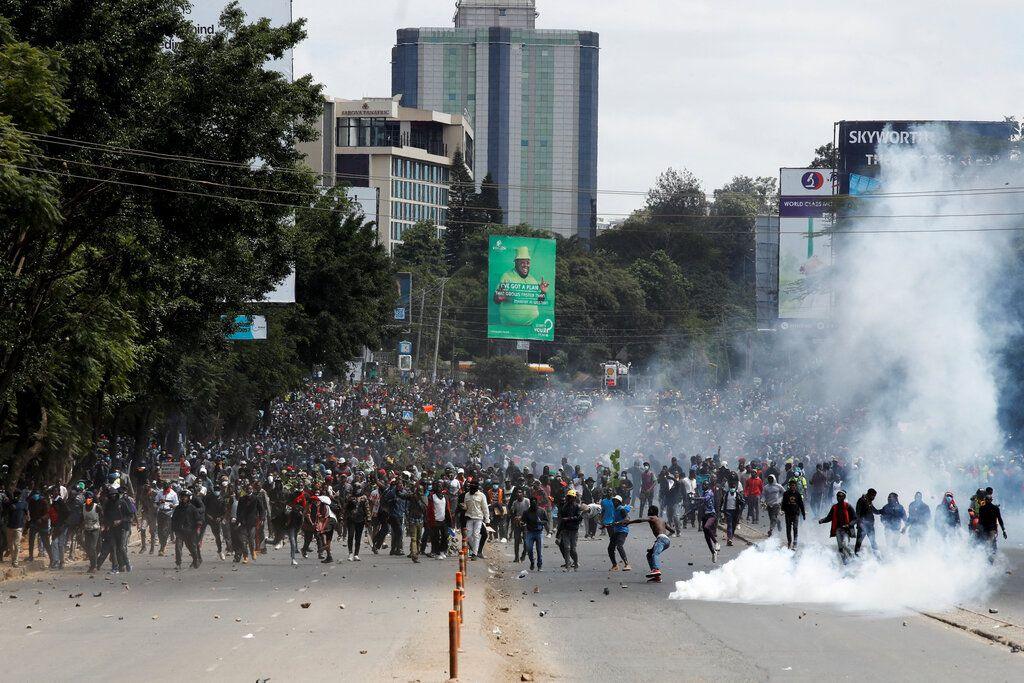
This week has been particularly raw in Africa. The continent continues to face severe economic challenges, spending more on debt servicing than on health and education. But nothing evoked more emotion than the horror of policemen shooting at rioters on the streets of Nairobi as they protested against what they considered the most draconian fiscal legislation in the country. Over two dozen Kenyans were killed after the protesters entered parliament, smashing windows and doors and setting part of the buildings on fire. They have been protesting against a piece of legislation known as the Finance Bill 2024, recently passed by parliament and set to be signed into law by President William Ruto. The enactment essentially imposed higher taxes on practically every item in the country, from bread to tires to TVs to motor cars. In Kenya, a finance bill is usually presented to parliament before the beginning of the financial year that runs from July to June, detailing the government’s fiscal agenda. For the 2024/2025 bill, the government planned to raise $2.7 billion in additional taxes to reduce budget deficit and state borrowing.
READ ALSO: Kenya Anti-tax Protest: President Ruto Withdraws Controversial Bill Amid Deaths
Join our WhatsApp ChannelBut Kenyans would have none of it. Protests erupted nationwide culminating in Tuesday’s total shutdown which quickly turned violent as police fired rubber bullets and live rounds. Initially, the government responded tepidly by scrapping the 16% VAT on bread along with taxes on motor vehicles, vegetable oil, and mobile money transfers, but when it became apparent that the violence would not abate, President Ruto addressed the nation Tuesday night, describing the riots as threats to “national security.’’ He said the rioters were criminals and vowed a massive crackdown. “It is not in order or even conceivable, that criminals pretending to be peaceful protesters can reign terror against people, their elected representatives and institutions established under our constitution, and expect to go scot-free,’’ the president said. But early the following day, President Ruto made a sudden climb down. Surrounded by the same lawmakers who passed the bill, he announced that he would no longer sign it and that the legislation would be withdrawn. He promised to consult with a cross-section of Kenyans on the way forward. By the end of the week, Kenyans were getting set to go on a one-million-person march to continue the protests, not only against the bill, but also against endemic corruption in government. At dawn on Friday, policemen and soldiers had taken over the streets, firing tear gas at the people who were now shouting “Ruto must go.’’ There were stalemates and tension in the country. This is a recipe for disaster. Most violent revolutions in history were instigated by hunger.
Like most of the continent, Kenya is gripped by severe debt burden. Yet it is the continent’s fastest-growing economy. Its domestic and foreign debts stand at a staggering $80 billion, about 75% of GDP, according to a recent UN report. Kenya faces a spectre of default, and it was in a desperate bid to avoid this that the government proposed those draconian tax hikes. As I watched the rioters on TV, I recalled the SAP riots of 1989; the series of June 12 riots in 1993, 1994 and 1995 and the 2020 anti-police brutality riots in Nigeria. My mind also went to our own dire situation in Nigeria. Every year, Nigeria spends all of its revenues in servicing a total public debt of N121.67 trillion (over $800 billion at today’s exchange rate); and this is the reason the country borrows to run the government, pay salaries and fund social services. In addition, rising inflation and the unbearable cost of living crisis have rendered ordinary people poorer by over 35%. Food, medicines and basic necessities have become unaffordable to majority of the citizens, rendering a lot of our people hungry while children are facing severe malnutrition, especially in the northern region. We are sitting on a keg of gunpowder!
What irks Nigerians more is that in spite of the untold hardship and suffering in the land, the political class continues to live in utmost lavishness and ostentation. The federal government had last year spent billions to purchase vehicles for the president and his wife; and renovate the vice president and the president’s official residences in Lagos and Abuja. Currently, there are plans to buy a brand-new plane for the president. Meanwhile, presidential travels, usually made up of bloated delegations, continue to sap the treasury of scarce foreign exchange, while corruption goes on unabated within the bureaucracy. In the state capitals, the governors are living in unbelievable opulence at the expense of the public. The insensitivity of these people is simply jarring.
Nigerians are keenly watching as Kenya boils. Public anger is rising in Africa’s most populous nation, but so far, it is not boiling over. During Christmas, the federal government and states like Akwa Ibom, Oyo, Rivers and Lagos as well as companies like Dangote Industries Limited spent billions to buy and distribute food items to citizens. “Through our massive food distribution programme across the nation, I was able to appreciate the scale of hunger and poverty in the country,’’ said Anthony Chiejina, DIL’s chief branding & communications officer to this writer recently. But for how long will these palliatives assuage the simmering furore across the land? As boxing legend, Mike Tyson, put it, “everyone has a plan until they get punched in the face.”