Fakoyejo Olalekan
Foreign Direct Investment (FID) into Nigeria and other Sub-Saharan African countries could drop by $10 billion, the International Monetary Fund (IMF) has disclosed.
The IMF made this known in a post titled; “Economic Growth in Sub-Saharan Africa Could Permanently Decline if Geopolitical Tensions Escalate.”
Join our WhatsApp ChannelIn the statement obtained via Gmail, the IMF said the loss would be caused by the geopolitical tensions involving the United States, European Union, Russia and China.
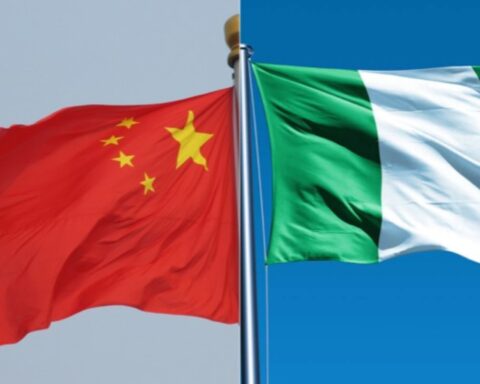
According to the global financial body, should the geopolitical tensions lead to the world splitting into two isolated trading blocs centred around China or the United States and the European Union, Africa’s economy will bear most of the brunt.
Economies in Sub-Saharan Africa will be at the receiving end, resulting in a decline in foreign capital importation and a permanent decline in the continent’s GDP by about 4 per cent after 10 years.
Already, policies by the Nigerian government have caused the country to suffer a drop in foreign capital importation from $23.9 billion in 2019 to $5.32 billion in 2022.
The split in world trade would further worsen the foreign inflow into Nigeria, which is Africa’s largest economy, as international investors look elsewhere to invest.
In the post warning of the repercussion of the world splitting into two isolated trading blocs, IMF said: “Sub-Saharan Africa could stand to lose the most if the world were split into two isolated trading blocs centered around China or the United States and the European Union.
“In this severe scenario, sub-Saharan African economies could experience a permanent decline of up to 4 percent of real gross domestic product after 10 years according to our estimates—losses larger than what many countries experienced during the Global Financial Crisis,” the statement reads.
Explaining further, IMF stated: “Economic and trade alliances with new economic partners, predominantly China, have benefited the region but have also made countries reliant on imports of food and energy more susceptible to global shocks, including disruptions from the surge in trade restrictions following Russia’s invasion of Ukraine.
“If geopolitical tensions were to escalate, countries could be hit by higher import prices or even lose access to key export markets—about half of the region’s value of international trade could be impacted.
“The losses could be compounded if capital flows between trade blocs were cut off due to geopolitical tensions. The region could lose an estimated $10 billion of foreign direct investment (FDI) and official development assistance inflows, which is about half a percent of GDP a year (based on an average 2017–19 estimate). The reduction in FDI in the long run could also hinder much-needed technology transfer.”