Admin
Admin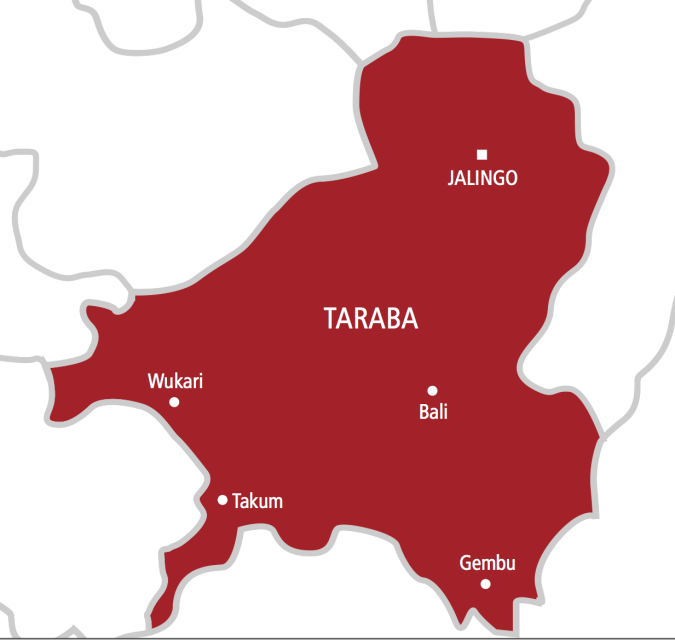
By Enehizena Saliyuk
City revival is often misunderstood as paint, paving stones, and photo opportunities—the visible parts of governance that lend themselves to ribbon-cutting.
But the real work of reviving a city is quieter and more demanding: restoring confidence in public institutions, rebuilding the routines of everyday life, and expanding what citizens believe is possible. In Taraba State, a set of deliberate interventions some symbolic, others deeply practical is beginning to outline a model of urban renewal that is less about aesthetics and more about dignity, access, and economic flow.
Join our WhatsApp ChannelConsider the Wukari internal roads. Roads are the most democratic form of infrastructure: everyone uses them, whether they own a car, push a wheelbarrow, ride a motorcycle, or walk to school. When internal roads fail, the city’s pulse becomes irregular—markets shrink, emergency response slows, transport costs rise, and small businesses spend more time coping than growing.
By fixing Wukari’s internal road network, the government is not merely “improving mobility”; it is returning time to citizens. It is lowering the hidden tax of frustration that poor infrastructure imposes on productivity. There is a profound civic message in a well-laid road: you matter enough for your movement to be taken seriously.
The Takum Junction flyover adds a second dimension to this story—planning. Flyovers are not built for decoration; they are built to acknowledge that cities will expand, traffic will grow, and economic activity will intensify. A junction is where the daily negotiations of a city take place—drivers, traders, commuters, transport unions, impatient schedules, and fragile tempers. When a junction becomes a bottleneck, it becomes a daily referendum on state capacity.
A flyover says: “We have seen the future, and we are preparing for it.” It is the language of anticipation rather than reaction, and that difference—between managing crises and designing systems—separates merely functioning cities from flourishing ones.
READ ALSO : Is Nigeria’s Christian Faith Embracing Tattoo Culture?
But no city can truly claim renewal if its people still fear illness as a financial or logistical death sentence. That is why the Wukari Hospital is not a standalone project; it is the moral centre of the revival narrative. A hospital represents the most intimate promise a government can make: that life will be protected, that suffering will not be ignored, and that care will not be a privilege reserved for those who can travel or pay. When health infrastructure is strengthened, it does more than treat patients; it stabilises households, reduces catastrophic health spending, improves workforce reliability, and strengthens social cohesion.
In practical terms, it also changes settlement patterns—people can stay, invest, and build where they live because essential services are not distant dreams.
Urban renewal in Wukari—beyond roads and facilities—signals something even more ambitious: an attempt to reimagine the city as an ecosystem rather than a collection of projects.
True urban renewal thinks in layers: drainage that prevents floods from turning streets into rivers; streetlights that extend economic activity beyond daylight; walkways that restore safety and dignity to pedestrians; public spaces that invite order rather than chaos.
Renewal is not the mere replacement of old structures—it is the restoration of civic pride. When a city becomes visibly cared for, citizens often become more willing to care for it too. That is the subtle psychology of development: people protect what they feel belongs to a shared future.
The same logic is taking root in Jalingo, where urban renewal is ongoing. Capital cities often become symbols of a state’s ambition, its administrative seriousness, and its identity. When Jalingo is renewed thoughtfully, it becomes a statement that Taraba is not content with survival; it is reaching for modernity in the everyday sense—cleaner streets, more predictable movement, better public order, and infrastructure that matches the aspirations of its young people.
This is important because cities are where talent chooses to stay or leave. Urban renewal is, in many ways, a retention strategy for hope.
Yet infrastructure is only as enduring as the leadership culture behind it. That is why the role of leadership and vision cannot be treated as a motivational add-on; it is the operating system. Projects that transform cities require continuity, prioritisation, and the courage to be judged not by promises but by outcomes. Vision gives coherence—so that a road connects to a market plan, a flyover connects to traffic management, a hospital connects to public health strategy, and urban renewal connects to economic competitiveness.
In this context, Taraba’s plan to build the capacity of its State Executive Council members through the Taraba Leadership Strategy Lab is one of the most consequential moves. When governments invest in the competence of the people who design, supervise, and sustain reforms, they reduce the risk that progress will be temporary.
Capacity-building is not ceremonial; it is how policy becomes execution, and execution becomes trust. A strategy lab, done well, can institutionalise problem-solving—helping leaders read data, coordinate across ministries, manage stakeholders, and deliver projects on time and within standards.
Taraba’s emerging lesson is simple but powerful: city revival is not a single event. It is a discipline. It is leadership made visible through roads that save time, junctions that ease movement, hospitals that protect life, and urban spaces that restore pride.
If sustained, this approach will not only change the look of Taraba’s cities—it will change the expectations of its people. And once citizens begin to expect more from governance, the future stops being a slogan and starts becoming a plan.

Amanze Chinonye is a Staff Correspondent at Prime Business Africa, a rising star in the literary world, weaving captivating stories that transport readers to the vibrant landscapes of Nigeria and the rest of Africa. With a unique voice that blends with the newspaper's tradition and style, Chinonye's writing is a masterful exploration of the human condition, delving into themes of identity, culture, and social justice. Through her words, Chinonye paints vivid portraits of everyday African life, from the bustling markets of Nigeria's Lagos to the quiet villages of South Africa's countryside . With a keen eye for detail and a deep understanding of the complexities of Nigerian society, Chinonye's writing is both a testament to the country's rich cultural heritage and a powerful call to action for a brighter future. As a writer, Chinonye is a true storyteller, using her dexterity to educate, inspire, and uplift readers around the world.