 MARCEL MBAMALU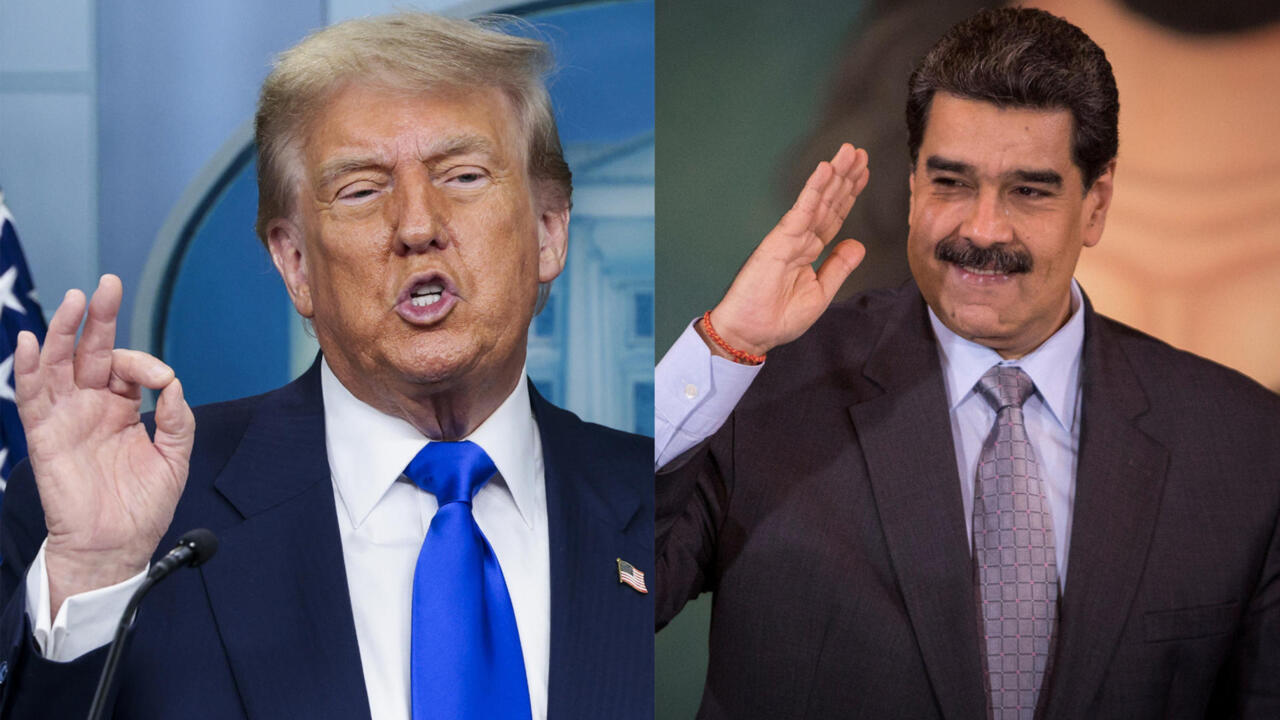
How Maduro Was Taken: Speed, Precision and Might
In the early hours of a still, uneasy Caracas night, events unfolded that many observers once considered unthinkable: the arrest of a sitting Venezuelan president by foreign forces. By dawn, Nicolás Maduro, long portrayed as untouchable behind layers of steel, soldiers, and secrecy, was no longer in Venezuela.
Join our WhatsApp ChannelAccording to U.S. officials and media briefings, the operation that led to his capture was not a spontaneous raid, nor a reckless gamble. It was a tightly sequenced military action designed to achieve one objective only: reach Maduro before he could disappear into his last line of defence.
The Target and the Clock
Maduro’s personal security architecture had long revolved around delay. His main residence and command locations were designed less to defeat an invading force outright than to buy time; that is, time to escape, to seal himself into reinforced safe rooms, or to trigger a political and military standoff.
At the heart of that design was what U.S. officials later described as a steel-reinforced inner refuge, a hardened space capable of being sealed off from the rest of the compound. Once inside, extracting him would have required hours, possibly days, and significant destruction.
The operation therefore became a race against the clock.
Air Dominance Before Boots on the Ground
The first phase reportedly took place far above the city. Before ground forces moved, U.S. aircraft neutralised key Venezuelan air-defence systems and radar nodes. This step, often invisible to civilians, is critical in modern warfare: control the air, and you control the tempo.
With Venezuelan military response systems degraded, U.S. planners could insert helicopters with reduced risk of interception or coordinated resistance. The objective was not occupation, but corridor creation, a brief window of uncontested movement.
The Role of Delta Force
The ground component was reportedly executed by Delta Force, an elite U.S. Army unit trained for hostage rescue, counterterrorism, and high-risk capture missions. Such units are built around speed and precision rather than sustained combat.
Instead of engaging large numbers of Venezuelan troops, the unit focused on bypassing resistance, exploiting confusion, and moving directly to the target location. In such missions, every additional minute increases the likelihood of escalation, civilian casualties, or mission failure.
This explains a point that puzzled many observers afterward: why U.S. forces were not significantly harmed. The operation was structured to avoid prolonged firefights altogether.
Why the “Fortress” Didn’t Save Maduro
In public remarks, President Donald Trump described Maduro’s residence as “a fortress.” The term is not mere rhetoric. Modern presidential safe rooms are built with layered security, blast-resistant doors, steel walls, and independent power and ventilation systems.
To defeat such defences, assault teams often carry industrial cutting tools, commonly referred to as blowtorches. These are not cinematic flames waved in the air, but controlled, high-temperature devices capable of cutting through reinforced steel when explosives are too risky.
Trump’s remark that U.S. forces “didn’t have to use the blowtorches—hard” was revealing. It suggested that Maduro never reached the sealed inner refuge. He was intercepted while still mobile, before doors could be locked and systems engaged.
In operational terms, this is decisive. Once a target is cut off in open or semi-secured space, resistance collapses quickly.
Why There Was No Prolonged Battle
Three factors appear to have shaped the outcome (1) Surprise- The operation reportedly unfolded at night, when alertness is lowest and coordination weakest. (2) Overwhelming superiority- Air control, intelligence dominance, and elite ground forces meant Venezuelan defenders faced an asymmetrical situation from the start. (3) Narrow mission scope- The goal was not regime change by force, but extraction. Once Maduro was secured, the mission ended.
This explains why there were no reports of extended clashes, mass casualties, or urban destruction. Speed was the weapon.
Extraction and Aftermath
After his capture, Maduro and his wife were reportedly flown out by helicopter and transferred offshore before being moved onward to U.S. custody. From that moment, the operation shifted from military to legal and diplomatic terrain, and this is where controversy now rages.
Supporters of the action frame it as law enforcement backed by military precision. Critics describe it as a violation of sovereignty and international law. Both views now coexist in global discourse.
What the Operation Really Demonstrates
Beyond the politics, the operation illustrates a wider reality of contemporary power. Modern conflicts are no longer defined solely by armies clashing, but by information, timing, and access. Fortresses still matter, but only if their occupants reach them in time.
In this case, according to U.S. accounts, Nicolás Maduro did not.
And in modern warfare, difference measured in minutes can decide the fate of governments.