

 Etim Etim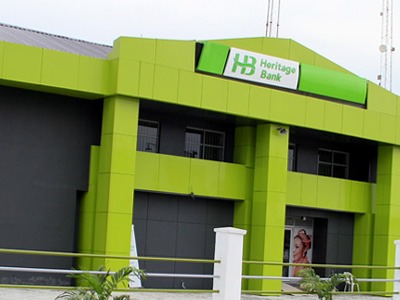
Many Nigerians were caught unawares by yesterday’s revocation of the license of Heritage Bank by the CBN, but among many industry operators, it was widely known that the bank has been severely distressed in the last five years. Under Godwin Emefiele, the CBN did not have the appetite to close down a bank, and so Heritage was under life support for a long time, relying mostly on borrowing from the CBN and the interbank market to support its businesses. But Yemi Cardoso is taking the apex bank in a different direction. He’s trimming the workforce, streamlining functions and divesting it from noncore regulatory duties. Heritage has therefore become the first bank since the 2005 consolidation to be allowed to crash. There have been a few sick ones since then – notably Intercontinental and Diamond – but they were not liquidated. They were purchased by a healthier one. So, why was Heritage not purchased by one of the stronger banks?
According to CBN’s Revocation Order signed by Cardoso, dated June 3 and seen by this writer, Heritage Bank contravened Section 12 (1) of the Banks and Other Financial Institutions Act (BOFIA) 2020 in five different ways: It has insufficient assets to meet its liabilities; conducted its business in an unsound manner; failed to comply with specific obligations imposed upon it under BOFIA, 2020 and the Central Bank of Nigeria Act as well as rules, regulation, guidelines and directives made under both Acts; is critically undercapitalized with a capital adequacy ratio below the prudential minimum applicable to its license category; and its financial performance and condition constitute a threat to financial stability.
Join our WhatsApp ChannelREAD ALSO: Why CBN Revoked Heritage Bank’s Licence
Based on Heritage Bank’s 2021 audited (but qualified) Statement of Accounts and Annual Report, its net interest income (that is interest income less interest expense) was in the negative. Net interest income measures the profitability of a bank and is a major source of income for a bank. It is the difference between what a bank earns as interest on loans and what the bank pays out to depositors as interest on their deposits. Heritage was paying out more to its depositors (mostly interbank lenders and CBN) than what it was earning on loans. This is largely because the bank’s non-performing loan (NPL) ratio was as high as 81.2 per cent. In other words, Heritage had too much bad loans in its books and so was not earning enough interest income. Out of every N100 it gave out as a loan, N81.2 was bad and unrecoverable. This is a recipe for disaster for any bank.
READ ALSO: Heritage Bank: FG Opens Online Platform For Depositors To Retrieve Funds From Defunct Bank
In addition, the bank’s operating expenses were also higher than its interest income, and so for the 2021 financial year, the bank recorded a loss of N82.928 billion and an accumulated loss of N459 billion. It is the largest loss recorded by any bank in this country in the last 30 years. Heritage Bank’s shareholders’ funds were -N230 billion (Negative N230 billion). At 81.2 per cent NPL, accumulated losses of N459 billion and Negative Shareholders’ funds of N230 billion, Heritage was a dead bank in the world of the living. There was nothing to do to revive it. Just imagine putting a cadaver in a shop and claiming that it is the shopkeeper!
You can now understand why no other bank was willing to buy Heritage. A distressed bank is bought for the value it would add to the purchaser despite its ill health. It could be the large branch network; size of customer base or its retail franchise with considerable savings and current account balances. Diamond Bank was distressed when Access Bank bought it in 2014, but it was an attractive investment because it had a lot of retail customers which Access didn’t have then. Intercontinental was very distressed too (I wrote a lengthy article on this in February), but Access went into it because it had a wide branch network which Access didn’t have then. And so, because of these two acquisitions, Access automatically became the nation’s biggest bank by assets and customer base.
Heritage had nothing to offer any potential buyer apart from its long and complicated history which might have been its Achilles heel. It was founded in the 1970s as Société Générale Bank (SGBN), a subsidiary of a French Bank, by the late Kwara politician, Dr. Abubakar Olusola Saraki. He was the leader of the Senate in the Second Republic under the NPN, and his son, Bukola Saraki, a medical doctor like the father, was Kwara State governor in 2003 and senate President in 2015. In 2006, the CBN closed down SGBN after the Soludo consolidation for failure to meet the N25 billion minimum capital requirement. But SGBN successfully challenged the closure in court.
In December 2012, the CBN reissued SGBN promoters a regional banking license and with new owners, the bank was rebranded as Heritage Banking Company Ltd. It opened for business under the new name in March 2013. Heritage was eager to grow inorganically, and so it acquired Enterprise Bank, a distressed bank formerly known as Afribank, from AMCON (Asset Management Corporation of Nigeria) in 2015 for N56.1 billion. A rebranded distressed bank buying another rebranded distressed bank! The Holy Book says ‘‘when the foundation is weak, what can the righteous do?’’ (Psalms 11:3).
Now, the NDIC has its job cut out for it. It should move quickly to take possession of whatever remains of Heritage, liquidate it and pay off the insured depositors. There are a few lessons to learn from this, and we shall explore it in the next article.








Hello there, You have done a great job. I’ll certainly digg it and personally recommend to my friends. I am confident they’ll be benefited from this web site.