 Emmanuel Ochayi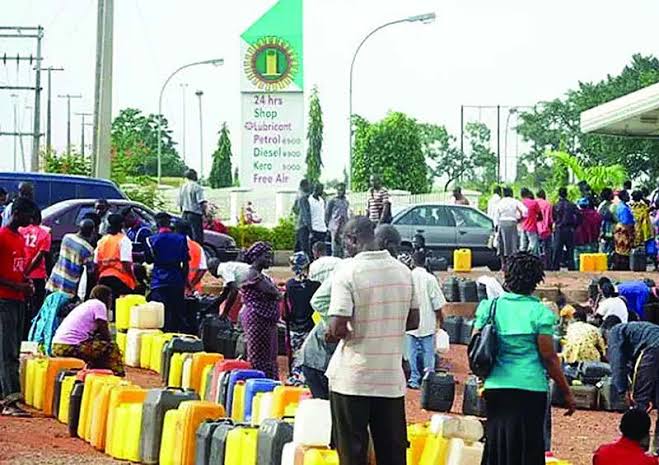
The ongoing controversy between the Nigerian National Petroleum Company Limited (NNPCL) and the Independent Petroleum Marketers Association of Nigeria (IPMAN) over fuel pricing has sparked widespread public debate.
IPMAN’s accusations against NNPC Limited’s pricing strategies have raised critical concerns about the national oil company’s role in distributing petroleum products. However, a closer look at the issue reveals a more complex situation—one that calls for collaboration among all stakeholders, rather than placing blame on one party.
Join our WhatsApp ChannelIPMAN vs NNPC: What is the Real Issue?
At the centre of the dispute is IPMAN’s claim that NNPC Limited buys fuel from the Dangote Refinery at prices below N900 per litre but sells it to independent marketers at much higher prices. IPMAN’s President, Abubakar Garima, recently stated, “Marketers can now source products directly from the Dangote Refinery without relying on NNPC Limited.” This new deregulation in Nigeria’s fuel market allows for more competition, but it has not been without its challenges.
NNPC Limited’s contractual arrangement with the Dangote Refinery guarantees a daily supply of 25 million litres of petrol. Yet, in reality, NNPC has received only around 7 million litres per day—about 27% of the contracted amount. This shortfall has caused fuel shortages and brought back long queues at petrol stations across Nigeria. The initial expectation was that the Dangote Refinery would supply 540 million litres of petrol to the market between mid-September and early October. However, only a little over 100 million litres were delivered.
The Dangote Refinery Bottleneck
It’s easy to point fingers at NNPC Limited, but the underlying issue is the Dangote Refinery’s failure to meet its obligations. The refinery’s low production output has become a significant bottleneck in Nigeria’s fuel supply chain. While NNPC Limited is responsible for managing its agreement with Dangote, it cannot fully control the operational challenges the refinery faces.
READ ALSO: NNPCL, IPMAN Agree On New Petrol Price Of N995 Per Litre, Fuel Supply Resumes
The inconsistent supply from the Dangote Refinery has exacerbated fuel shortages across the country. However, the solution is not to demonise NNPC Limited but to address the refinery’s inefficiencies. Improving its output could stabilise fuel availability and prices in Nigeria, reducing reliance on imports.
How Deregulation Affects the Market
With Nigeria’s downstream petroleum sector now deregulated, independent marketers have more freedom to import fuel directly or buy from the Dangote Refinery at negotiated prices. This competitive environment is supposed to benefit consumers by lowering prices and ensuring more stable fuel access. Yet, the reality has been different.
NNPC Limited no longer holds a monopoly on fuel supply, which represents a significant shift in its role within the market. Garima has acknowledged that marketers now have more control over their supply chains and pricing. This means that while NNPC Limited may be involved, it is not solely responsible for the high prices consumers currently face.
The Challenge of Pricing and Supply Chain Realities
There is no denying that NNPC Limited’s pricing strategies have come under fire. However, these strategies are reflective of market realities. Global fuel price fluctuations, supply chain disruptions, and Nigeria’s infrastructure deficits all play a role in determining the final price of fuel.
An official from NNPC Limited stated, “We are working within the constraints of a volatile market. We’ve introduced flexible payment terms for marketers, including a seven-day payment window and refund mechanisms when prices shift. These measures are designed to provide some relief in this unpredictable environment.”
While these steps may not completely solve the problem, they show that NNPC Limited is making efforts to navigate the challenges of a deregulated fuel market. Rather than focus solely on the company’s pricing, it is crucial to understand the broader context.
Collaboration is Key to a Sustainable Solution
To address the fuel crisis effectively, the focus must shift from blaming NNPC Limited to collaborating on practical solutions. The inefficiencies at the Dangote Refinery need urgent attention. The Nigerian government should step in to help improve the refinery’s operations, ensuring it meets its supply obligations and stabilises the market.
Additionally, encouraging more independent marketers to enter the market could promote competition, which would drive down prices. However, investment in infrastructure—such as storage facilities and transportation networks—is also necessary. Without this, fuel distribution will remain inefficient, and shortages will continue to plague the country.
Building a Better Fuel Market for Nigeria
Open dialogue between NNPC Limited, IPMAN, the Dangote Refinery, and other stakeholders is critical to solving the current crisis. Rather than engage in a blame game, these entities must work together to build a more resilient and transparent fuel market. With proper government support, investment in infrastructure, and improved refinery operations, Nigeria can reduce its reliance on imported fuel and secure stable local supplies.
As an industry observer noted, “Nigeria’s fuel market is at a crossroads. Collaboration, not conflict, will be the key to moving forward. We must work together to address the root causes of fuel scarcity and create a competitive market that serves the interests of all Nigerians.”
Moving Beyond Blame
Nigeria’s fuel challenges are complex, involving global market dynamics, local refinery inefficiencies, and logistical issues. However, none of these problems are unsolvable. By fostering collaboration and addressing the operational inefficiencies at the Dangote Refinery, Nigeria can build a stable, competitive fuel market that benefits its citizens.
In the words of another fuel marketer, “The time for finger-pointing is over. We need to collaborate to solve the real issues at hand. That’s the only way to fuel Nigeria’s future.”

Emmanuel Ochayi is a journalist. He is a graduate of the University of Lagos, School of first choice and the nations pride. Emmanuel is keen on exploring writing angles in different areas, including Business, climate change, politics, Education, and others.