Fakoyejo Olalekan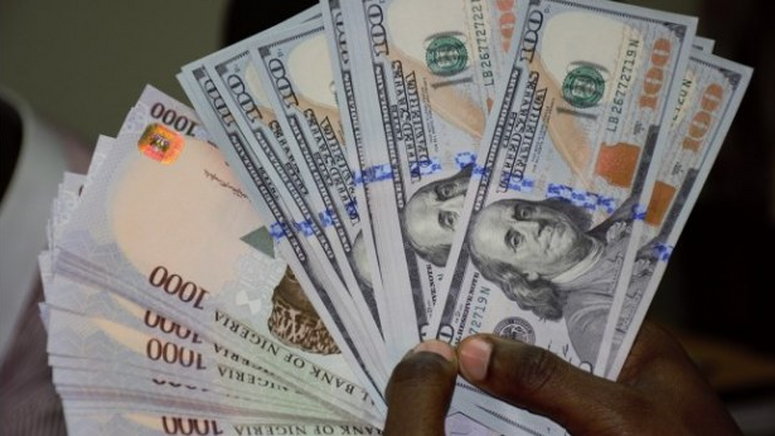
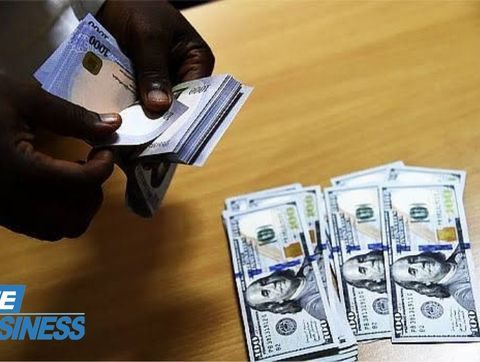
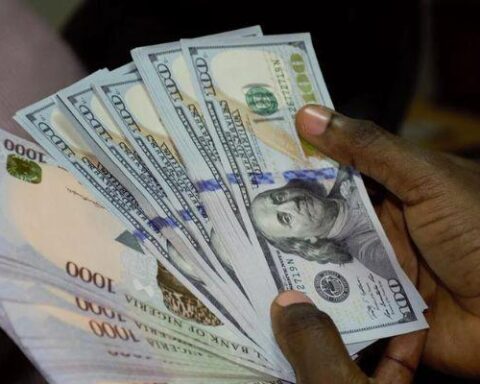
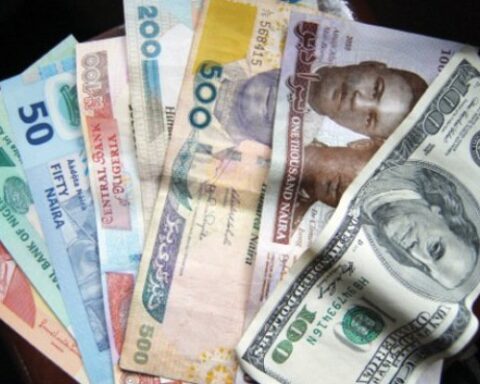
The exchange rate between the naira and the dollar continues to fluctuate in the official market, as both currencies ended trading at N744.41/$1 on Monday.
Prime Business Africa learnt that the price of the United States Dollar (USD) increased slightly by N3.81 kobo from the N740.60/$1 rate reported on Friday.
Join our WhatsApp ChannelDuring trading in the official market, the exchange rate hit N799/$1, the day’s peak, however, it also dropped to a low of N740 before trading closed.
This was disclosed by FMDQ Exchange in a report released on Monday, the same day foreign exchange traders recorded $160.22 million in forex transactions.
The foreign exchange transactions dropped by $4.38 million or 2.66 per cent during trading from $164.60 million traded on Friday.
In the parallel market, the average naira to dollar exchange rate was N922.6/$1 on Monday, as the Nigerian currency depreciated by 0.08 per cent from N921.8/$1.
Also, the pound was sold at an average rate of N1188.9/£1 in the black market, as the worth of the British currency declined from N1191.4/£1.
Similarly, the euro also depreciated against the naira falling slightly to N1028.6/€1 average rate, from N1029.2/€1. This showed the value of the Nigerian currency appreciated by 0.05 per cent.
Meanwhile, the scarcity of foreign exchange continues to worry investors, as it prevents oil marketers from participating in the importation of fuel into Nigeria.
Recall that the Federal Government licensed some oil marketers to import fuel into the country, but some have suspended their plan due to scarcity of forex in the official market.
According to the Executive Secretary, Major Oil Marketers Association of Nigeria (MOMAN), Clement Isong, $25 million to $30 million is needed to import petrol into the country, however, the oil marketers are unable to source for the forex in the official market.
This has affected FG’s plan to increase the number of fuel importers, leaving the Nigerian National Petroleum Company (NNPC) Limited as the sole importer.
Increasing the number of importers is expected to increase competition and force down the price of fuel in the long run, however, with NNPC still the sole importer and the dollar rate rising further in the black market, which oil marketers depend on to obtain forex, the cost of petrol will skyrocket further.
Already, the oil marketers have started warning that the price of a litre of fuel could cross N700 in the coming weeks, projecting the pump price will rise from N580 and settle between N680 to N750 per litre.