 Victor Ezeja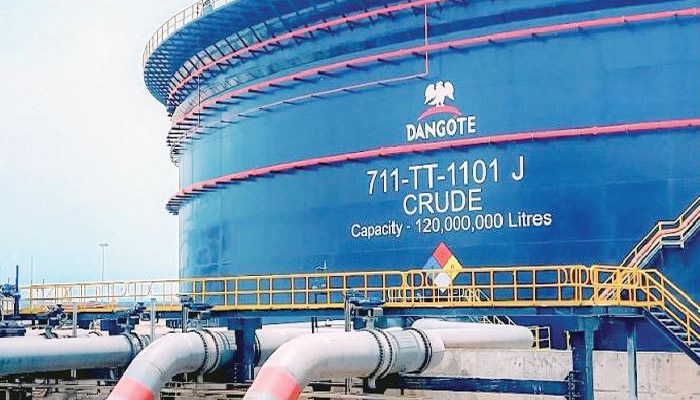
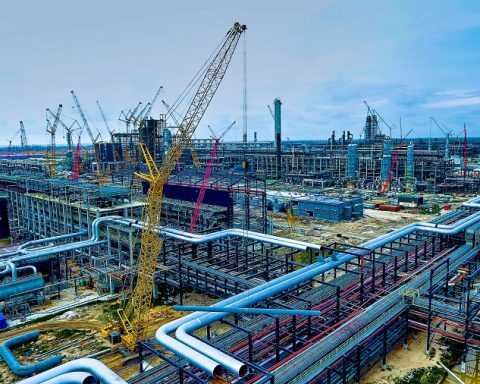
Dangote refinery and other new ones that sprang up in different parts of the world in recent times, including pipeline systems, are said to have altered global oil trade dynamics.
The 650,000 barrels per day Dangote Refinery which started operation in early 2024 reportedly retained 13 per cent of Nigeria’s crude oil exports in 2024, reflecting an increase from 2 per cent recorded in 2023, according to a Reuters report.
Join our WhatsApp ChannelThis reflects an increasing demand for crude oil by domestic refineries in the country.
The report, however, indicated that despite being a net exporter of crude oil, Nigeria still recorded 47,000 bpd of U.S. oil in 2024, a development that experts find unusual for an oil-exporting country.
The report noted that the Dangote refinery played a significant role in crude oil import volume recorded in 2024 in Nigeria.
READ ALSO: Dangote Refinery Accuses NNPCL Of Misleading Claims On $1bn Investment
Prime Business Africa had reported that the Dangote refinery resorted to import to meet its feedstock need as the Nigerian National Petroleum Company failed to supply crude oil to the $20 billion facility.
The report revealed that the increase in refining capacity in Bahrain, Oman and Iraq as well as Dos Bocas in Mexico, may likely increase crude oil demand in those regions.
It added that with the new Trans Mountain pipeline, Canada may now export an additional 590,000 barrels per day to the Pacific Coast, increasing the country’s waterborne exports to a record 550,000 barrels per day by 2024. As a result, refineries in the U.S. West Coast have purchased less Saudi Arabian and Latin American oil, and re-exports from the U.S. Gulf Coast have decreased due to direct supplies from Canada to Asian nations.
According to the report, the amount of crude oil exported worldwide fell by 2 per cent in 2024, marking the first decline since the COVID-19 pandemic.
This is due to slow demand growth and altered trading routes brought about by sanctions, conflicts, and the construction of new refineries and pipelines.
Tanker supplies were frequently diverted due to the conflicts in the Middle East and Ukraine, while importers in Europe and South America were compelled to look for alternative sources as a result of the sanctions imposed on Russia and Iran.
As Russia’s war with Ukraine broke out, European refiners increased their purchases of oil from the Middle East and the United States while decreasing their imports from Russia.
However, refiners resorted to the United States and Guyana as a result of increased transportation costs from the Middle East brought on by Israel’s war with Gaza, which was causing attacks on ships in the Red Sea.