 MARCEL MBAMALU
Dangote–Farouk Saga: Why Damning Claims Brought Down Oil Sector Giants
By Dr Marcel Mbamalu
Join our WhatsApp ChannelIn a stunning turn of events, high-profile resignations have rocked Nigeria’s oil sector, leaving many wondering what’s really going on.
The sudden exits of Farouk Ahmed and Gbenga Komolafe, amidst explosive allegations by Aliko Dangote, have sparked intense scrutiny and raised questions about accountability in the industry.
Dangote’s claims of corruption, lavish spending, and sabotage have sent shockwaves, but it’s the unexplained $5 million school fees in Switzerland that’s really grabbing attention. As Nigerians demand answers, the government’s muted response has only fueled, in part, by allegations of a $5 million school fee payment, has sparked outrage.
But this isn’t just about individual guilt or innocence – it’s about the culture of impunity in Nigeria’s oil sector. As Farouk and Komolafe step down, the government must seize this moment to demonstrate its commitment to transparency and accountability.
Will this be a turning point for Nigeria’s oil industry, or just another chapter in the same old story? One thing’s clear: the spotlight is on, and it’s shining bright.
In a system where officeholders rarely step aside over allegations, no matter how grave, these resignations have unsettled public expectations and forced a deeper reading of elite conduct.
At the centre of this moment is Farouk Ahmed, a prominent figure in Nigeria’s oil sector and regulatory history, whose recent decision to resign from leadership positions followed explosive allegations by Aliko Dangote.
Mr Dangote claimed that Farouk allegedly paid about $5 million in school fees for his children in Switzerland, engaged in corruption, and lived above his means.
Dangote further petitioned the Independent Corrupt Practices and Other Related Offences Commission (ICPC) to investigate the matter. Instead of fighting back, Farouk resigned abruptly, deepening questions about regulation, accountability and political pressure in Nigeria’s oil sector.
Perplexingly, around the same period, Gbenga Komolafe, chief executive of the Nigerian Upstream Petroleum Regulatory Commission (NUPRC), resigned alongside Farouk, reinforcing the sense that something unusual and consequential was unfolding.
Yet, rather than clearly defend its petroleum policy, the government remained muted, and President Tinubu immediately wrote to the Senate requesting expedited confirmation of Oritsemeyiwa Amanorisewo Eyesan as CEO of NUPRC and Engineer Saidu Mohammed as CEO of NMDPRA. To many Nigerians, this pattern of exits felt decidedly un-Nigerian.
A Rare Pattern: Resignation as a Political Signal
In Nigeria, resignation is not the default response to allegations. Officeholders typically fight back through litigation, political counter-accusations, or strategic silence while retaining office.
That is why the resignations linked to these recent allegations have been widely interpreted, fairly or not, as signals of vulnerability rather than mere acts of personal honour.
When Uche Nnaji resigned as Minister of Innovation, Science and Technology in October 2025 amid a certificate controversy, many Nigerians saw it as a shift: a recognition that public office now carries reputational costs institutions cannot indefinitely absorb.
Questions over the authenticity of his academic and NYSC credentials, confirmed by the University of Nigeria, Nsukka, and mounting public and legal pressure prompted his resignation, framed as a principled step to protect government integrity. Whether this reflects moral awakening or elite damage control is debatable, but its rarity gives it meaning. Yet as in the case of Farouk, the government was also muted.
Farouk, the Oil Sector and an Old Grudge
Worthy to note is that Nigeria’s oil sector has long been a battleground between public oversight and private power. In 2012, a House of Representatives ad-hoc committee investigating fuel subsidy abuses, chaired by Farouk Lawan, exposed the fraught interplay between regulators, lawmakers and dominant industry players.
Although that probe involved a different official, the episode established a historical pattern: scrutiny of powerful actors often provokes high-stakes confrontation.
Fast-forward to recent years, Farouk Ahmed, as CEO of NMDPRA emerged as a key figure in sectoral decisions, sometimes perceived as hostile to dominant private interests.
More reason Dangote appears to have long viewed Farouk’s pro-importation disposition and the entire public unions as a threat to his multi-billion-dollar refinery and the Nigerian economy.
After the refinery began producing fuel in 2024, the company accused NMDPRA of issuing import licences contrary to the Petroleum Industry Act.
Dangote argued imports should only cover supply gaps and alleged the regulator undermined local refining. The refinery sued NMDPRA, NNPC Ltd and oil marketers, seeking ₦100 billion in damages. The case survived early objections but was later withdrawn and dismissed by the Federal High Court.
By June this year, tensions shifted to labour and market control. Unions accused Dangote of sidelining workers and independent marketers through its distribution strategy.
In September, the crisis escalated when PENGASSAN called a nationwide strike over the alleged dismissal of more than 800 workers. The National Industrial Court restrained the strike, highlighting the refinery’s strategic importance.
In December, the conflict became openly political as Dangote publicly accused NMDPRA of policy sabotage and corruption.
Notably, allegations of corruption against Farouk were not new; civil society groups had previously called for his investigation. What changed was the accuser: coming from Africa’s richest man, the claims carried greater weight.
The $5 Million Question and the Swiss Symbol
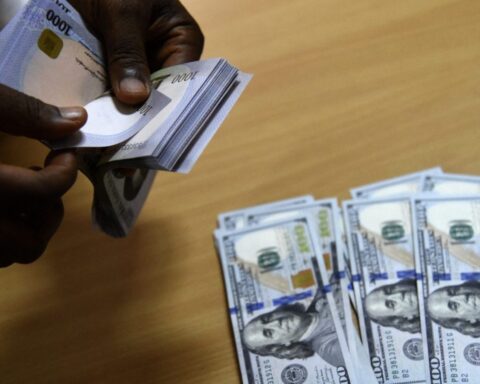
Dangote’s claim that Farouk allegedly paid $5 million in school fees at a Swiss institution struck a particular nerve, not merely because of the sum, but because of its symbolism. Journalists and analysts have rightly asked: what kind of school charges $5 million for four children, over what duration, and for what programmes?
While elite boarding schools and private universities in Europe and North America are undeniably expensive, figures approaching $5 million naturally raise questions, particularly in the absence of publicly known income streams that could justify such expenditure.
Tinubu Nominates New Oil Regulators as Ahmed, Komolafe Resign
The reference to Switzerland amplified suspicion. For decades, the country has occupied a troubled place in Nigerian political memory as a perceived haven for hidden assets, coded accounts and financial subterfuge. Although Swiss banking secrecy has been reformed, its symbolic association with offshore wealth persists in the public imagination.
None of this proves wrongdoing, but it may have helped explain why the allegation resonated and did not fade quickly from public discourse.
Resignation is not guilt, yet silence carries risk, because in Nigeria’s political culture, resignation without explanation is often read as tacit admission.
Resignation alone shields institutions, not personal reputations. By stepping down, Farouk appears to have chosen a civil, institutional option, protecting the organisations he led from reputational damage. That decision, while commendable, carries a danger, as he may now escape investigation by EFCC or ICPC.
To prevent history from recording his resignation as culpability, Farouk must go further: publicly account for his children’s educational arrangements, provide verifiable timelines and documentation, and, if necessary, invite independent scrutiny.
The burden does not rest on Farouk alone. Having made a detailed allegation, Dangote also carries responsibility. Should the matter reach judicial or investigative forums, he would be expected to substantiate his claims with documentary or testimonial evidence, clarify how the figures were calculated, and submit himself to cross-examination like any other citizen. Public accusation, no matter how powerful, is not a substitute for proof.
Taken together, this moment, the allegations, the resignations and the institutional distancing may signal a subtle but significant evolution in Nigeria’s political behaviour. Elites may now be more willing to retreat temporarily rather than brazenly defy public outrage. Whether this reflects genuine ethical reform or merely tactical withdrawal remains uncertain.
What is clear, however, is this: in a country where power rarely apologises and almost never resigns, resignation itself has become a message. The task before Nigerians and the media is to ensure that message is neither misread nor exaggerated, and that it does not fade without accountability.