Admin
Admin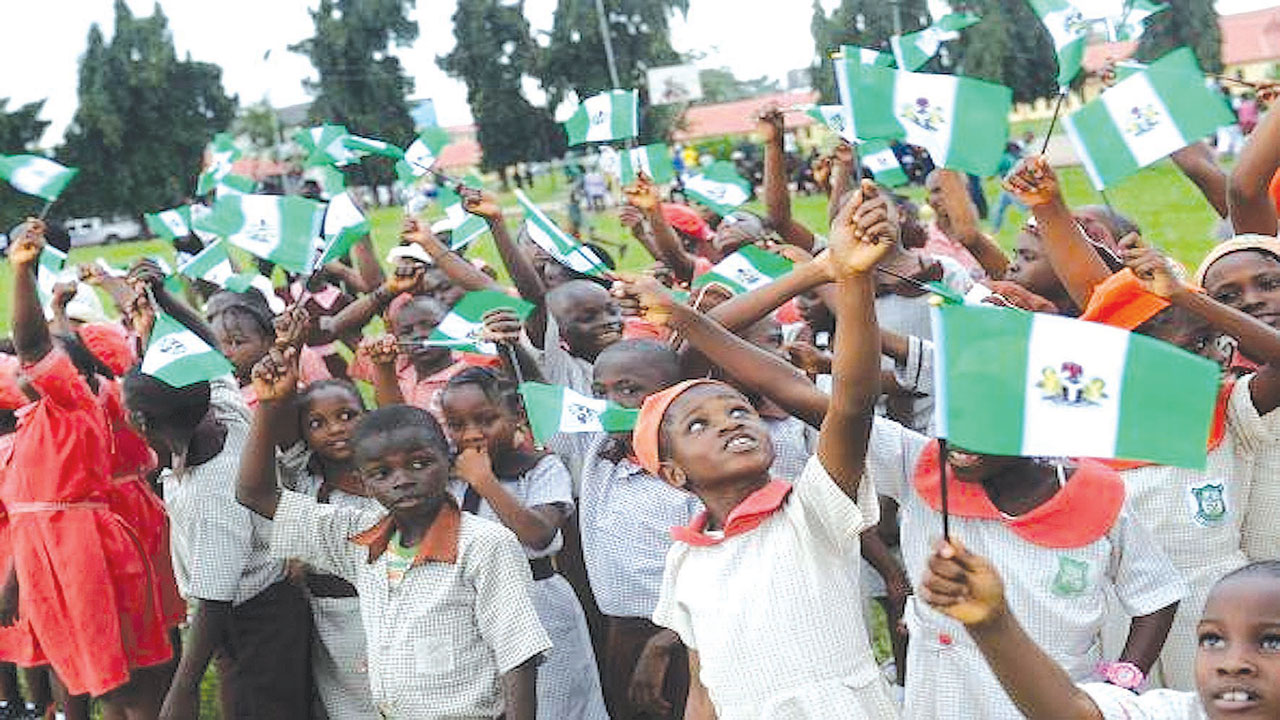
By Enoch Adewunmi Oyeduntan
Join our WhatsApp Channel
Children’s pure smiles and pleasant attitudes win many hearts. A day to honour them isn’t surprising.
Nigeria celebrates Children’s Day on May 27 to honour children worldwide and inspires adults to reflect on their own childhoods.
Similarly, UNESCO oversees the commemoration of World Day for Cultural Diversity for Dialogue and Development on May 21 each year. This day demonstrates not only the richness of the world’s cultures, but also the significance of intercultural communication for peace, equitable resource distribution, and long-term development for all, regardless of age, race, etc. Unquestionably, equity is the key to achieving diversity and inclusion, which will abolish injustice and share equally the advantages of an equitable environment, resources, and infrastructure development for everyone.
The majority of the discussion during this year’s celebration of diversity and inclusion day focussed on diversity and inclusion in the workplace. However, underprivileged children living in slums such as Makoko, Ajegunle, Amukoko, Badia, Bariga, Ijeshatedo/Itire, Ilaje, and Iwaya, among others, received little attention.
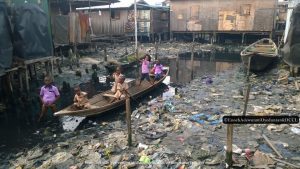
Children who grow up in slums like Makoko endure a childhood that frequently violates the expectations of both supporters of “innocent childhood” and “universal childhood. Several articles have undoubtedly been published on the Makoko slum, and numerous documentaries and films have been produced on and about the lives of the Makoko residents. Numerous commendable humanitarian efforts have been implemented in this slum beneath the most travelled bridge in the West African megacity, whose residents face a constant threat from diseases, hunger, poverty, neglect, malnutrition, and a lack of basic amenities such as hospitals, schools, portable water, and uninterrupted power supply.
During my numerous trips to Makoko, I captured this image of children living in a depressing, filthy, and highly unsanitary environment. I observed starving children attempting to paddle their boat through the murky, stench-filled water while other children raced and played on the hazardous footbridge near to them. Compared to their fellow counterparts on Banana Island, Lekki, Victoria Island, and other metropolitan districts of Lagos, it is a far cry. This picture subtly demonstrates how equality, diversity, and inclusion have disappeared, and the effects are plaguing these children’s lives.
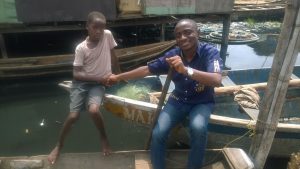
In full view of the Third Mainland Bridge, these Makoko children and their living conditions are a nightmare for many concerned citizens and the authorities. Everyone who arrives in Lagos to do business on the islands will likely cross the Third Mainland Bridge. Makoko is utterly antithetical to a city’s desire to reinvent itself as a mega and smart city. It is crucial to eliminate this stigma by employing fairness to achieve diversity and inclusion in wealth distribution and to address the basic needs of these children living in perilous and terrible situations.
There is a typical sight at Makoko, where visitors and residents alike board wooden canoes to get onto the floating settlement, the grey-black sludge that passes for lagoon water; and the cluster of canoes impatiently waddling through the dungeon of water ways. Every day, children in tattered clothes are out there struggling to live.
The living conditions of these children are deplorable, appalling and distressing. There is zero developmental growth. I’m sure that God never meant for children to live in such horrible places as they do now.
In Makoko, there are constantly a large number of under aged children are seen smoking fish in filthy areas, trading, and engaging in herculean chores in tough environments where they must fight for space with open defecators, urchins (popularly known as agberos). The sight of filthy conditions, staggering poverty, and adults and children living in these life-threatening conditions, such as the half-naked, malnourished children steering their own boats or playing on the verandas of the wooden shacks, and people smoking marijuana and gambling on dilapidated abandoned boats that have been converted into makeshift recreation centres, constantly reminds you of our “unbalanced society.
It is often assumed that the overall process of slum regeneration will inevitably benefit children in most slum redevelopment projects. This isn’t always the case, though. Children’s needs are not taken into consideration by even the finest cleanliness programmes, such as providing additional public toilets, as is now the case in most Nigeria slums. Children are afraid of public toilets, and they have to wait a long time for their turn because of the enormous adult wait. Children can often be seen squatting outside public toilets in their neighbourhoods or near their homes.
Certainly, many children who grow up in these deplorable conditions bear a double burden, since they frequently experience both physical and mental underdevelopment. The issue then arises: what are the crucial characteristics that might guarantee fairness, inclusion, and even development for slum-dwelling children, and how can these gaps be reduced? In this regards, we call on concerned authorities to identify, target, and reach out to these slums like Makoko through the following development options:
- Slum improvement: extending infrastructure in the slums where residents have themselves constructed incremental housing.
- Slum upgrading: extending infrastructure in the slums along with facilitation of housing unit upgrading, to support incremental housing
- Slum redevelopment: redevelopment of the entire slum after demolition of the existing built structures.
- Slum resettlement: in the case of untenable slums, to be rehabilitated on alternative sites.
Bearing the above in mind, efforts should be made for: Increased and improved social services and health care; increased and improved water supply and infrastructure; expanded educational options; and implementation of robust health sensitization programmes of any kind; Proper waste management and sanitation execution while relying on indigenous water management knowledge.
Dr. Enoch Adewunmi Oyeduntan, Ph.D Developmental Communication and Public Health Communication Specialist.