Fakoyejo Olalekan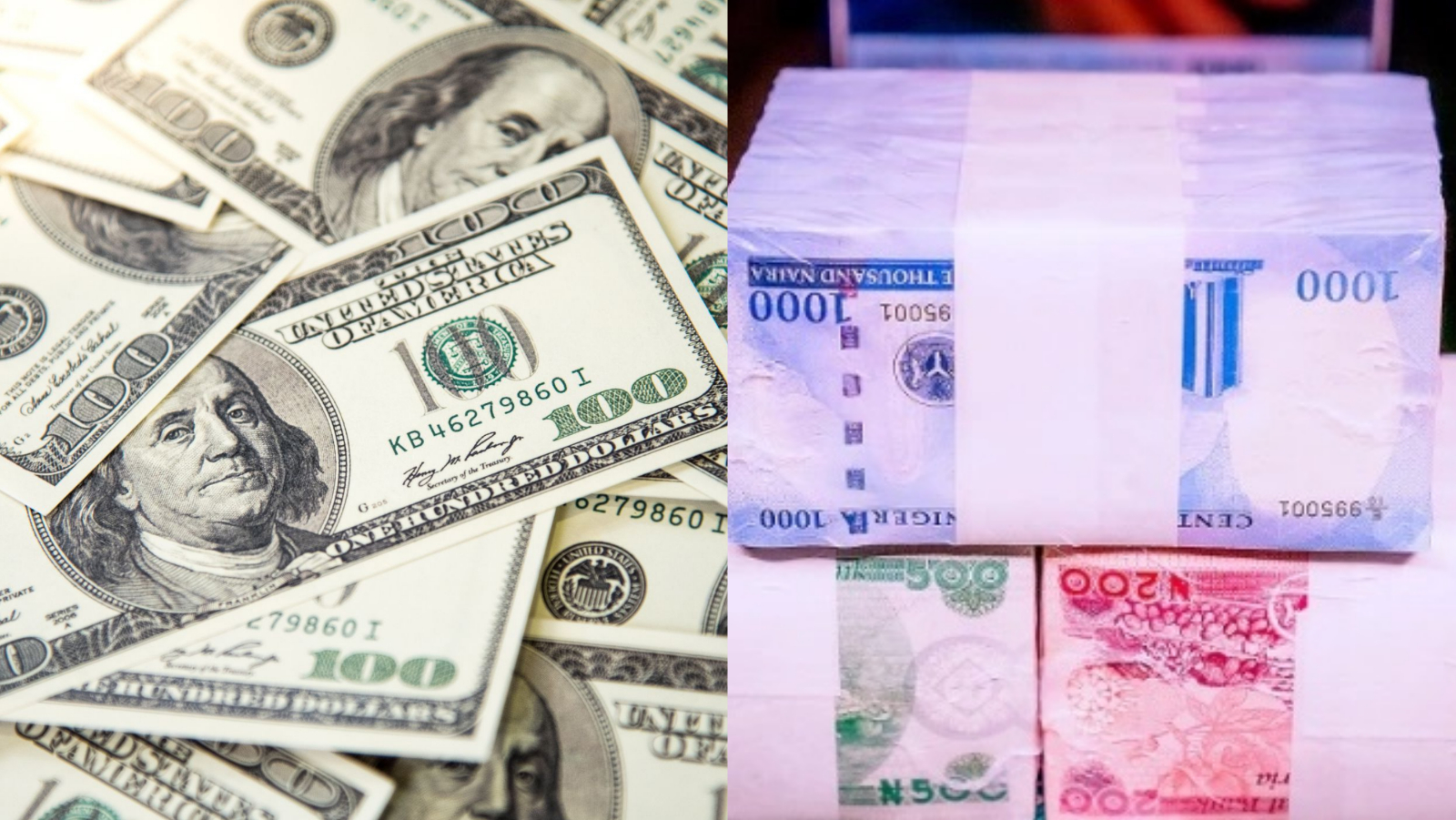
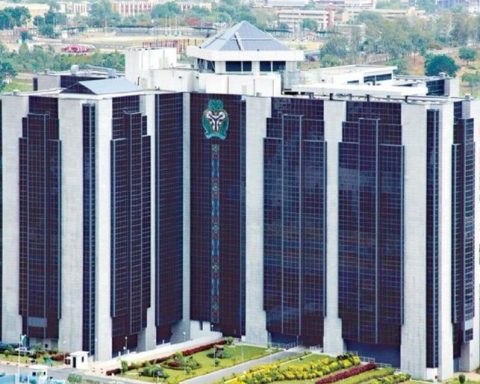
In the first half of 2022, the Central Bank of Nigeria (CBN) sold $9.4 billion to the foreign exchange market to control dollar rate, despite international creditors advising against such intervention.
Why CBN’s forex intervention matters?
The CBN’s $9.4 billion intervention in the foreign exchange market indicates the official forex market is still struggling with scarcity, and demands has overshoot supply.
Join our WhatsApp ChannelIntervention by the CBN is often done to control the exchange rate between naira and other foreign currencies such as dollar, pound and euro.
Prime Business Africa understands that such disbursement into the forex market could have an impact on dollar rate in the official market, and also the black market, considering forex in the official market find their way into the parallel market against CBN’s wish.
CBN’s intervention prevents market forces from taking control or determining the movement of exchange rate, creating speculations that the rate in the official market is not as realistic as that of the black market.
So while the $9.4 billion intervention increases the forex supply, it also continues to aid what has been termed as artificial exchange rate in the official market.
Breakdown of CBN’s forex intervention in first half 2022
According to CBN’s half-yearly economic report, the value of intervention between January to June is 2.34 per cent year-on-year growth when compared to the $5.8 billion provided in the same period last year.
The central bank sells forex in two categories; spot (sold on current price at the period of sale) and forward sales (sold at projected future price).
Prime Business Africa gathered from the CBN document that spot accounted for 47.5 per cent or $4.38 billion of the intervention fund, while Forward sales secured $4.3 billion.
CBN sold the forex to traders in the investors and exporter windows and through the platform of its Small and Medium Enterprises (SMEs) and inter-bank Secondary Market Intervention Sales (SMIS).
During the spot sales, $2.07 billion was sold to the Investors’ and Exporters’ (I&E) window, $856.81 million for invisibles, the Small and Medium Enterprises received $834.74 million, and $622.92 million was allocated to inter-bank Secondary Market Intervention Sales.
Aside from selling, the central bank also bought forex worth $1.3 billion between January to June, “Conversely, the Bank purchased US$1,325.43 million during the review period, which resulted in a net sale of US$7,903.83 million.” The report reads.
World Bank, IMF against CBN forex interventions
Last month, the International Monetary Fund (IMF) had advised Nigeria’s central bank to reduce its intervention in the foreign exchange market.
IMF said this in its 2022 Article IV Consultation concluding statement. The Global creditor suggested CBN allow commercial banks to determine exchange rate.
“In the medium term, the CBN should step back from its role as main FX intermediator, limiting interventions to smoothing market volatility and allowing banks to freely determine FX buy-sell rates,” IMF said.
In June 2021, the World Bank had also faulted CBN’s forex management, blaming the Godwin Emefiele-led financial regulator for the foreign exchange market crisis.
World Bank asked the CBN to allow oil companies to start selling forex to the Investors and Exporters window in other to limit CBN’s participation.
“Until oil companies are allowed to sell FX receipts to IEFX bank participants, CBN would still have an important role to play as supplier of FX.
“In this scenario, participating banks in the FX market will start to play an expanded role that goes beyond just executing buy/sell orders of its clients to start acting as market makers, meaning that they start to quote two-way prices buying and selling on its own behalf and carrying a stock of FX.
“With increased flexibility, the CBN could start intervening only to smooth large fluctuations and work toward ensuring a single, market-driven rate,” World Bank said.