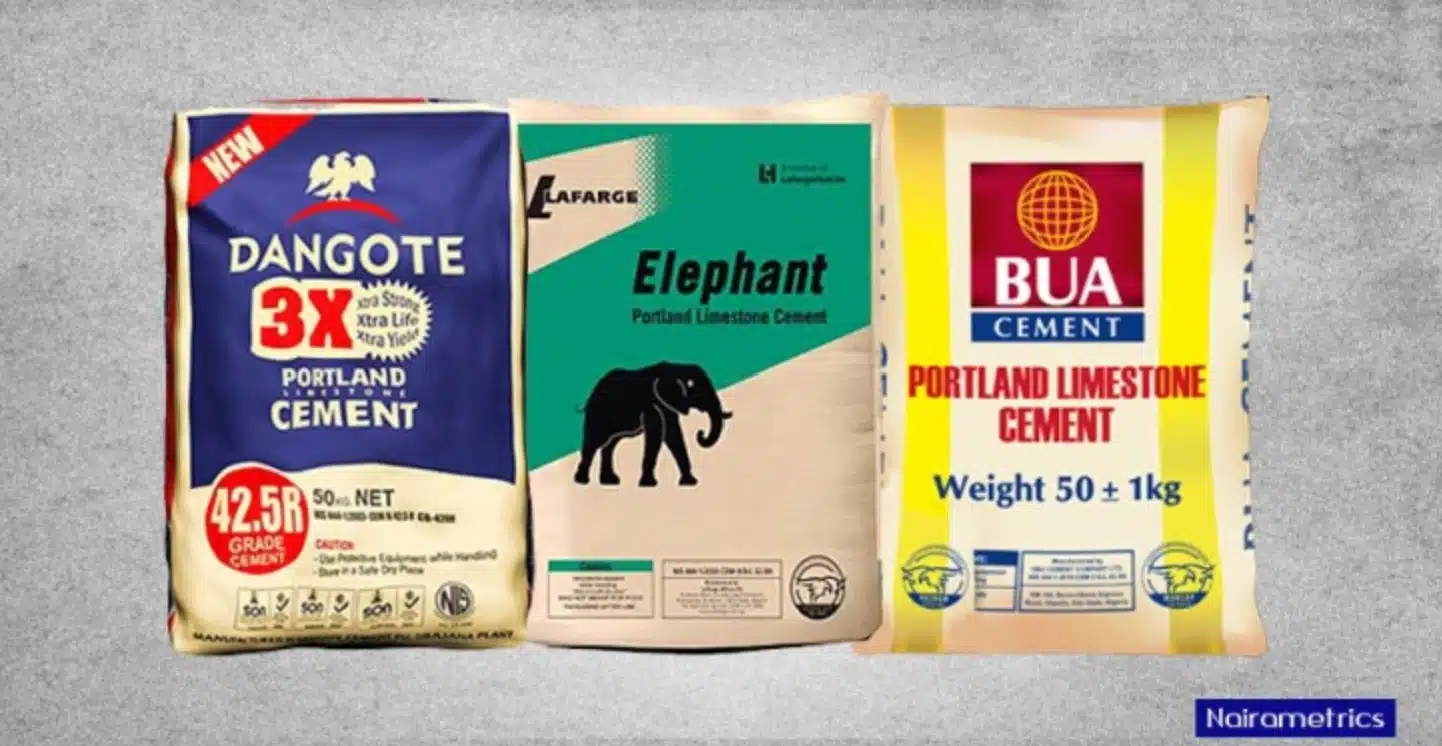
The rising cost of cement in Nigeria has become a metaphor for the economic challenges plaguing the nation. Builders, contractors, and developers find themselves battling soaring prices, which have disrupted the construction industry and deepened the housing deficit. Across the country, dreams of affordable housing and steady project timelines are crumbling under the weight of escalating costs.
In recent months, the retail price of a 50kg bag of cement has climbed from an average of ₦7,500 to over ₦8,500, with some regions like the South East reporting prices as high as ₦9,500. This unprecedented increase has left builders lamenting the hurdles it presents to an already strained sector.
Join our WhatsApp ChannelA Storm for the Construction Sector over Cement Prices
The situation reflects a cocktail of economic pressures. Suleiman Yusuf, President of the Building Control Prevention Guild (BCPG), describes it as a “perfect storm” fuelled by monopolies, high diesel costs, and Nigeria’s dependence on foreign-sourced raw materials like gypsum.
“Everything is working against affordable cement right now. From the dominance of a few manufacturers to the soaring cost of diesel, we are fighting battles on all fronts,” Yusuf explained. With Dangote Cement, BUA Cement, and Lafarge Africa controlling over 95% of Nigeria’s cement production capacity, market competition is minimal.
This concentration of power has left buyers with little choice but to accept high prices, a predicament Yusuf blames on the monopolistic structure of the industry. “Contractors are forced to work with inflated prices or abandon projects entirely,” he added.
Voices from the Field
For Nigerian builders, the hike in cement prices translates to delayed or halted projects. Emeka Adah, a contractor based in Lagos, voiced his frustration: “I’ve had to stop work on two projects because the cost of materials is unbearable. Clients are not willing to pay extra, and I can’t afford to bear the losses.”
READ ALSO: Cement Prices Soar By 100% In 3 Years, Hit N7,000 per Bag
Similarly, Audu Ibrahim, a real estate developer, lamented the challenge of managing escalating costs. “We are struggling to complete housing projects on time. Every price hike pushes us further into debt,” he said.
Mr. Lawrence John in Isolo who mould bricks, painted a grim picture of the grassroots impact. “We used to make a decent living, but now clients are cutting corners or avoiding construction altogether. Things are hard. We sell one block for N250 and N350 last year but we currently sell one for around N750 to N850 because of the increase in the price of cement.” he said.
A civil engineer, Tunde Akande, from Lagos, highlighted safety concerns linked to rising costs. “Many builders are now tempted to use substandard materials to cut expenses which is a recipe for disaster. I won’t be surprise if the rate of house collapsing in Lagos increases between now and next year. The government needs to intervene real quick” Akande warned.
Architect Aisha Ahmed, who has spent over a decade in the field, called on the government for swift intervention. “If this trend continues, Nigeria’s housing deficit will only worsen. The government must act now to stabilise prices,” she stated.
Expert Perspectives on the rise of cement prices
Economists and industry experts echo these concerns. Estate surveyor and valuer Femi Oyedele pointed to Nigeria’s reliance on imported gypsum as a key factor. “The gypsum used in cement production is imported at high foreign exchange rates. This dependence on foreign materials leaves us at the mercy of fluctuating global markets,” Oyedele said.
Yusuf suggested that alternative power solutions and improved transportation infrastructure could alleviate some pressure. “Relying on diesel-powered production is unsustainable. The government should explore rail transport as an alternative to road, which is expensive and unreliable,” he said.
Oyedele also advocated for the adoption of alternative building materials like clay bricks, timber, and aluminium. “The over-dependence on cement is driving these costs. Sustainable alternatives can reduce the pressure on the market,” he asserted.
A Call for Government Action
Builders and experts agree that government intervention is crucial. For Yusuf, breaking the monopoly in the cement industry could be a game-changer. “Encouraging more entrepreneurs to enter the market and offering tax concessions for raw material importation can create a fairer playing field,” he said.
The implications of soaring cement prices extend beyond construction delays. Rising costs ripple through the economy, affecting job creation and the affordability of housing. Yusuf warned that if unchecked, these pressures could lead to more abandoned projects and unsafe construction practices.
“The government needs to prioritise policies that make building materials accessible to all Nigerians. Anything less will leave the sector in chaos,” Yusuf added.
The Ripple Effect of Price Hikes
As the construction industry contributes significantly to Nigeria’s GDP, the fallout from cement price instability cannot be ignored. According to National Bureau of Statistics data, the sector accounts for 3.5% of the nation’s economy and employs millions of Nigerians.
However, abandoned projects and slowed construction activity threaten these gains. Oyedele emphasised the need for collaboration between the building industry and academia. “We need research into sustainable building practices. This will not only lower costs but also reduce dependence on imported materials,” he said.
The Future of Affordable Construction
The rising price of cement in Nigeria serves as a stark reminder of the interconnected challenges facing the economy. While builders and developers bear the immediate brunt, the broader implications for the housing market and job creation are equally alarming.
Architect Aisha Ahmed summarised the sentiment of many in the industry: “If the government doesn’t step in soon, we may see a total collapse of the housing sector. Affordable construction will become a distant dream.”
Cement, once seen as the cornerstone of development, has become a symbol of economic hurdles in Nigeria. Without urgent measures, the sector’s future—and the hopes of millions relying on it—remain uncertain.

Emmanuel Ochayi is a journalist. He is a graduate of the University of Lagos, School of first choice and the nations pride. Emmanuel is keen on exploring writing angles in different areas, including Business, climate change, politics, Education, and others.