Sudan Conflict: Eritrea, South Sudan Take opposite Stands On Resolution

Sudan Conflict: Eritrea, South Sudan Take opposite Stands On Resolution

As the conflict in Sudan rages on with both parties showing firepower, two neighboring countries have taken opposite stands in measures needed to bring the conflict to an end.

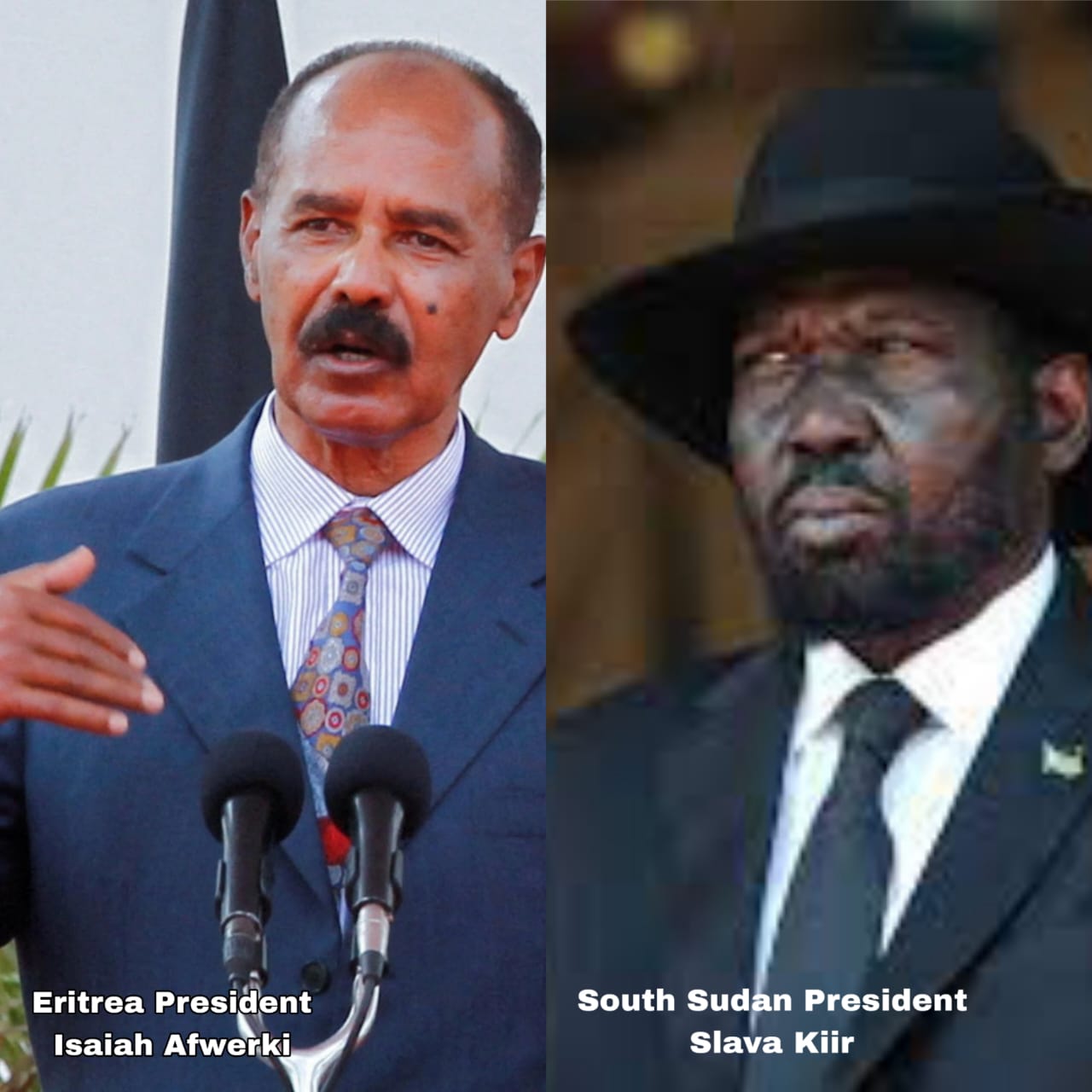
The President of Neighbouring South Sudan, Salva Kiir has advocated stronger measures from the international community to be put in place to end the conflict that has created a huge humanitarian crisis in the region. While Eritrea has said it does not want a part in the external initiatives that are being put in place to end the conflict, saying that the initiatives were “political bazaars.”

Join our WhatsApp Channel

The Vice president of the Sudanese Transitional sovereign council, Malik Agar, stated the position of Eritrea on Sunday after he paid a courtesy visit to the President of Eritrea, Isaias Afwerki who told him that the current initiatives on the conflict in Sudan are “political bazaars in which Eritrea cannot engage in.”

Adding that President Afwerki emphasized “that the situation in Sudan is an internal matter for Sudanese people and cautioning that external intervention would only exacerbate the complexities.”

Sudan’s closest Neighbour, South Sudan asked that the international community do something soonest to bring the situation in Sudan under control due to the humanitarian crises that is bedeviling the country and spilling into South Sudan.

President Salva Kiir who spoke on Sunday during a celebration marking South Sudan’s 12th independence said “The current situation in Sudan is a major concern to everyone. It is now causing immense suffering and exerting immense economic and social pressure on our border communities.”

“This [situation] is really sad. It was an unexpected situation which now requires a fully coordinated and strong action to end what is happening,” he said.

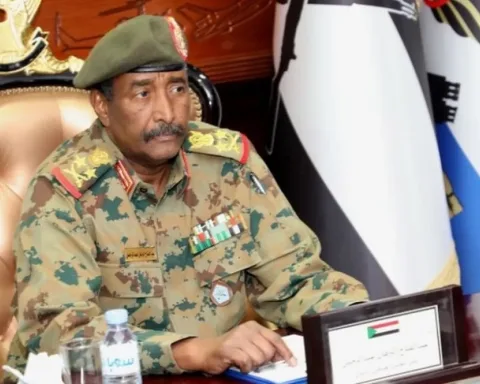
The conflict in Sudan which began April 15 due to a power struggle between army chief Abdel Fattah al-Burhan and the head of the Rapid Support Forces (RSF), General Mohamed Hamdan Dagalo, has displaced over 2.2 million persons inside the country while over 600 thousand persons have fled across border to neighboring South Sudan, Chad, Egypt and Eritrea. Over 3 thousand people have been killed by air strikes and shootings by both forces across the country.

Up to 25 million people in Sudan need humanitarian aid and protection, the UN says.

About 100 thousand persons fleeing the conflict in Sudan are Eritreans who claim that situation in Eritrea is not favourable.

However, President Afwerki told state television that his country would welcome anyone fleeing the conflict in Sudan whether they are Eritreans or Sudanese.

“Eritrea has open borders and without fanfare will continue to receive Eritrean and Sudanese civilians as well as others affected by the current conflict and share with them whatever it has,” the president said.

Despite a series of cease-fire agreements brokered by the United States and Saudi Arabia, fighting has not stopped.

President Kiir, however, maintained peaceful dialogue is needed for stability to return in Sudan.

“Now, despite the success of our efforts over the past months working with leaders in the region, I know that there have questions about our efforts in Sudan. The conflict has not stopped and there are efforts for mediation. The situation remains a matter of concern. My answer has been yes, the conflict is continuing and this is the particular issue in which we have invested time to address. When the fighting stops, it will open a way for mediation,” he said.

John Adoyi, PBA Journalism Mentee
+ posts

Featured Stories

Latest from Africa

President Tinubu

Tinubu Nominates New Oil Regulators as Ahmed, Komolafe Resign

President Tinubu has nominated new chief executives for Nigeria’s petroleum regulatory agencies following the resignation of the heads of the Nigerian Midstream and Downstream Petroleum Regulatory Authority (NMDPRA) and the Nigerian Upstream Petroleum Regulatory Commission (NUPRC), developments that come amid intense controversy
Previous Story

10 Most-Watched Sports Events In The World

Suspect Arrested Over 6 Deaths In China’s Kindergarten Stabbing
Next Story

Suspect Arrested Over 6 Deaths In China’s Kindergarten Stabbing

Don't Miss

FESPACO Grand Prize Winner ‘Night Nursery’ Becomes 2022 iREP’s Closing Film

GARDERIE NOCTURNE (Night Nursery), the film that won the Best Documentary
Minimum Wage Decision Expected as Nigerian Labour Leaders Await President's Response ABUJA, NIGERIA – The discussions on the new minimum wage between the Federal Government and Organized Labour are anticipated to conclude today, with labour leaders keenly awaiting President Bola Tinubu's verdict on their N250,000 proposal. The Nigeria Labour Congress (NLC) and the Trade Union Congress (TUC) had set a Monday deadline for finalizing the new minimum wage talks. Last Friday, the Tripartite Committee on National Minimum Wage concluded its meetings where the Federal Government and the Organized Private Sector agreed on N62,000, while Labour demanded N250,000. However, the Nigeria Governors Forum declared that any minimum wage exceeding N60,000 would be unsustainable. A labour leader who spoke anonymously on Sunday stated, "We have submitted the report to the president and are waiting for him to make his decision. That is the most important thing and that is what we are all waiting for." The labour leaders, including NLC President Joe Ajaero, are currently attending a labour conference organized by the International Labour Organisation in Geneva, Switzerland. The leadership plans to hold a National Executive Council meeting upon their return, where a decision on a potential strike will be made based on the president's feedback. "We must come back from Geneva first before we can hold a NEC meeting. We are also trying to be careful so the government won't say Labour is inciting citizens against it. We are waiting for the president's decision," added another top NLC official. The labour unions, comprising the NLC and TUC, recently embarked on a two-day nationwide strike to demand a new minimum wage and the reversal of the electricity tariff hike. The strike was suspended for five days after a commitment was made with the Federal Government to resume negotiations and establish a new minimum wage within a week. Following a six-hour meeting between labour leaders and the National Assembly in Abuja, President Tinubu directed the finance minister, Wale Edun, to present the cost implications of a new minimum wage within two days. The finance minister, alongside the Minister of Budget and National Planning, Atiku Bagudu, presented the cost implications at the Presidential Villa on Thursday. The president is currently reviewing the proposal and is expected to make an official announcement soon. When asked about the Monday ultimatum, a source within the NLC said, "We have sent a report to the committee and are expecting the president to act on it. We will hold a National Executive Council meeting regarding the ultimatum when we return from Geneva. It is very important for us to be there, but right now, we are patiently waiting for the decision of Mr President." Organized Labour's recent actions underscore the urgency and importance of establishing a new minimum wage for Nigerian workers. The outcome of President Tinubu's decision will be crucial in determining the next steps for both the government and the labour unions. Related News: Atiku claims to have saved Tinubu's political career Debating the appropriate wage for workers Labour criticizes governors for minimum wage stance The labour leaders and the nation await the president's decision, which will significantly impact the economic and social landscape of Nigeria.

Minimum Wage: Deadline Looms As Nigerian Govt Debunks N105,000 Proposal

As the five-day ultimatum given by organized labor for the