 MARCEL MBAMALU
More than five decades after Nigeria’s Civil War ended, the country is still grappling with the same questions that shaped the conflict: justice, belonging, trust and equal citizenship.
Although the war ended in 1970, its memories continue to influence Nigeria’s national conversations. The recent apology by Plateau State Governor Caleb Mutfwang to the Igbo community and former Head of State Yakubu Gowon’s memoir, My Life of Duty and Allegiance, have reopened a debate Nigeria has repeatedly postponed: whether the country has truly confronted the wounds of its past or merely moved forward without fully resolving them.
Join our WhatsApp ChannelDuring an interactive session with Igbo leaders at the Government House in Jos, Mutfwangacknowledged the suffering experienced by the Igbo during the Civil War and expressed regret over the role played by people from Plateau State. He said Plateau people were “deceived into going to war” and stated that the apology was aimed at helping both communities “put the past behind us and continue to foster unity.”
However, beyond the immediate political interpretations surrounding such gestures, it raises a deeper question about Nigeria’s approach to reconciliation: whether acknowledgement of past suffering and forgetting it, as the governor suggested, can translate into genuine national healing.
Perhaps, they all want it to be left in the past for the same reason 56 years after the end of the Civil War, Gowon argues that the Aburi Accord did not authorise the Eastern Region’s secession and maintains that the federal government’s actions were aimed at protecting Nigeria’s territorial integrity.
The contrast between both moments is significant because beyond competing narratives lies a larger national question: why has Nigeria struggled to reconcile with the Igbo fully, and what has the country lost by allowing unresolved grievances and feelings of exclusion to persist?
READ ALSO: No Victor, No Vanquished? Gowon’s Memoir Reopens Biafra’s Bloody Ledger
History Nigeria Cannot Ignore
The Nigerian Civil War did not begin with the declaration of Biafra in 1967. Its roots were found in a series of political crises, military interventions, ethnic suspicions and the failure of the Nigerian state to guarantee security for its citizens.
To understand the conflict, Nigeria must return to 1966, a year that fundamentally changed the country’s political direction.
On January 15, 1966, a group of young military officers, many of them of Igbo origin, carried out Nigeria’s first military coup. The coup resulted in the deaths of key political and military figures, including Prime Minister Abubakar Tafawa Balewa, Northern Region Premier AhmaduBello and Western Region Premier Samuel Ladoke Akintola.
Although the coup failed to establish lasting control, its ethnic composition and the identities of those killed created deep suspicion, particularly in Northern Nigeria. Many Northerners interpreted the event as an attempt by Igbo officers to dominate Nigeria’s political and military structures.
However, the consequences of the coup extended beyond the actions of the officers involved. It intensified ethnic distrust at a time when Nigeria’s fragile federal system was already facing serious regional tensions.
Major General Johnson Aguiyi-Ironsi later assumed power as Nigeria’s first military Head of State. His administration attempted to address the country’s instability, but one decision would become particularly controversial.
On May 24, 1966, Ironsi introduced Decree No. 34, which replaced Nigeria’s federal structure with a unitary system of government. While his government presented the move as necessary for national stability, many Northerners interpreted it as reinforcing fears of centralised Igbo control.
The growing tension eventually resulted in the July 29, 1966 counter-coup led largely by Northern military officers. Ironsi and Lieutenant Colonel Adekunle Fajuyi, the Military Governor of the Western Region, were killed during the coup. Lieutenant Colonel YakubuGowon subsequently emerged as Head of State.
Between 1966 and 1967, thousands of Igbo people and other Easterners were killed in anti-Igbo violence across parts of Northern Nigeria, while hundreds of thousands were displaced and forced to return to the Eastern Region. Estimates of casualties vary, with historians placing the number of deaths from the pogroms between approximately 8,000 and 30,000.
Since the Civil War did not emerge suddenly in 1967. It was the consequence of a deeper collapse of trust between a section of the country and the state that was meant to protect it.
The events that followed the collapse of trust between Easterners and the Nigerian state eventually led to the declaration of the Republic of Biafra by Lt. Col. Chukwuemeka OdumegwuOjukwu on May 30, 1967.
Although the war was fought between federal and Biafran forces, its greatest burden was carried by ordinary citizens. The blockade imposed on Biafra contributed to severe shortages of food, medicine and essential supplies, creating a humanitarian crisis.
On January 15, 1970, following the surrender of Biafran forces, Gowon declared that there would be “No Victor, No Vanquished.” The statement he claimed was intended to assure Nigerians that the end of the war would not lead to revenge, collective punishment or permanent exclusion.
Following the war, Gowon introduced Reconstruction, Rehabilitation and Reconciliation, popularly known as the Three Rs, promising to rebuild war-ravaged communities, reintegrate former Biafrans and restore national unity. He also assured Nigerians that there would be no second-class citizens and that every citizen would enjoy equal rights within the federation. Yet national promises are measured not by rhetoric but by implementation.
Yet, one of the most controversial post-war policies was the Federal Government’s £20 policy. Regardless of the amount individuals held in their bank accounts before the war, many former Biafrans were allowed to withdraw only £20 to restart their lives.
It means the same government who mentioned RRR never thought that some policies will make it immaterial. Hence thousands of traders, professionals and business owners lost access to savings accumulated before the war, making economic recovery more difficult in a region whose economy depended heavily on commerce and enterprise.
The abandoned property policy created another lasting grievance. In parts of the former Eastern Region, particularly present day Rivers State, properties belonging to displaced Easterners were declared abandoned and transferred to new occupants under post war regulations.
The implementation of the Three Rs also fell short of the expectations created by their announcement. Although reconstruction efforts began after the war, available evidence suggests that recovery was uneven, with many communities struggling to rebuild damaged infrastructure, restore livelihoods and address the psychological consequences of the conflict.
Another enduring issue is political representation. Since Nigeria’s return to democracy in 1999, no person of Igbo extraction has been elected president, fuelling persistent debates over the South East’s place in the federation and IPOB.
Cost of Holding One Group Back: Why Nigeria Also Loses
Yet the question Nigeria must confront is not only whether the Igbo have experienced exclusion. The deeper question is what Nigeria itself has lost by failing to fully harness the energy, creativity and enterprise of one of its most productive communities.
The Igbo story has long been tied to Nigeria’s economic development. From Onitsha Main Market, one of West Africa’s largest commercial centres, to Nnewi’s industrial base and Aba’s manufacturing and leather industries, Igbo entrepreneurs have built businesses, created jobs and driven commerce. Their contributions also extend to education, professional expertise, innovation and global business networks that benefit Nigeria far beyond its borders.
This is why inclusion is not merely about historical grievances but about national development. No country can afford to limit the participation of citizens whose talents, investments and ideas contribute to its growth.
Other nations have learnt this through painful experience. South Africa recognised that apartheid had damaged not only social justice but national progress. Germany rebuilt after the Second World War by confronting its past and strengthening accountable institutions, while Rwanda pursued reconstruction by fostering a shared national identity after genocide. Nigeria’s circumstances differ, but the lesson is the same: nations become stronger when every citizen believes they belong.
Peace scholar Johan Galtung distinguished between negative peace, the absence of violence, and positive peace, which requires justice, equality and social trust. Nigeria achieved negative peace after 1970, but continuing debates over belonging and exclusion suggest it is still striving for positive peace. This echoes warnings by Wole Soyinka that societies cannot build a stable future on silence and denial, and Olusegun Obasanjo’s repeated insistence that Nigeria’s unity must be meaningful, not sustained merely by force or constitutional arrangement.
Nigeria needs neither endless blame nor collective guilt. It needs honest reconciliation through truthful engagement with Civil War history, equal citizenship regardless of ethnicity, and governance that reflects competence, fairness and confidence across every part of the federation.
Although Governor Caleb Mutfwang’s apology and Gowon’s memoir have reminded Nigeria of a reality it has long struggled to escape, they also expose unresolved contradictions. If the RRR was truly to achieved the healing why did Gowon return in his memoir to defend his account of Aburi rather than reflect on why many Nigerians, particularly the Igbo, still question whether reconciliation was ever fully realised?
Equally striking, Governor Mutfwang did not respond to Gowon’s memoir when it was published, only to issue an apology two months later. The Civil War belongs to history, but its consequences continue to shape the present. The answer is not to reopen old wounds for political advantage, nor to demand silence from those who still carry memories of loss and exclusion.

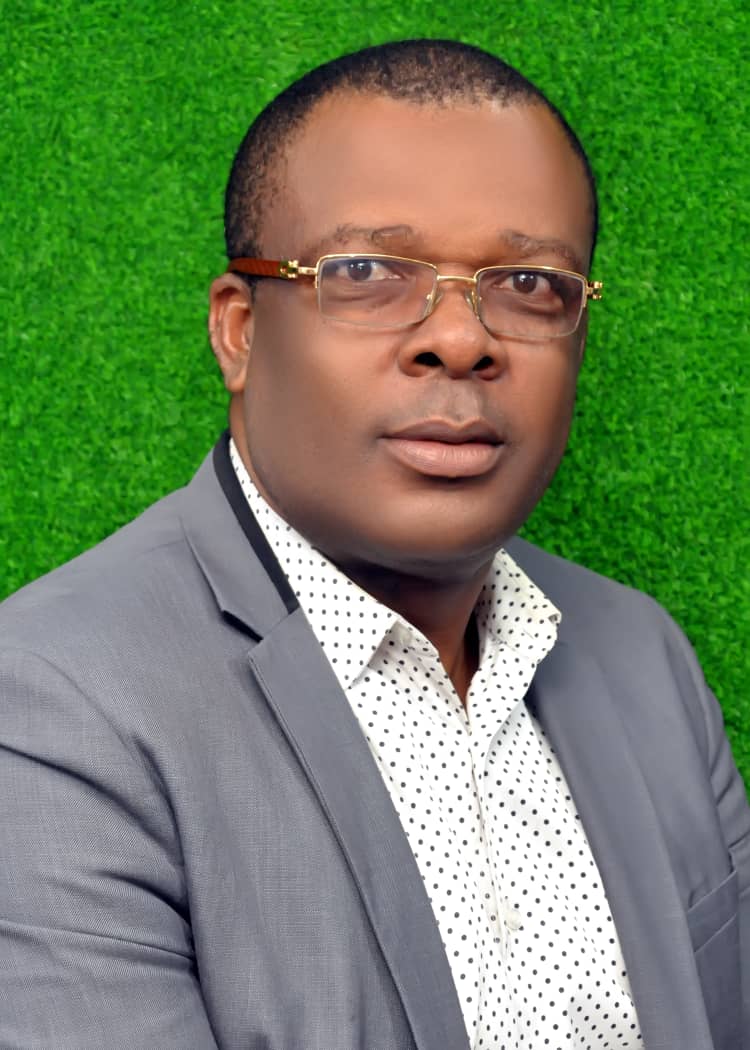
Dr. Marcel Mbamalu is a distinguished communication scholar, journalist, and entrepreneur with three decades of experience in the media industry. He holds a Ph.D. in Mass Communication from the University of Nigeria, Nsukka, and serves as the publisher of Prime Business Africa, a renowned multimedia news platform catering to Nigeria and Africa's socio-economic needs.
Dr. Mbamalu's journalism career spans over two decades, during which he honed his skills at The Guardian Newspaper, rising to the position of senior editor. Notably, between 2018 and 2023, he collaborated with the World Health Organization (WHO) in Northeast Nigeria, training senior journalists on conflict reporting and health journalism.
Dr. Mbamalu's expertise has earned him international recognition. He was the sole African representative at the 2023 Jefferson Fellowship program, participating in a study tour of the United States and Asia (Japan and Hong Kong) on inclusion, income gaps, and migration issues.
In 2020, he was part of a global media team that covered the United States presidential election.
Dr. Mbamalu has attended prestigious media trainings, including the Bloomberg Financial Journalism Training and the Reuters/AfDB Training on "Effective Coverage of Infrastructural Development in Africa."
As a columnist for The Punch Newspaper, with insightful articles published in other prominent Nigerian dailies, including ThisDay, Leadership, The Sun, and The Guardian, Dr. Mbamalu regularly provides in-depth analysis on socio-political and economic issues.