 Amanze Chinonye
Nigerian industrialist Aliko Dangote is targeting October for the groundbreaking of a proposed $16 billion oil refinery in Lamu, Kenya, putting a firm timeline on a project that has been under consideration for several years, Prime Business Africa reports.
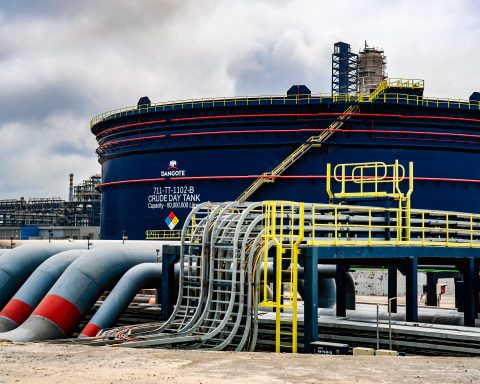
The refinery is designed to process 700,000 barrels of crude oil per day, exceeding the 650,000-barrel-per-day nameplate capacity of Dangote’s refinery in Lagos, which reached full capacity earlier this year.
Join our WhatsApp ChannelREAD ALSO :
Tanzania’s Dewji Eyes $100m Investment in Dangote’s Planned East Africa Refinery
Dangote said the estimated cost of the Kenyan project has fallen from an earlier projection of $17 billion to about $16 billion. He attributed the reduction to a shorter construction period, which would lower financing costs, and experience gained from building the Lagos refinery, which cost about $20 billion.
The Kenyan facility is expected to be completed in less than four years after construction begins, Dangote said.
The project will be financed through a combination of equity and debt, with equity accounting for 30% and debt for the remaining 70%.
The financing plan comes as Dangote Petroleum Refinery prepares for a proposed initial public offering expected to raise about $5 billion and value the business at nearly $50 billion.
Advisers to the company have held discussions with stock exchanges in Kenya, South Africa, Egypt, Ghana and Rwanda over possible participation by investors in those markets. Kenyan investors could account for as much as $500 million of the proposed offering.
The Kenyan government has also indicated that it could provide limited seed funding from public resources.
Preparatory work has already begun at the Lamu site, with soil testing and design activities under way. Preliminary engineering is continuing as the project moves through regulatory approvals and site-preparation stages.
Dangote said the refinery is being developed to serve the wider East African market rather than Kenya alone. Potential export destinations include Uganda, Tanzania, South Sudan and Ethiopia, as well as other regional markets.
Kenya consumes roughly 100,000 barrels of petroleum products a day, meaning a refinery with a 700,000-barrel daily capacity would have substantial production available for export.
Lamu was selected partly because of its strategic position along the Lamu Port-South Sudan-Ethiopia Transport corridor, known as LAPSSET, which is intended to connect Kenya’s coast with landlocked markets in East Africa.
The location also provides access to the Indian Ocean and Lamu Port, which could facilitate the import of crude and export of refined petroleum products.
READ MORE :
Dangote Backs Museveni’s Mineral Policy, Eyes East Africa Refinery Project
Dangote Industries has projected that the project could generate about 60,000 jobs across construction, engineering, logistics, manufacturing and related energy activities.
The development has, however, attracted opposition from environmental and community groups concerned about its potential impact on Lamu’s marine ecosystem, fisheries and coastal communities.
Lamu is home to a UNESCO World Heritage site, while previous energy projects in the area have faced environmental and legal challenges. A proposed coal-fired power plant, for instance, was abandoned following sustained opposition and a court challenge.
Kenyan officials have indicated that construction of the refinery is expected to begin before the end of 2026, subject to the completion of regulatory and preparatory requirements.
If completed, the refinery would significantly increase East Africa’s refining capacity and could reduce the region’s reliance on imported petroleum products, while strengthening Lamu’s role as an energy and logistics hub.

Amanze Chinonye is a Staff Correspondent at Prime Business Africa, a rising star in the literary world, weaving captivating stories that transport readers to the vibrant landscapes of Nigeria and the rest of Africa. With a unique voice that blends with the newspaper's tradition and style, Chinonye's writing is a masterful exploration of the human condition, delving into themes of identity, culture, and social justice. Through her words, Chinonye paints vivid portraits of everyday African life, from the bustling markets of Nigeria's Lagos to the quiet villages of South Africa's countryside . With a keen eye for detail and a deep understanding of the complexities of Nigerian society, Chinonye's writing is both a testament to the country's rich cultural heritage and a powerful call to action for a brighter future. As a writer, Chinonye is a true storyteller, using her dexterity to educate, inspire, and uplift readers around the world.