 MARCEL MBAMALU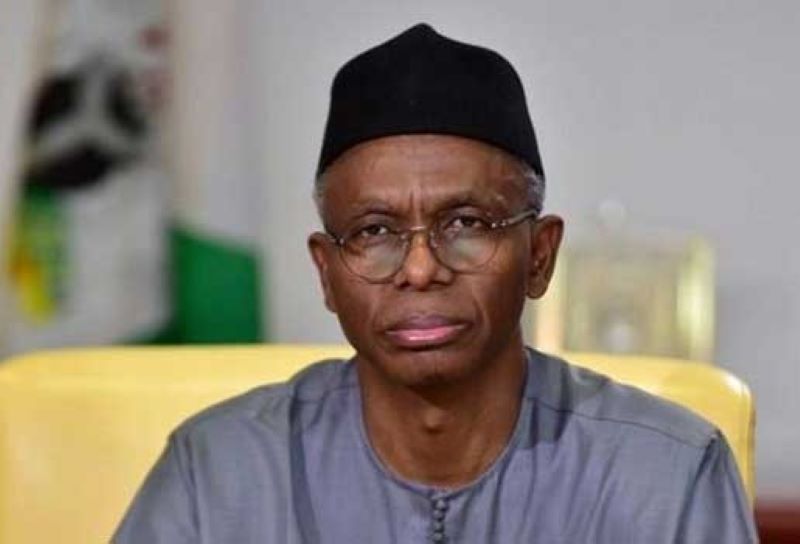
Nasir El-Rufai, once a staunch member of the All Progressives Congress, surprised many by defecting to the African Democratic Congress.
He said he left because the party had abandoned its founding ideals, engaged in selective accountability, sidelined loyal members, and allowed some politicians to pay for ministerial appointments practices he claimed he could not support. Nasir El-Rufai’s defection, formalised on 27 November 2025 after he quit the APC earlier in the year, has reignited debates about his public role and polarising influence.
The former Kaduna governor recently accused the National Security Adviser, Nuhu Ribadu, of orchestrating an attempt to arrest him at the Nnamdi Azikiwe International Airport shortly after he returned from Cairo. El-Rufai said security operatives tried to detain him without formal invitation and that he intercepted a phone call in which Ribadu allegedly instructed them to arrest him.
Join our WhatsApp ChannelThe claim of wiretapping is particularly concerning. How would someone who is not fraudulently tipped off know plans against him? Observers have described the allegation as “extremely grave” due to its national security implications.
READ ALSO: The Unraveling Of Nasir El-Rufai And Festus Keyamo
Despite the drama, El-Rufai indicated he would comply with lawful investigations, confirming that he would appear before the Independent Corrupt Practices and Other Related Offences Commission (ICPC) and that the Economic and Financial Crimes Commission had also invited him for questioning over alleged irregularities during his tenure.
The State Security Services (SSS) has now filed a three-count cyber crime charge against him for “unlawfully intercepting the phone communications of the National Security Adviser, Nuhu Ribadu,” at the Federal High Court on three counts of alleged violations of the Cybercrimes Act.
Since defecting from the APC to the ADC, El-Rufai has become an outspoken critic of the federal government. In addition to the arrest claim, he accused the NSA’s office, led by Ribadu, of procuring dangerous toxic chemicals and demanded clarification, further deepening the rhetoric around national security and governance.
As the public is still waiting for Ribadu to respond to these allegations (he has actually asked him to show evidence), whether his claims about Ribadu and the current administration are borne out in evidence or not, the situation highlights a broader irony: a man once central to government now portrays himself as a victim of the very state machinery he once championed.
Perhaps, if the government had not betrayed him as he claimed, he would be the one facilitating the incidents he is now divulging. After all, he and Ribadu were long regarded as close allies within the APC, particularly during the Buhari administration, before their relationship deteriorated, and birds of identical plumage often congregate in the same proximity. These episodes collectively shaped a deeply polarising reputation, yet political memory is fragile.
Flashbacks: El-Rufai’s administration, and the politics shaping today’s Nigeria
From urban demolition in Abuja to the communal violence and kidnappings in Kaduna, El-Rufai’s tenure left a tangible imprint on governance, security, and political culture.
When Mr El-Rufai served as Minister of the Federal Capital Territory between July 2003 and July 2007, his tenure was marked by both ambitious reforms and controversy.
He launched a strict enforcement of Abuja’s master plan, aiming to restore urban order and eliminate illegal structures. Under his leadership, the Abuja Geographic Information System was established, creating Nigeria’s first computerised land registry and streamlining land allocation. Supporters credit these initiatives with improving governance and reducing corruption in land administration. Yet the execution of these reforms generated significant public anger.
Large-scale demolitions displaced thousands of residents, many of whom lived in informal settlements that had grown over decades. While El-Rufai defended the demolitions as necessary to reclaim and regularise land, the lack of evident social safeguards left communities traumatised and contributed to his reputation as a bold but polarising figure.
Mr El-Rufai later governed Kaduna State from 29 May 2015 to 29 May 2023, a period marked by persistent insecurity. Between 2015 and 2023, the International Centre for Investigative Reporting (ICIR) estimates that about 4,876 people were killed in violence across the state, nearly two deaths per day, including clashes between armed herders, bandits, and farmers, particularly in Southern Kaduna.
Southern Kaduna experienced repeated ethno-religious and communal attacks throughout his tenure, drawing criticism that authorities failed to protect communities. In March 2022, militants attacked villages around Kagoro, killing dozens, burning homes, and displacing residents. In December 2022, bandits razed homes in Mallagum 1 and killed civilians as violence spiked toward the end of his tenure.
Kidnapping became a defining concern. In early March 2021, 39 students were abducted from the Federal College of Forestry Mechanisation in Afaka, Igabi Local Government Area. Weeks later, 29 remained in captivity, as the government refused ransom negotiations. Earlier in the year, Francis Jonathan Ayuba was killed by bandits five days before his wedding. Reports of widespread abductions and killings reinforced public scrutiny of security policies.
Controversial statements further compounded criticism. In 2016, El-Rufai admitted paying some armed Fulani herders to stop violence, prompting outrage among residents and civil society. In 2021, the same man pointed out that he would never pay ransom to bandits even if they kidnapped his son.
The Middle Belt Forum had accused him of divisive governance and turning Kaduna into a banditry hub, while media outlets noted alleged religious bias and dismissive attitudes toward victims.
Extreme rhetoric, including referring to him as a “terrorist”, emerged from public frustration, yet no court or security agency has ever investigated him. Are there more he would reveal about the current administration if arrested?
Fast-forward to September last year, the same El-Rufai criticised the federal authorities for “empowering bandits”, framing the strategy as non-kinetic.
He claimed, during a live interview on Channels Television, that authorities have been sending money and supplies to violent groups. He further alleged that criminal gangs in Kaduna, Niger, Zamfara and Katsina enjoy monthly stipends and food items from the government.
When he was asked during the live interview to compare his and the incumbent government’s approach to curb terrorism and banditry, he said that:
“What I will not do is to pay bandits, give them a monthly allowance, or send food to them in the name of non-kinetic… We’re empowering bandits,”.
On ethnic and political division
Some of El-Rufai’s statements have consistently drawn sharp criticism from many tribes especially the Igbo groups and segments of the public, a reason many Igbos perceive him as unsupportive or even hostile toward their interests.
He appears reluctant to back Igbo political aspirations. Prominent online advocates have also suggested that, although he now seems aligned with Peter Obi, in reality he may work against him, reflecting a pattern of discouraging Igbo participation at the national level.
In May 2021, during a webinar, he told Igbo people that they could not win the presidency by “threatening secession or shouting victimhood” and must build alliances across Nigeria to succeed.
Ohanaeze Ndigbo Worldwide condemned the remarks, describing them as contrary to Igbo interests and urging him to focus on governance and security rather than political admonitions. Later, in September 2025, protests erupted in Imo State during an event he attended, with demonstrators expressing distrust over his record as Kaduna governor and perceived insensitivity toward Igbo concerns.
From power player to strategic victim
In the current saga, El-Rufai projects an image that is at once vulnerable and strategic and appears aware of how public perception works, framing himself as a figure under siege to gain attention and sympathy.
Some persons might see him as a betrayed politician, but closer analysis suggests a calculated posture: he highlights threats against him while maintaining control over the narrative. This reinvention speaks to his political acumen. By positioning himself as a “victim” of state action, he diverts focus from past controversies and maintains relevance in national discourse.
It signals a shift from governance to political theatre, where messaging and optics matter as much as deeds.
In Nigeria, heavy-handed enforcement, poorly communicated investigations, or the appearance of selective action can unintentionally elevate critics rather than contain them. El-Rufai reinvention illustrates a paradox of Nigerian politics: missteps, controversies, and enforcement misjudgements can resurrect reputations. Yet renewed visibility or sympathy does not erase past failures.