 Prosper Okoye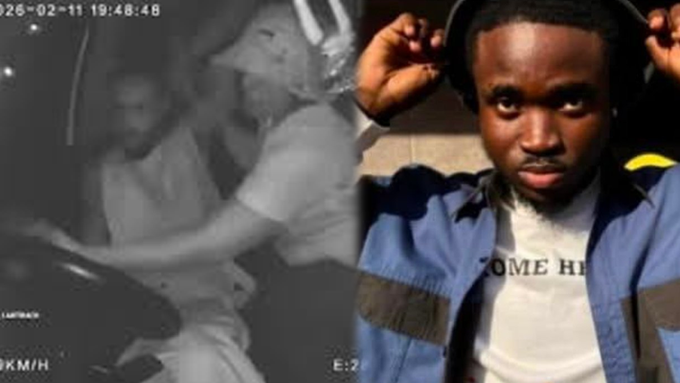
A 22-year-old Nigerian student was murdered during a ride in South Africa, with the attack captured on his own dashcam. The killing has shocked the country and raised questions about the safety of foreign nationals and e-hailing drivers. As the first suspect appears in court, his family mourns the young man’s life, cut short just weeks before he was due to graduate.
The Killing
On the evening of 11 February, Isaac David Satlat accepted what looked like an ordinary ride request in Pretoria West. The mobile engineering student, who drove part-time for Bolt to support his studies, picked up a man and a woman.
Minutes into the trip, the routine journey turned deadly.
Join our WhatsApp ChannelA dashcam mounted on his windscreen recorded the woman, seated in front, suddenly reaching across to grab him by the neck. A man in the back seat joined in. Satlat struggled to keep control of the vehicle as he was overpowered.
Within about four minutes, police say, he was dead.
The attackers moved his body to the back seat, drove the car out of the city and abandoned it in the Moshongo area of Atteridgeville, west of Pretoria. The vehicle and Satlat’s body were found later that day. Investigators believe he was strangled.
The footage, though distressing, became crucial. It allowed police to identify and arrest a female suspect, who appeared at the Atteridgeville Magistrate’s Court on Monday charged with murder and hijacking. A man seen in the video remains at large, though police say further arrests are expected.
Life Cut Short
Satlat had travelled from Nigeria’s Plateau State to study in South Africa, hoping education would open the door to a better future. He was due to graduate in March and had spoken of continuing his studies in Canada.
Driving for an e-hailing service paid his rent, his tuition and his living costs.
To his family, he was gentle and determined. His uncle, Otila Onoja, said they are now trying to raise money to return his body to Nigeria for burial.
“We need funds to take him home,” he told South African television. “He was a peaceful and respectful young man.”
Relatives say his father was hospitalised after hearing of his death.
Justice And Safety
The killing has drawn a diplomatic response from Nigeria. Abike Dabiri Erewa, who heads the Nigerians in Diaspora Commission, described the attack as “deeply disturbing” and called on South African authorities to ensure those responsible are fully prosecuted.
“Justice must not only be done, it must be seen to be done,” she said, adding that the safety of Nigerians abroad was “non-negotiable”.
READ ALSO:
South Africa Cracks Down on Traffic After 13 Children Die in Crash
South Africa Probes Alleged Defiance of Presidential Order as Iranian Warships Join Naval Exercise
Within South Africa’s Nigerian community, many see the killing as part of a wider pattern of hostility towards foreigners. Others argue it reflects rising violent crime rather than xenophobia.
Eugene Ngoetjana of the Meter Taxi and E-hailing Association said attacks on drivers were often driven by opportunity. “These drivers are easy targets,” he said.
The Tshwane E-hailing Council is now urging drivers to install dashcams and pushing for stronger safety rules. Its chair, Marvin Ditshego, said the footage in Satlat’s car was the only reason the suspects could be traced.
“Without that camera,” he told the South African Broadcasting Corporation, “this case might never have been solved.”
For Satlat’s family, the debate over crime and xenophobia is secondary. Their son went out to work and never came back. His final journey, recorded by his own camera, has become a stark reminder of the risks faced by thousands of drivers across South Africa.

Prosper Okoye is a Correspondent and Research Writer at Prime Business Africa, a Nigerian journalist with experience in development reporting, public affairs, and policy-focused storytelling across Africa