 Prosper Okoye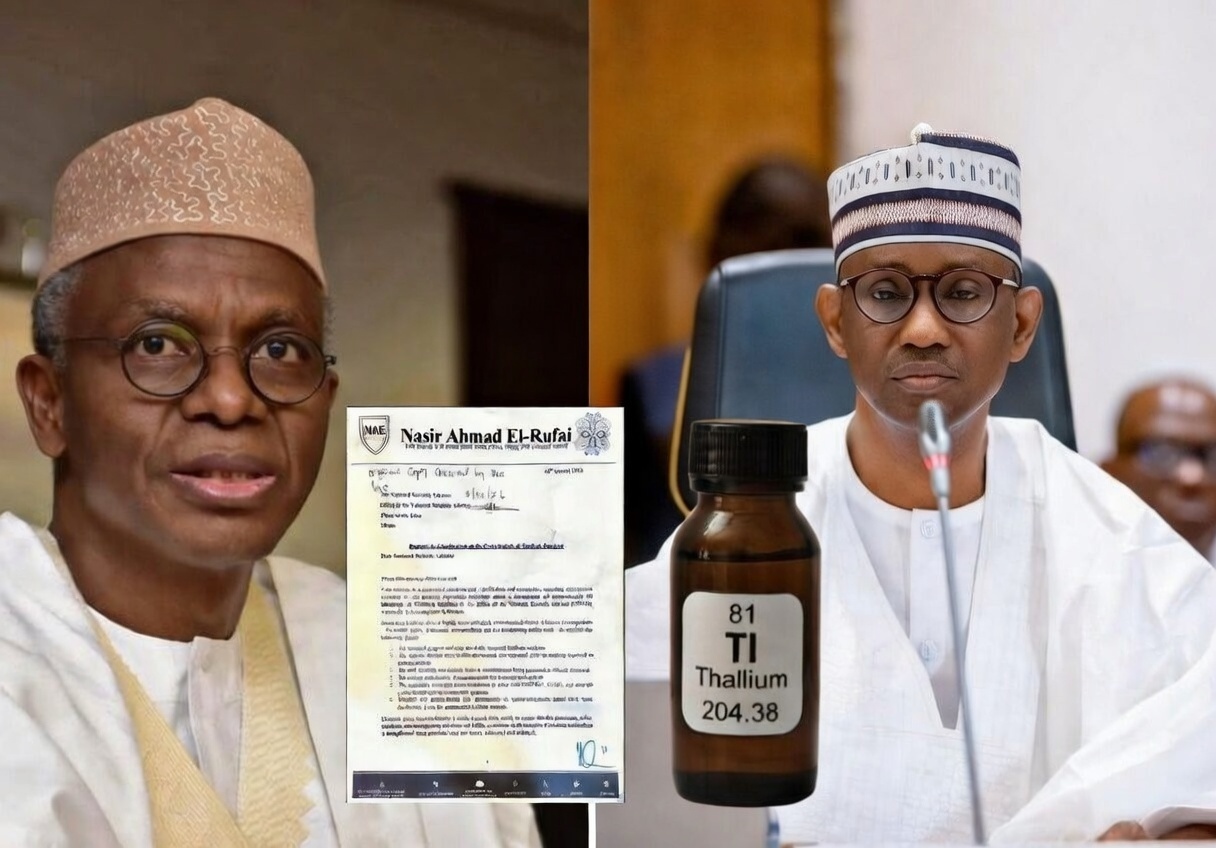
Former Kaduna State governor Nasir El-Rufai has publicly accused Nigeria’s National Security Adviser (NSA), Nuhu Ribadu, of overseeing the purchase of about 10 kilograms of thallium sulphate, a highly toxic chemical, reportedly from a supplier in Poland.
In a letter dated 30 January 2026, shared on his official X account, El-Rufai described thallium sulphate as a “very dangerous toxin” controlled internationally because of its severe health risks. He asked for clarification on why it was being procured, the supplier’s identity, whether proper permits were obtained, and how storage and safety measures were being handled. He also requested information on coordination with agencies such as the National Agency for Food and Drug Administration and Control (NAFDAC).
El-Rufai said he was acting as a “concerned citizen” and called for transparency to maintain public trust.
Join our WhatsApp ChannelNSA Denies Allegations
The Office of the National Security Adviser (ONSA) quickly rejected the claims. In a response dated 13 February 2026, signed by Brigadier-General O.M. Adesuyi on behalf of Ribadu, ONSA stated it had “neither procured nor initiated any process for the purchase of such material, and has no intention of doing so.”
The letter referred the matter to the Department of State Services (DSS) for a “comprehensive investigation” and invited El-Rufai or anyone with relevant information to provide evidence.
Delivery of the response faced initial issues at El-Rufai’s Abuja residence but was eventually received by his security team on 15 February.
Understanding Thallium Sulphate
Thallium sulphate is a colourless, odourless, and tasteless compound once used as a rodenticide. It is now heavily restricted or banned in many countries due to its potency. Exposure can occur through ingestion, inhalation, or skin contact and can cause nausea, vomiting, abdominal pain, neurological problems, seizures, and, in severe cases, death. Long-term effects may include hair loss, nail changes, and organ damage.
No public evidence has been presented to support the alleged procurement.
Airport Confrontation
The dispute has unfolded amid heightened political tension. On 12 February, after returning from Cairo, Egypt, El-Rufai said DSS operatives attempted to detain him at Abuja’s Nnamdi Azikiwe International Airport. According to him and his aides, about 50 DSS personnel approached him without a warrant, ordering him to follow them. El-Rufai refused, citing due process, and bystanders intervened.
He alleged the operation was at the request of the Independent Corrupt Practices Commission (ICPC) and accused Ribadu of personally ordering it, citing what he said were intercepted phone communications. His passport was reportedly seized but he was not arrested.
The ICPC has invited El-Rufai for questioning, which he said he plans to attend around 18 February. There has been no detailed public response from the DSS or ICPC about the airport incident.
READ ALSO:
Impeachment Storm: NSA Ribadu, Umahi, APC Leaders Hit Rivers For Gov. Fubara
El-Rufai In Kaduna: Like Nnamdi Kanu … Like Sunday Igboho?
I’ve Never Discussed Running For President In 2031 – Ribadu Replies El-Rufai
Political Context and Reactions
El-Rufai, a prominent opposition figure ahead of Nigeria’s 2027 elections, has faced multiple graft investigations linked to his previous roles as governor and minister.
Reactions to the allegations have been divided. Supporters, including former Vice President Atiku Abubakar and figures from the African Democratic Congress, condemned what they called political persecution. Critics, including activist Deji Adeyanju and former ally Senator Shehu Sani, described the accusations as diversionary or “drama,” urging El-Rufai to focus on pending allegations against him.
The episode highlights ongoing tensions in Nigerian politics, raising questions about the use of security agencies and accountability for public officials.
Toxicological information on thallium sulphate is drawn from established medical sources. Neither the chemical procurement nor intercepted communications have been independently verified by the Prime Business Africa.
Prosper Okoye is a Correspondent and Research Writer at Prime Business Africa, a Nigerian journalist with experience in development reporting, public affairs, and policy-focused storytelling across Africa