 Prosper Okoye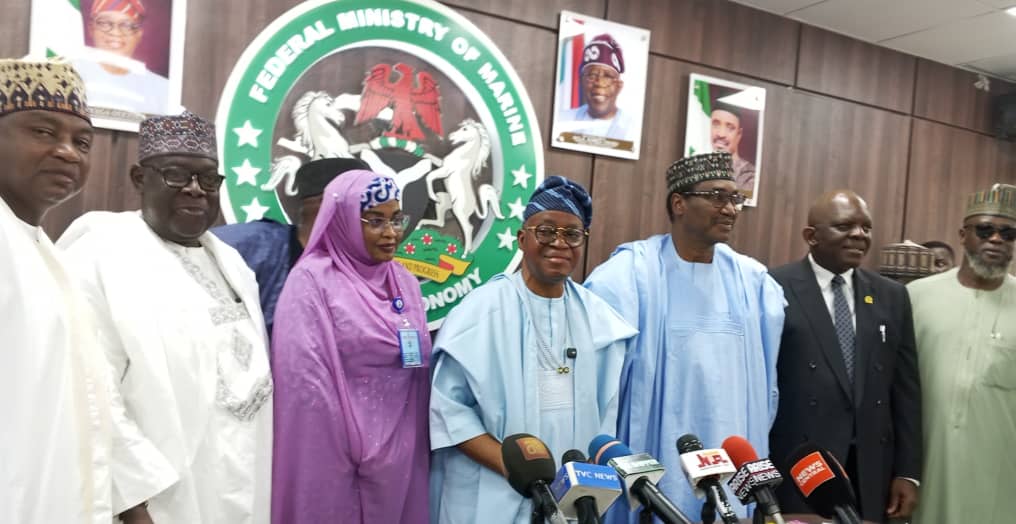
Nigeria’s Minister of Marine and Blue Economy, Adegboyega Oyetola, has outlined the responsibilities of the newly inaugurated Board of the Nigerian Shippers’ Council, tasking members with oversight, regulatory discipline and support for ongoing reforms in the maritime sector.
Speaking in Abuja on Monday at the board’s inauguration, Mr Oyetola said the approval of the council’s governing body by President Bola Ahmed Tinubu was in line with statutory provisions and marked the formal activation of institutional oversight within the Marine and Blue Economy.
He said the ministry was implementing reforms aimed at improving port efficiency, strengthening trade facilitation, enhancing marine transport and promoting environmental sustainability, adding that the board was expected to ensure these policies translated into measurable outcomes.
Join our WhatsApp Channel“The Nigerian Shippers’ Council, as Port Economic Regulator, has a critical role in promoting fairness and transparency in port charges and service delivery,” the minister said. “Effective regulation is central to reducing the cost of doing business and improving Nigeria’s competitiveness in regional and global trade.”
Mr Oyetola stressed that while management remained responsible for daily operations, the board’s duty was to provide policy direction, ensure compliance with government guidelines and safeguard the council’s mandate. He urged board members to work closely with management and warned against internal conflicts that could undermine performance.
Responding on behalf of the board, its chairman and former Katsina State governor, Ibrahim Shehu Shema, said members had accepted the responsibility and would operate strictly within existing laws and regulations.
“We are committed to ensuring fairness in port fees and levies charged by terminal operators and shipping companies, and to strengthening regulatory compliance across the sector,” Mr Shema said.
He said the board would also focus on oversight of cargo monitoring systems, including the International Cargo Tracking Note (ICTN), as well as initiatives aimed at improving government revenue from maritime activities.
According to him, attention would be given to inland dry ports, collaboration with oil and gas free trade zones and export processing zones, and the use of technology to improve cargo tracking, dispute resolution and data management within the council.
Mr Shema also said the board would support plans to develop transshipment ports and hub systems, backed by marine traffic studies, feasibility assessments and the expansion of shipbuilding and dockyard infrastructure.
Other members of the board include Pius Akutah, Chief Emi Membere-Otaji, Chief John Aluya, Chiji Collins, Funmilayo Olasehinde, Funmilola Rashidat Adeoti, Mele Kolo Giadem, Hafsatu Mohammed, Maharazu Adamu Dayi and Uzoamaka Okereke.
Blue Economy: Tinubu Appoints New Executive Directors For NPA, NIMASA
NIMASA To Reopen Lokoja Office For Blue Economy
Two Years In Office: Who Is Happy With Tinubu’s Fantastic Economy?
The inauguration marks the commencement of the board’s tenure under the Federal Ministry of Marine and Blue Economy.

Prosper Okoye is a Correspondent and Research Writer at Prime Business Africa, a Nigerian journalist with experience in development reporting, public affairs, and policy-focused storytelling across Africa