 Amanze Chinonye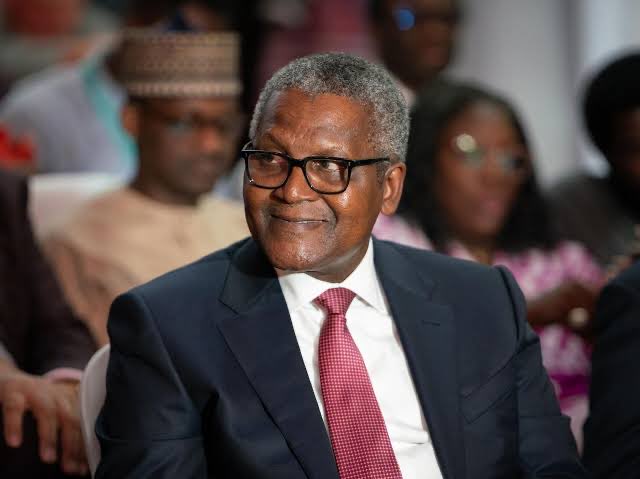
Nigerian billionaire industrialist Aliko Dangote has attributed the higher cost of cement sold locally to Nigeria’s heavy tax regime and regulatory burden, saying fiscal policies make domestically sold cement more expensive than exports, Prime Business Africa reports.
Dangote made the remarks amid growing public concern over the rising cost of building materials across the country.
According to him, cement exported from Nigeria is cheaper largely because it is exempt from multiple taxes and levies that apply to products sold within the country, significantly reducing production and distribution costs abroad.
Join our WhatsApp Channel“When you look at my invoice, the cement I export is cheaper than the one I’m selling domestically, because that’s how exports work,” Dangote said. “In export, I’m saving a lot of money – I’m not paying 30 per cent income tax, I’m not paying 2 per cent education levy, 1 per cent health levy, 7.5 per cent VAT, or 10 per cent withholding tax.”
READ ALSO : BUA Cement Records N858.73bn Revenue In Nine Months, Profit Rises By 448%
China’s Export Surge Strengthens Xi’s Hand as Trump Raises Trade War Stakes
He explained that these exemptions allow Nigerian cement to compete effectively with international producers from Turkey, Russia and China, while Nigerian consumers continue to bear the cumulative impact of local taxes and regulatory charges.
Dangote stressed that the consequence of this structure is that domestic buyers shoulder the burden of Nigeria’s structural inefficiencies, noting that increased local manufacturing alone cannot lead to significantly lower prices without reforms in taxation and regulation.
The issue has drawn repeated interventions from government officials. In February 2025, the Minister of Works, Senator Dave Umahi, urged cement manufacturers to reduce prices to about ₦7,000 per 50kg bag, citing improved economic conditions, a stabilising naira, and reduced petrol prices.
Umahi criticised prevailing prices of around ₦9,500, noting that manufacturers raised prices when the naira weakened to nearly ₦2,000 to the dollar but had not adjusted them downward despite currency recovery.
Earlier, in February 2024, the Minister of Housing and Urban Development, Musa Dangiwa, accused cement producers of exploiting foreign exchange volatility to justify sharp price increases, warning that high cement costs were threatening housing delivery programmes, especially for low- and middle-income Nigerians.
Despite these concerns, cement prices across Nigeria currently range between ₦9,500 and ₦10,200 per 50kg bag, according to market checks by Prime Business Africa.
Dangote said the controversy reflects broader structural challenges in Nigeria’s industrial and fiscal framework, a tension also evident in debates surrounding the Dangote Refinery. While the refinery was built to reduce fuel imports and stabilise supply, it has faced criticism over pricing, market dominance, and private ownership.
He argued that Nigeria should focus on attracting more domestic investors rather than relying on imports to regulate prices, noting that increased competition would naturally balance market power and strengthen oversight.
Until Nigeria addresses the high cost of doing business and streamlines its tax and regulatory environment, analysts say the contradiction of cheaper exports and expensive domestic goods is likely to persist.

Amanze Chinonye is a Staff Correspondent at Prime Business Africa, a rising star in the literary world, weaving captivating stories that transport readers to the vibrant landscapes of Nigeria and the rest of Africa. With a unique voice that blends with the newspaper's tradition and style, Chinonye's writing is a masterful exploration of the human condition, delving into themes of identity, culture, and social justice. Through her words, Chinonye paints vivid portraits of everyday African life, from the bustling markets of Nigeria's Lagos to the quiet villages of South Africa's countryside . With a keen eye for detail and a deep understanding of the complexities of Nigerian society, Chinonye's writing is both a testament to the country's rich cultural heritage and a powerful call to action for a brighter future. As a writer, Chinonye is a true storyteller, using her dexterity to educate, inspire, and uplift readers around the world.