 Amanze Chinonye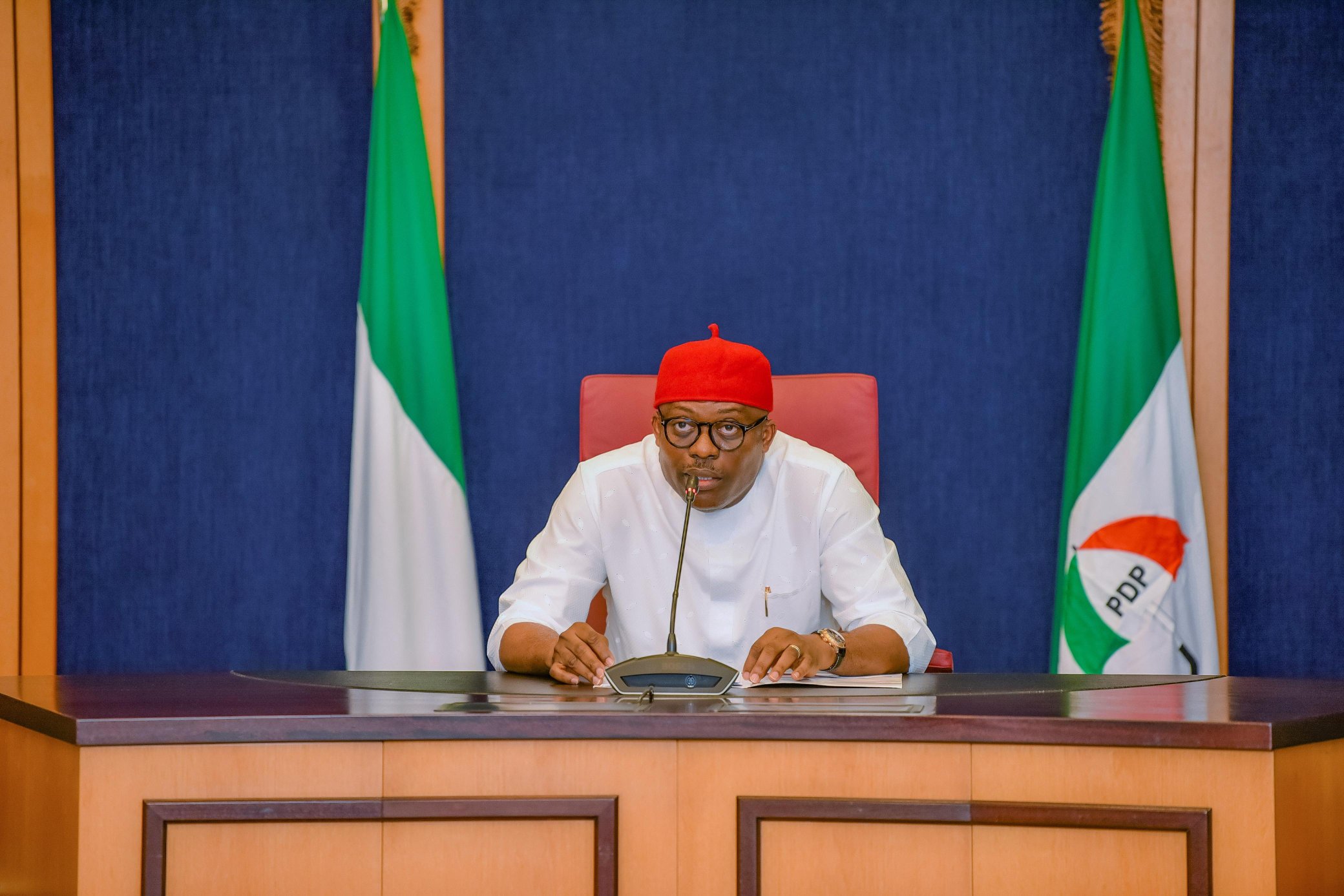
Rivers State Governor Sir Siminalayi Fubara on Friday, declared the official end of the six-month emergency rule imposed on the state, pledging to restore democratic governance and accelerate development after months of political tension.
In a statewide broadcast, Fubara recalled that President Bola Ahmed Tinubu declared a state of emergency on March 18, 2025, following an intense political crisis that paralyzed governance. The emergency led to the suspension of democratic institutions and direct federal oversight of the state.
“The last six months have been enormously challenging for our dear State under the emergency rule,” Fubara said. “I accepted to abide by the declaration and chose to cooperate with Mr. President and the National Assembly, guided by my conviction that no sacrifice was too great to secure peace, stability, and progress for Rivers State.”
Join our WhatsApp ChannelPeace Deal and Political Reconciliation
The governor credited President Tinubu with brokering a peace process that brought together all major political actors, including Federal Capital Territory Minister Nyesom Wike, members of the Rivers State House of Assembly, and his own administration.
“Our leader, His Excellency Nyesom Ezenwo Wike, all members of the House of Assembly, and I have all accepted to bury the hatchet and embrace peace and reconciliation in the best interest of our dear Rivers State,” he announced.
Fubara said the political crisis is now “behind us,” stressing that the responsibility lies with all leaders to sustain the fragile peace. He urged government officials, lawmakers, and stakeholders to work for the common good and put the interests of the people above personal or party differences.
READ ALSO: Fubara’s Disposition Not Justification To Continue Emergency Rule In Rivers – HURIWA
National Assembly Approves Tinubu’s Emergency Rule Declaration In Rivers
Gratitude to the Presidency and Key Stakeholders
The governor expressed “utmost loyalty and eternal gratitude” to President Tinubu for what he called a “fatherly disposition and decisive interventions,” and thanked National Assembly leaders Senate President Godswill Akpabio and House Speaker Abbas Tajudeen for their roles in restoring order.
He also lauded the Rivers State House of Assembly, traditional rulers, religious leaders, civil society groups, and ordinary citizens for their patience and support during the emergency period.
Returning to Governance and Development
Fubara pledged to refocus his administration on governance and service delivery, citing “credible milestones” already achieved in infrastructure, education, and healthcare despite the political turbulence.
“Our immediate responsibility is to return to the path of governance and development by completing the projects we started,” he said, promising that no ongoing project would be starved of funds.
The lifting of emergency rule carries far-reaching implications for Rivers State, a key economic hub in Nigeria’s oil-rich Niger Delta.
With democratic structures restored, the state can now resume budgetary processes, unlock stalled infrastructure projects, and attract private investment previously deterred by political uncertainty.
Analysts say sustained peace will be critical to stabilizing the local economy, protecting oil and gas operations, and reassuring residents and businesses that Rivers is once again open for normal political and economic activity.
Fubara urged Rivers people to “rise above bitterness and division” and seize the moment as a fresh beginning.
“The costliest peace is cheaper than the cheapest war,” he reminded citizens, calling for collective action to rebuild trust and ensure lasting stability.
The governor concluded with a prayer for the prosperity of Rivers State and the Federal Republic of Nigeria, marking a symbolic return to full democratic governance after six turbulent months.

Amanze Chinonye is a Staff Correspondent at Prime Business Africa, a rising star in the literary world, weaving captivating stories that transport readers to the vibrant landscapes of Nigeria and the rest of Africa. With a unique voice that blends with the newspaper's tradition and style, Chinonye's writing is a masterful exploration of the human condition, delving into themes of identity, culture, and social justice. Through her words, Chinonye paints vivid portraits of everyday African life, from the bustling markets of Nigeria's Lagos to the quiet villages of South Africa's countryside . With a keen eye for detail and a deep understanding of the complexities of Nigerian society, Chinonye's writing is both a testament to the country's rich cultural heritage and a powerful call to action for a brighter future. As a writer, Chinonye is a true storyteller, using her dexterity to educate, inspire, and uplift readers around the world.