 Etim Etim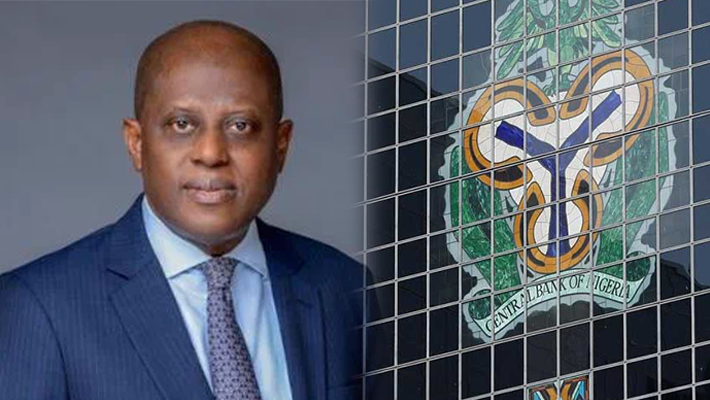
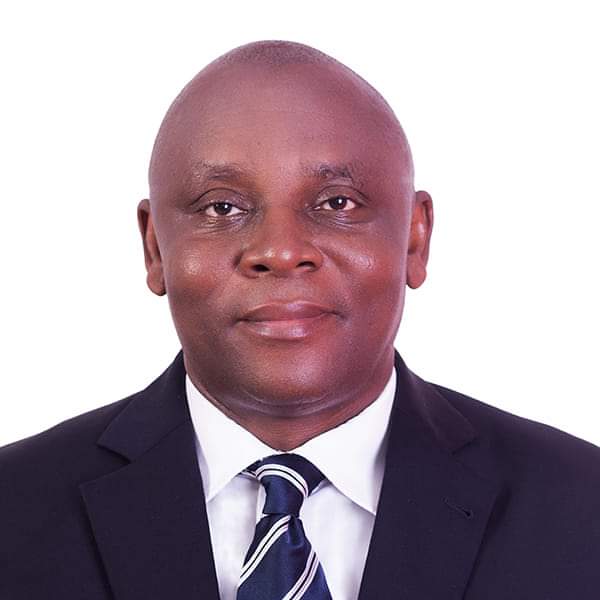
Olayemi Michael Cardoso was named Nigeria’s twelfth Central Bank Governor on September 15, 2023 by President Tinubu; and after a rigorous senate confirmation hearing, he and the four new deputy governors appointed with him, assumed duty on September 23. They inherited an institution that was deeply mired in controversies, unethical and unprofessional practices and monumental corruption, especially in the manner the foreign exchange market was managed. The CBN was bloated with a largely demotivated workforce, much of which was already disenchanted by the shady and fraudulent leadership that ran the bank in the preceding eight years.
My views on the Emefiele years is well documented. In 2022 and 2023, I wrote many articles criticizing then-governor Godwin Emefiele and his leadership style, especially his political and partisan activities. (See ‘’Who is funding Emefiele’s campaigns?’’ November 2021; ‘’Emefiele’s presidential campaign possess ethical dilemma’’, May 8, 2022 and ‘’Why Godwin Emefiele shouldn’t go down alone, November 20, 2023, among others’’. They were published in several newspapers and online platforms).
Join our WhatsApp Channel
By the time Cardoso and his four deputies arrived CBN two years ago, Nigeria’s economy was in a very bad shape. Oil production was very low; oil theft was rampant; foreign exchange was scarce; inflation was rising; unemployment was very high; national debts were mounting (they still are); some states were unable to pay salaries; the Naira was falling; investors were fleeing; the government was printing money to fund recurrent expenditures and the cabal was feeding fat on arbitrage.
After a few weeks on the job, Cardoso went to brief President Tinubu; and at the end of a lengthy session, he told the President that he would only continue on the job if he were given a free hand to run the bank. His priority, he said, would be to reposition the bank on the path of orthodox central banking practices and win back confidence in the institution. Tinubu assured him of independence, and in the last two years, Cardoso and his team have cleaned the Augean Stable and reassured multilateral institutions, investors and analysts that Nigeria now has a central bank that works.
The governor started by clearing off the $7 billion outstanding foreign exchange liabilities he met after a successful verification of the debts by forensic auditors. With this, multinationals, investors and airlines are now able to repatriate funds easily, thus restoring confidence in the ability of the CBN to honour verified claims.
As the verification exercise was proceeding, the bank launched a comprehensive reorganization of its personnel, trimming more than 2,000 off the oversized workforce, then put at about 12,000 and redeploying top management staff. For a long time, the CBN was a preferred place of employment for the children and wives of privileged politicians; and this was the main reason the downsizing generated so much uproar from the political class.
The next move was the announcement of a recapitalization programme for the banking industry; the re-composition of the Monetary Policy Committee; the fight to tame inflation and stabilize the exchange rate. All commercial banks were directed to raise their minimum paid-up capital to N500 billion for international banks; N200 billion for national banks and N50 billion for regional banks within two years ending March 2026. The policy is intended to fortify banks’ capacity to withstand macroeconomic shocks, support Nigeria’s ambition to grow GDP to $1 trillion in 2030 and restore global investor confidence in the industry.
With only six months remaining, the five top lenders (Access, FBN, GT, UBA and Zenith) and some mid-level players like Fidelity have pretty much cleared the hurdle, while others are putting finishing touches to their plans. Analysts expect that the sector will witness another round of consolidation, with mergers and acquisitions among the mid-tier level. It is coming 20 years after the first consolidation which was announced in 2004 by then-governor Charles Soludo. That exercise shrank the sector from 89 to 25 big banks. Today, we have 43 deposit money banks of various sizes and market share. The newest has just been licensed and is yet to open for business.
The CBN continues to focus on its core mandate of maintaining price stability and protecting the soundness of the banking system. The removal of petrol and FX subsidies have led to massive devaluation of the Naira and increased prices of goods and services. The bank is fighting with tight monetary controls to rein in inflation.
As we all know, managing exchange rates and taming inflation can be a complex dilemma for policy makers. A policy that supports one goal might undermine the other, making it challenging to achieve both simultaneously. Cardoso has projected a decline in interest rate in the immediate future, citing easing inflation and improved capital allocation efficiency as key drivers. Speaking last month at the European Business Chamber (Eurocham Nigeria) in Lagos, the governor stressed that the current high interest rate, ranging between 32% and 36%, on commercial loans would begin to ease as macroeconomic conditions stabilize. He outlined the bank’s strategic priorities as macroeconomic stability, banking sector recapitalization and positioning Nigeria as an attractive investment haven. ‘’
Our primary objective is to maintain that stability while simultaneously addressing inflation and ensuring that the financial system is sufficiently resilient to facilitate corporate lending and investment’’, he said. In addition, there has also been a growing synergy and collaboration between the CBN and fiscal authorities such as the Ministries of Finance, Industry, Trade & Investment and the Budget Office the immediate – something of a rarity in the past.
At his senate confirmation hearing, Cardoso pledged to provide a professional and efficient leadership; and rebuild the CBN into a globally respected institution that is capable meeting international and domestic expectations. He’s been up to a good start.
Etim Etim
ETIM ETIM is a journalist, banker and author. He has been a member of the Editorial Board of The Guardian, a Regional Manager in Access Bank and is currently a Columnist in Prime Business Africa, The Cable and Businessday newspapers.
He is also the Chief Executive of Stein Meyer Communications, a major media consultancy and the author of the best-selling book, "Akwa Ibom Heroes: Inside Story of the Fight for Abrogation of Onshore-Offshore Oil Dichotomy" and co-author of another book, "Osinbajo Strides: Defining Moments of an Innovative Leader".